


By Morgan Blackthorne
In an age where technology dictates our waking hours and digital noise fractures our attention, there exists a quiet rebellion for those seeking depth, meaning, and connection to something older than memory. Ceremonial witchcraft offers precisely this—a structured yet deeply personal practice that transforms everyday moments into sacred encounters with the hidden currents of life.
What Is Ceremonial Witchcraft?
Ceremonial witchcraft is not merely a collection of rituals performed in passing; it is the deliberate orchestration of symbol, intention, and element to create meaningful transformation. Unlike folk traditions which often develop organically through generations of practice within specific communities, ceremonial witchcraft draws heavily from documented magical systems—hermetic traditions, elemental correspondences, planetary workings—and synthesizes them into a coherent practice that can be adapted by any practitioner regardless of background.
At its core, ceremonial witchcraft relies on the principle that symbols carry power. When we deliberately employ symbols in our work, they become bridges between conscious intention and unconscious receptivity. The pentacle is not merely drawn; it is invoked as protection. The candle flame is not merely lit; it becomes a focused conduit for will. Each element—earth, air, fire, water—carries specific qualities that the practitioner calls upon according to their purpose.
Why Ceremonial Practice Matters Today
The modern witch does not need to retreat into isolation or don elaborate robes to practice her craft. What matters is presence—the ability to be fully engaged in ritual rather than performing it mechanically. This quality of presence is what transforms a simple incantation into genuine magic, and it is why so many contemporary practitioners find that ceremonial practice enriches their daily lives even when they are not formally working with their hands.
Ceremonial witchcraft also serves as a meditative discipline. The structured nature of ritual provides scaffolding for the mind while leaving room for spontaneous insight. When you perform an opening ceremony, cast your circle, call upon your directions and spirits, state clearly what intention you wish to manifest, then close with gratitude—you are practicing a form of meditation that engages body, breath, voice, and spirit simultaneously.
The Foundations: Elements, Directions, and Correspondences
Every ceremonial practice begins with understanding the correspondences that underlie it. Ancient cultures noticed patterns in nature—the sun moves through specific paths, winds blow from particular directions, fires burn hotter than water, earth supports all things—and encoded these observations into their magical systems. Modern practitioners inherit this rich background without needing to memorize every detail.
The basic correspondences include:
- Earth for stability, nourishment, and manifestation; associated with green colors, roots, and the direction south
- Air for thought, communication, and mental clarity; connected with white or yellow tones and the east
- Fire for energy, passion, and transformation; linked to reds, oranges, and the west
- Water for emotion, intuition, and healing; tied to blues and purples, and the north
Beyond these four lie additional correspondences: planetary associations (Sun for vitality, Moon for intuition), elemental essences (herbs, stones, colors), and the directions that structure any ritual space. Understanding these does not require memorizing vast tables—it requires developing a relationship with them through regular practice.
Creating Your Own Ceremonial Practice
The beauty of ceremonial witchcraft lies in its accessibility. You need not master every detail before beginning; you can start simply, learning through doing. Begin by establishing a regular time for your practice—a morning when you have quiet, an evening when the world slows down. Then build gradually: choose a simple ritual structure, add correspondences as they make sense to you, and let your personal voice emerge in your workings.
Remember that every ceremony contains both structure and spontaneity—the formal opening establishes boundaries while allowing unexpected insights to enter. The careful casting of the circle creates safety; the spontaneous moment when something stirs within you during ritual is where genuine magic often appears.
A Simple Ceremonial Practice for Beginners
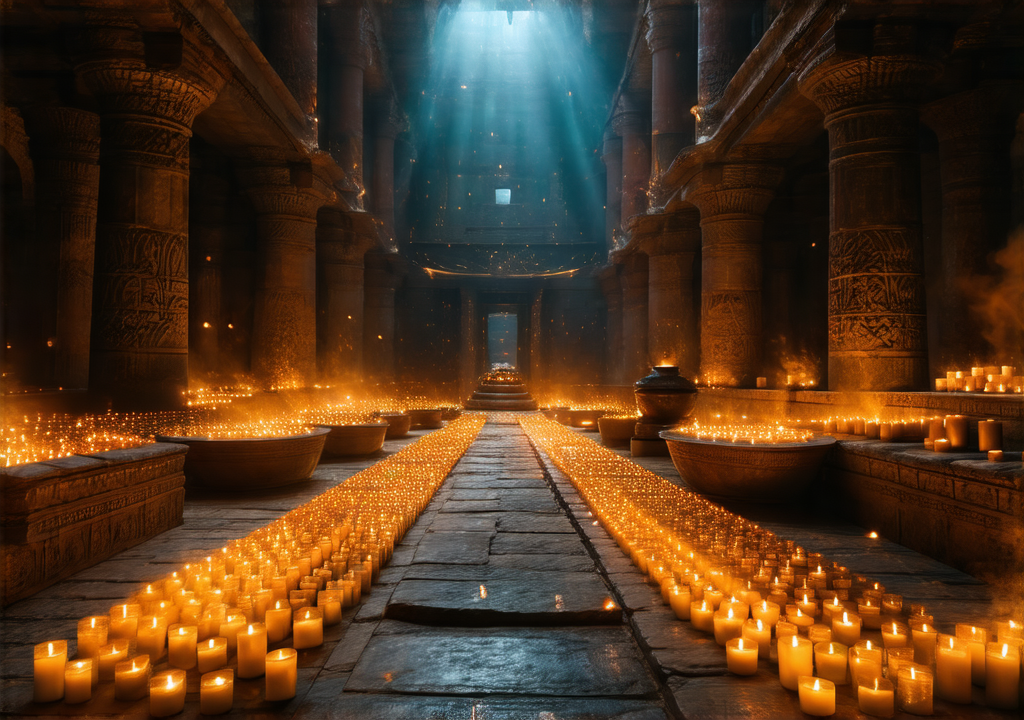
Consider this basic working: light a candle representing your intention, set out small bowls or stones signifying each direction and element, speak aloud what you wish to manifest, then allow yourself ten minutes of quiet reflection while feeling the presence of those directions surrounding you. Close with gratitude and extinguish the candle deliberately. This simple practice can be performed daily, weekly, or whenever needed—and it works not because it is complicated but because it is intentional.
Finding Your Witch Within
What makes ceremonial witchcraft so powerful for modern practitioners is that it meets us where we are—neither demanding ancient purity nor requiring decades of study. It asks only that we bring presence, sincerity, and willingness to learn through doing. The symbols do not work because they are old; they work because we engage with them meaningfully.
Discover Your Inner Witch Through Ceremonial Practice is not merely an invitation but a declaration: magic exists within the structure of our lives if we choose to see it, and ceremonial practice provides both the framework and the freedom needed to discover that magic in ourselves.


















No Comments