


A Guide to Ceremonial Witchcraft for the Modern Practitioner
By Selene Thorne, High Priestess of the Silver Coven
In an age where technology hums in our pockets and screens dominate our waking hours, there remains a quiet truth: magic is not something that happens elsewhere. It is happening here, now, within the ordinary fabric of daily life. To turn ordinary moments into extraordinary spells, one need only lift eyes from the mundane and recognize the sacred threads woven through every moment.
Ceremonial witchcraft offers precisely such an invitation. Where modern witches might be content to dip their toes in occasional spell-casting or keep a few bottles of dried herbs on a shelf, ceremonial witchcraft demands something deeper—a commitment to ritual as a living language, where every gesture carries meaning and every spoken word alters the course of things.
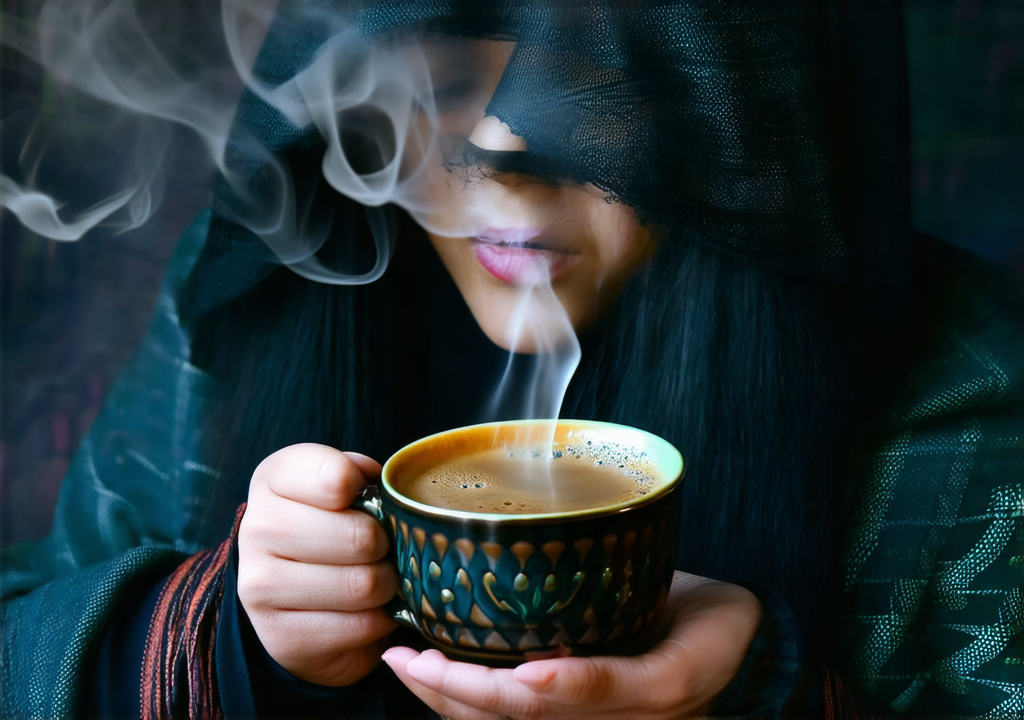
Consider the simple act of lighting a candle before beginning a task. To the casual observer, it is merely illumination. But to the practitioner of ceremonial craft, that flame becomes a doorway through which intentions pass from mind to world, carrying with them the intention of whatever is being set in motion. Whether preparing for work, beginning meditation, or simply sipping morning tea by window, the candle’s wax melts not only itself but also time itself, transforming ordinary minutes into vessels of power.
The Architecture of Ceremony
What elevates a simple ritual to true ceremonial witchcraft? Several elements converge:
Intention—perhaps the most vital ingredient. Before any tool is lifted or word spoken, the practitioner must decide what they are doing and why. Not merely “I am casting this spell” but rather: Why now? Why me? What am I calling forth? Intention gives direction to power; without it, even the most beautiful incantation floats upward like smoke from a fire whose embers have cooled.
Tools—those which carry meaning beyond their immediate physical properties. A knife cuts not just herbs but also severances; crystals hold frequencies that persist long after their owners forget they were ever held; oils carry within them the essence of whatever plant they represent, compressed and concentrated into drops of power. Ceremonial witches do not use tools merely as convenience but as extensions of will—tangible expressions of invisible intentions.
Language—the spoken word holds unique power in ceremonial practice. When words are spoken with precision and conviction, they become vessels carrying intention outward into the world. This is why invocations, prayers, incantations and affirmations matter so much: not because magic happens automatically when words are uttered correctly (though it sometimes does), but because language itself carries meaning that cannot be dismissed as mere decoration.
Timing—the hour chosen for a ritual matters deeply to those who observe such things. There is no single correct moment; there are only moments more appropriate than others, depending upon what one seeks to accomplish. A full moon night brings different energies than an early spring morning; winter solstice carries different currents than autumn equinox. To practice ceremonially is to move with these currents rather than against them—to understand that certain times call forth certain powers and to choose accordingly.
Crafting Spells from the Ordinary
The practitioner of ceremonial witchcraft finds magic not by seeking extraordinary circumstances but by infusing ordinary activities with magical awareness: cooking dinner becomes a spell when one moves through the kitchen with intention; writing a letter becomes sacred when written upon special paper while invoking appropriate spirits; walking through woods becomes ritual when one pays attention to each step’s meaning.
Consider what happens when one begins preparing breakfast while speaking softly about intentions aloud—about health, abundance, protection, or whatever is being cultivated at that particular moment in life. The act of stirring porridge or boiling tea carries with it something more than sustenance for body alone: it becomes an invocation carried forward through kitchen air, moving upward as steam rises from pot toward ceiling, carrying prayers upward as though they were birds flying between earth and sky.
Consider also the simple act of closing one’s eyes before beginning any new endeavor—not merely to visualize but actually to see: seeing beyond the veil that separates ordinary from extraordinary; seeing not just what is visible now but what could be if intention were properly aligned with action. The witch who practices ceremonially does not need much: a few tools, some time alone each day perhaps, and willingness to notice what others overlook.
Living as Witchcraft
What distinguishes true ceremonial practice from occasional spell-casting? It is not merely occasional magical activity but rather living life itself as continuous ritual—that every moment carries meaning if only one pays attention; that breathing counts as prayer when done with awareness; that eating meals becomes communion when shared mindfully and gratefully.
The ancient witch whose wisdom has been preserved through centuries understood this deeply: magic was never meant to be something special happening somewhere else in some other place while ordinary life went on without us. Magic happens here, now, within our daily activities if only we recognize it as such. Turn ordinary moments into extraordinary spells simply by choosing to see them differently—and suddenly you are living the magic that has always been waiting there for you.


















No Comments