


By Aurelia Blackwood
If you have ever felt drawn to the mysteries of witchcraft but found yourself overwhelmed by ancient grimoires, arcane symbols, and seemingly impenetrable rituals, then this article was written specifically for you. Ceremonial Witchcraft—the practice of channeling magical forces through structured rituals—has been practiced since humanity first looked upward at night skies and whispered prayers to the stars. What remains unchanged is its power; what has evolved are the methods by which modern witches access that same ancient energy in their own lives.
Understanding Ceremonial Witchcraft
At its core, ceremonial witchcraft involves performing specific actions within a designated space, often using tools such as candles, incense, and written symbols to focus intent. Unlike casual spell-casting, where you might light a candle while thinking about love or health, ceremonial practice demands precision—timing, direction, spoken words—and intentionality in every element. The word “ceremony” comes from Latin caerimonia, meaning “consecrated,” and this sense of sacredness is what separates ceremonial witchcraft from ordinary magic.
The key difference between a casual witch and a ceremonial one lies not in talent or power, but in method. A casual witch might light a candle to manifest abundance. A ceremonial witch will choose specific timing—perhaps during waxing moon, at an auspicious hour—in a consecrated space, perhaps with incense of cinnamon and myrrh, while speaking words of invocation to deities she has studied and honored. The result may appear similar; the depth of connection between the two approaches is entirely different.
Why Ceremonial Witchcraft Matters Now
Modern life offers us everything except time: we live in constant motion, our minds scattered across screens and notifications. But ceremonial witchcraft provides something modern witches desperately need—a return to intention, a grounding presence that reminds us who we are beneath the layers of expectation. When you perform ceremony, whether it is taking thirty minutes or three hours, you create sacred space out of profane time. You become the priestess of your own life, the keeper of its rhythms and patterns.
The resurgence of ceremonial witchcraft in recent years reflects broader cultural trends: people seeking deeper meaning beyond surface-level spirituality, those who want magic to mean something rather than simply to decorate their Instagram feed. Ceremonial practice provides structure without rigidity, tradition without dogma, power without pretense.
Setting Up Your First Ceremony
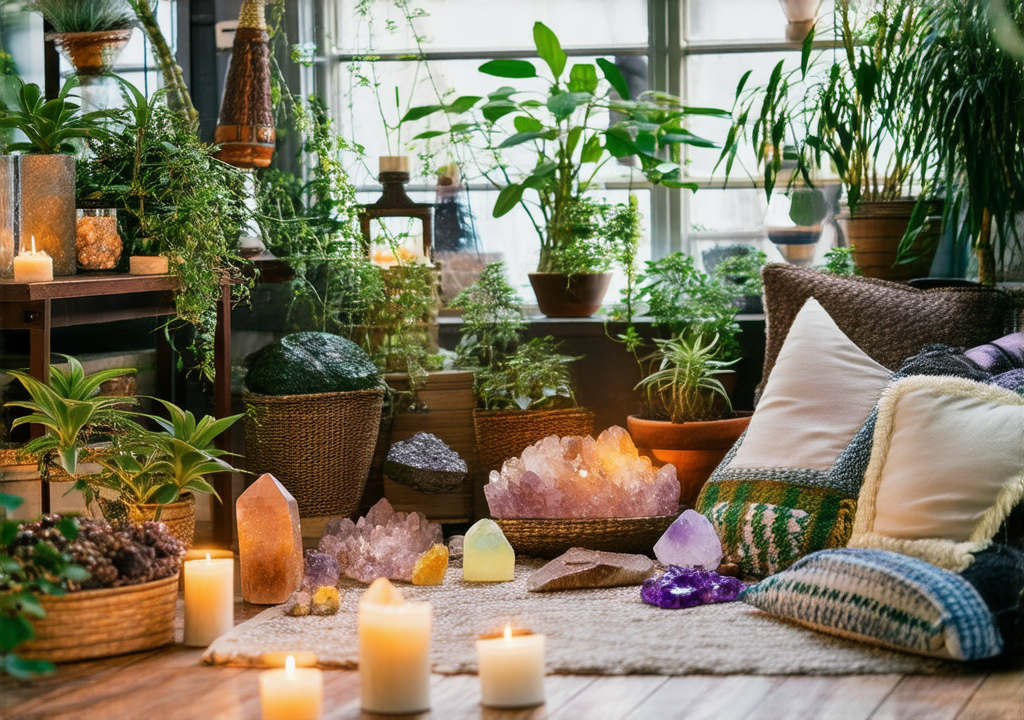
You do not need special equipment or expensive tools. Start with what you have: candles of any color meaningful to you, perhaps some herbs from your garden or local market, a small altar space (a shelf, a table, even a windowsill), and a journal in which to record each ceremony. The essential elements include:
1. Purification. Whether through bathing, incense smoke, or simply clearing the air of intention, preparation creates the vessel into which you pour your magic. Begin by cleansing your space—open windows if possible, ring bells, light sage or palo santo. This is not about getting rid of bad energy; it is about making room for what is coming.
2. Invocation. Call upon the deities, spirits, or energies you wish to work with. This can be a formal prayer or something simpler: speak their names aloud, visualize their presence, perhaps light candles in their honor. Remember that invocation is not merely calling—it is invitation. Invite them into your space and let them know you are ready to receive.
3. Meditation. Sit quietly for several minutes before beginning the main ritual. Feel yourself becoming still; feel the energy around you shift from ordinary to sacred time. In meditation, you move beyond thought into pure presence—the state required for true magic-making.
4. The Ritual Proper. Now perform whatever action you intended: cast a circle, pour offerings, inscribe your intent upon parchment or directly onto skin with henna or ink. This is where intention meets action, where thoughts become things.
5. Gratitude and Closing. Never underestimate the importance of thanking those who participated in your ceremony. Close the space by extinguishing candles (in whatever order makes sense), gathering any remaining tools, writing down what occurred while memories are fresh. Always close a ceremony properly—it leaves no loose ends for stray energy to slip through afterward.
Common Tools and Their Meanings
Every tool used in ceremonial witchcraft carries meaning beyond its physical properties:
Candles: The primary conduit between human intention and elemental force. White candles carry purity; black, protection; green, growth; gold, abundance; red, passion. Choose colors according to your intent rather than tradition alone.
Incense: Perhaps the most misunderstood element of ceremonial practice—people burn incense without knowing why. Incense carries prayers upward as smoke rises and burns away, carrying our intentions from human realm into divine space. Different resins carry different energies: frankincense for divination; myrrh for protection; styrax for clarity.
Chalice: Symbolizing the feminine receptive principle—the cup that receives. Every ceremonial witch should have one vessel to use as chalice during offerings and invocations. Wine, water, or cider all serve equally well depending on intention.
Pentacle or pentacle: A flat disc upon which symbols are inscribed; serves as altar cloth and the physical anchor of ritual space. Symbols commonly included represent earth’s five elements: fire (a flame), air (a bell), water (a cup), earth (earth itself, often soil from your own garden), and spirit (the center point).
Tips for Beginners Starting Out
Do not be intimidated by perfectionism. You can perform a full ceremonial ritual in any home with basic materials—no special tools required beyond imagination and intention. Begin simply: light candles on paper plates if you must, burn whatever herbs your grandmother left behind or those growing wild outside, use any bowl as chalice. What matters most is presence, not perfection.
Keep records of every ceremony, no matter how brief. A journal becomes invaluable when patterns emerge over time: which days bring the strongest energy? Which times suit which kinds of work? How long does your circle hold before it needs cleansing? These insights come only through consistent practice and careful observation.
The Beauty of Accessibility
What makes ceremonial witchcraft so accessible is that it requires no one-size-fits-all approach. Your first ceremony need not mirror anyone else’s; you may blend traditions freely, adopt practices from different magical systems simultaneously, or invent entirely new ones if inspiration strikes mid-ritual. Ancient magic does not demand adherence to tradition—only that you bring genuine presence and intention to whatever form your practice takes.
Conclusion: Begin Today
Start where you are. Light a candle tonight; speak aloud what you intend; feel the difference between ordinary time and sacred space when you do so with awareness rather than automaticity. Ancient magic is not something outside yourself but within it, waiting patiently for modern witches to remember how to access it through deliberate practice. Every ceremony begins simply: with intention, presence, and willingness to be present.
Ancient Magic for Modern Witches (Easy Start Inside)—the title might suggest complexity, but nothing could be further from truth; if you can light a candle and mean what you say while doing so, you already possess everything required for beginning this beautiful work.*
















No Comments