


By Aurelius Thornfield
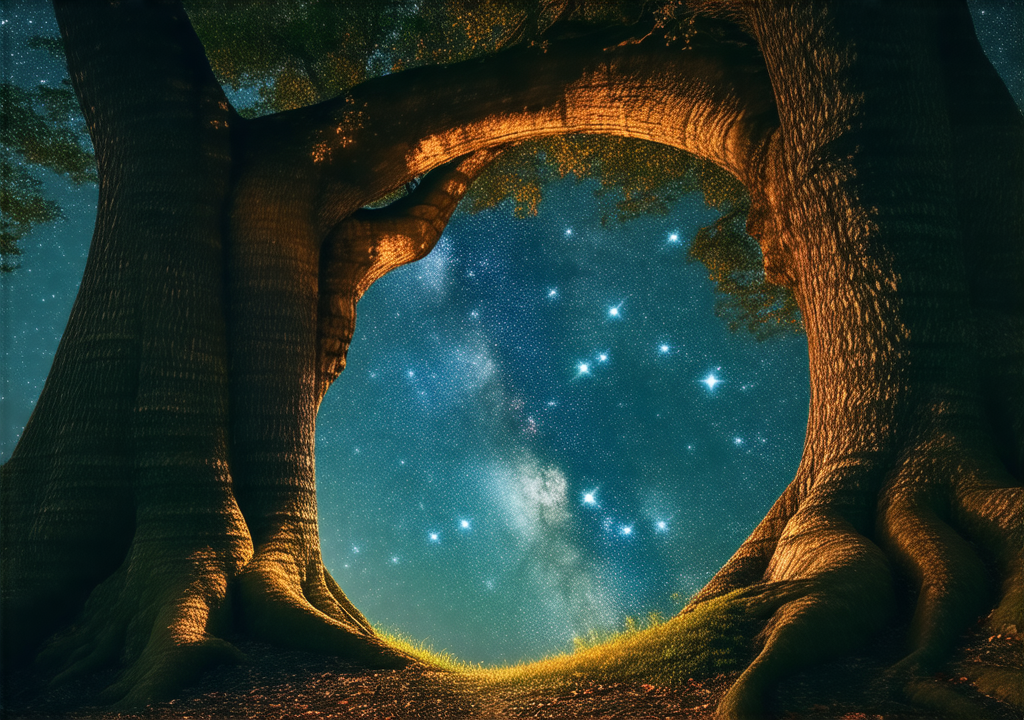
Beneath the visible world, where moonlight weaves through ancient woods and candle flames flicker with intention, there exists a practice that has persisted quietly across centuries—a living tradition not for the masses but for those who seek the hidden threads of power. Ceremonial Witchcraft, often overlooked in popular culture, is precisely this: an intricate art of ritualized action, where the practitioner becomes both student and master within a lineage stretching back beyond memory.
The Hidden Nature of True Craft
What distinguishes ceremonial witchcraft from its simpler cousins—candle magic, folk healing, or seasonal celebrations—is its deliberate architecture. Every element serves purpose; every gesture carries meaning. Unlike casual practitioners who may dabble in spells without systematic understanding, the true ceremonial witch approaches each practice as part of a living tradition—a continuous conversation between past and present practitioners across centuries.
This hidden depth becomes apparent when one considers the tools themselves: the athame for cutting and directing energy, the pentacle grounding spiritual forces into matter, the wand channeling intention outward. These are not mere props but instruments of transformation, each chosen with care and consecrated through ritual. They become extensions of will—extensions that carry power across boundaries between material and ethereal realms.
The Architecture of Ritual Practice
A ceremonial witch’s practice unfolds in layers like geological strata. At the base lies pure intention—the focused desire that begins every spell or rite. Above this foundation stand the tools: wands, circles, candles, herbs, incense—each chosen not arbitrarily but according to their correspondence with celestial bodies, elemental forces, and astrological timing.
The ritual itself proceeds through stages worthy of careful study. It opens with casting a circle—a boundary between ordinary time and sacred space—then invokes directions, elements, perhaps deities. Invocations follow: prayers, poems, chants that call forth specific energies. Then comes the work—the spell or magical act itself, performed within this consecrated space. Finally, the circle is closed, gratitude offered, tools blessed and stored until their next use.
What makes ceremonial witchcraft particularly remarkable is its integration of multiple traditions. The wiccan wheel offers seasonal markers; Kabbalistic paths provide a map of consciousness; hermetic principles offer philosophical grounding; alchemical symbols supply visual metaphors for inner transformation. No single tradition monopolizes; each contributes to the whole.
The Practitioner’s Journey
The life of a ceremonial witch extends far beyond occasional spell-casting. It involves daily practices: morning meditations, evening blessings, journaling experiences and insights. Seasonal festivals provide opportunities for communal celebration; solstices and equinoxes mark natural turning points worthy of special observance.
But the deepest work happens in private—the sustained effort to cultivate inner awareness while maintaining external competence with ritual tools. This requires patience, discipline, and genuine curiosity: a willingness to study astrology, herbal lore, tarot symbolism, numerology, and other arts that might enrich practice. Each additional skill deepens understanding; each new insight refines intention.
The Secret Life Unfolds
What is so secret about ceremonial witchcraft? Not its mysteries—those are well known to those who seek them—but rather the quality of experience it offers. Where ordinary life moves according to external schedules and social expectations, ritual time flows differently: slower, richer, more deliberate. Where most people react to circumstances, the practitioner creates conditions; where others see only surface events, they discern deeper patterns.
This secret life reveals itself gradually. A candle lit at dusk becomes not just illumination but symbol of inner light; an herb bundle hanging above the hearth becomes not mere decoration but active agent in household protection. Suddenly, every object participates in meaning-making; every action carries potential transformation.
Modern Relevance
In our fast-paced world, ceremonial witchcraft offers something increasingly valuable: a way to make life more intentional. Not by rejecting modernity—rather by bringing deeper presence into daily activities. Whether through morning ritual before beginning work, evening blessing of home and hearth, or seasonal observances connecting us with ancient rhythms, the practice makes time itself richer.
The secret life remains hidden not because it is rare but because it requires attention—a willingness to see beyond surface appearances, to notice patterns where others see randomness, to understand that beneath everyday events lies a deeper order waiting discovery and participation. For those willing to enter this world fully, ceremony becomes not separate from life but the most authentic expression of life itself.
This article represents current understanding of ceremonial witchcraft tradition as practiced by modern practitioners who honor both ancient wisdom and contemporary insight.















No Comments