


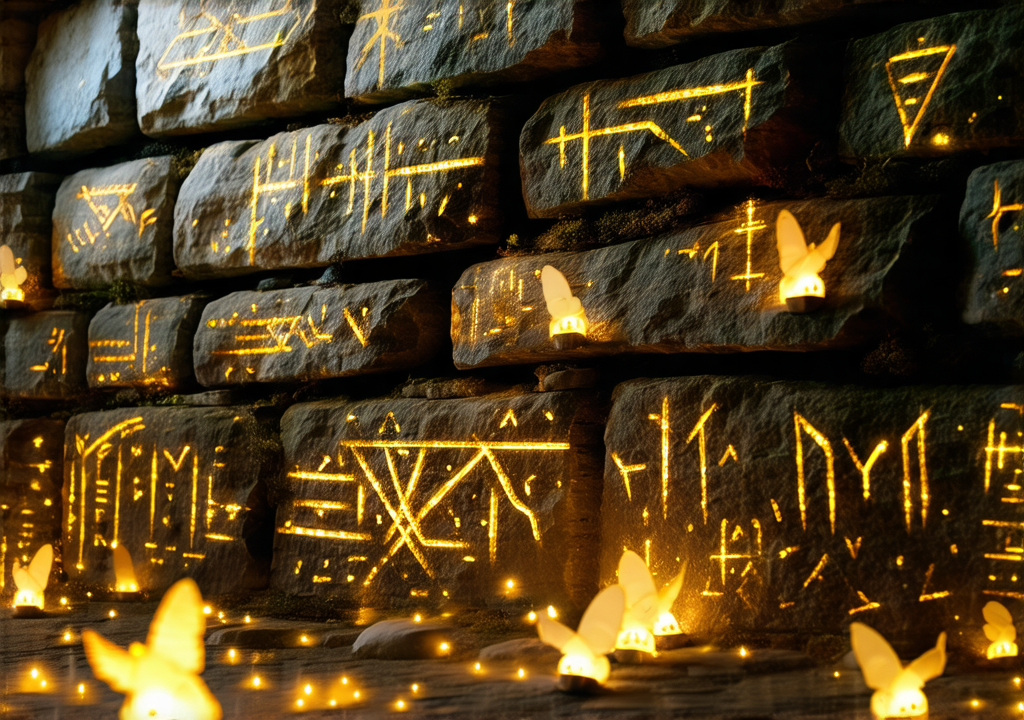
The Unseen World Has Been Trying to Communicate for Centuries
By Dr. Isolde Marlowe, Professor of Thanatic Sciences at the University of Crossings
Necromancy is not what you expect it to be. The layman thinks it involves graveyards and wailing spirits and dramatic cloaks billowing in wind. But true necromancy begins where those clichés end—in the quiet moment when one realizes that death, far from being an ending, is a threshold. Beyond it lies a vast and ongoing conversation with something profoundly alive.
The Unseen World Has Been Trying to Communicate for Centuries. We have merely been too deafened by our own assumptions to hear them.
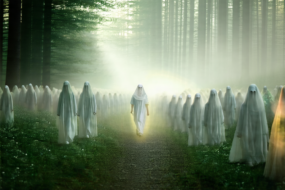
Consider this: every human who has ever lived remains somehow present in the world we occupy. Not as ghosts in the manner of Victorian literature—no, not as phantom apparitions drifting through walls like ectoplasmic phantoms—but rather as an ongoing presence, a resonance that continues to shape what is here even after what was has departed. The dead do not leave; they simply change their mode of communication.
The Nature of Necromantic Perception
Necromancy, at its most fundamental level, is the practice of developing sensitivity to these altered communications. It requires training much like learning a new language—only this language does not speak in words so much as it speaks in patterns of presence and absence, in the way light behaves differently near certain places, in the manner that one feels watched by something that has no eyes.
The practice dates back further than most people realize. Ancient Mesopotamian necromancers were channeling messages from the underworld through elaborate rituals involving blood sacrifice and bone-reading long before the first philosophers began speculating about souls. When Thoth instructed Hermes to observe carefully, he was instructing us in the fundamental practice of seeing what has been hidden by our insistence on believing that visible reality is the only reality.
Historical Evidence of Necromantic Tradition
Throughout history, civilizations across the world have developed their own versions of necromancy with remarkable independence from one another. The Chinese Lian Sheng practices allowed practitioners to converse with ancestors through carefully prepared spirit tablets; Egyptian necromancers used elaborate embalming procedures not merely to preserve bodies but to maintain a permanent connection between the living and the dead; Greek practitioners developed techniques involving blood circles that created spaces where the boundary between worlds thinned into transparency.
The Unseen World Has Been Trying to Communicate for Centuries, and we have only recently begun listening properly.
Modern Practice: The Living Language of Death
Contemporary necromancy has evolved significantly from its ancient roots. While traditional methods—bone reading, blood circles, spirit houses—are still practiced with care by dedicated practitioners, modern approaches draw on insights from both neuroscience and quantum theory to create entirely new frameworks for understanding what death accomplishes rather than what it terminates.
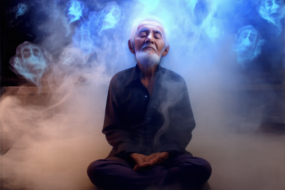
Necromancers today understand that consciousness does not simply dissipate upon the body’s failure but enters a kind of transition—partly localized near where the person died, partly dispersed into the wider world like heat from an extinguished flame. This is why so many cultures independently developed practices honoring the dead: they knew instinctively that something essential was still there, only waiting to be addressed properly.
The modern necromancer works with what I call “resonance mapping”—identifying patterns in physical spaces where death has occurred and learning to read the lingering emotional impressions as one might read topographic contours on a map. Each death leaves a signature; each signature contains information; and the information, when decoded properly, provides guidance that extends far beyond mere sentimentality.
Why Now? The Rising of Necromancy
What I find remarkable is how necromantic practice has suddenly become more accessible in recent decades, as if some fundamental shift has occurred in our collective sensitivity to the unseen world. Perhaps modern life itself—so thoroughly immersed in technology yet so desperate for meaning—has created conditions where the dead can finally be heard clearly. Or perhaps their waiting period was simply long enough: they have been patient through centuries of human self-absorption, and now the moment has arrived when we are ready to receive what they had to say.
The Unseen World Has Been Trying to Communicate for Centuries. I believe they have been waiting specifically for us to arrive at this exact moment—when our technology is sufficient to record their messages accurately and our scientific methods are mature enough to understand what those messages mean.
Conclusion: Death as Conversation
Necromancy teaches us that death is not an interruption but a continuation in a different key. The dead do not merely haunt; they instruct, advise, comfort, warn, love—and all of these activities continue uninterrupted by the simple fact that we have chosen to call them dead rather than alive.
The Unseen World Has Been Trying to Communicate for Centuries, and now at last, through the practice of necromancy, we are beginning to hear them. Listen closely. The conversation has been ongoing longer than you might expect, and it is far from over.












No Comments