


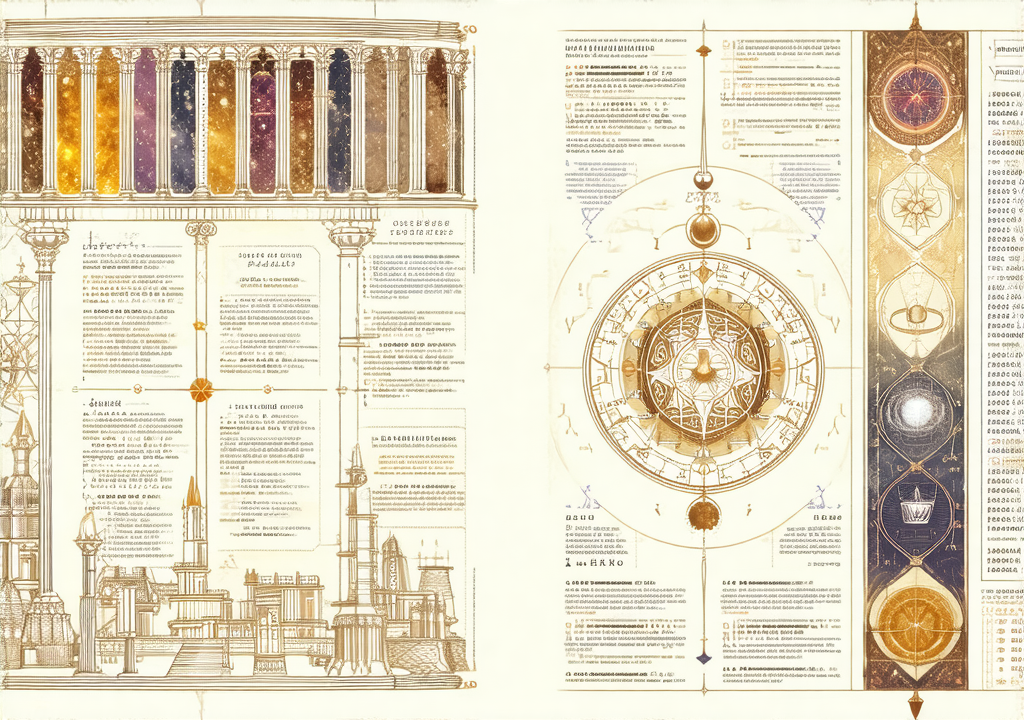
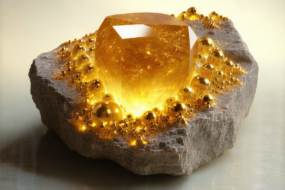
Alchemists have long maintained that beneath the veil of ordinary perception lies a hidden reality—a secret geography of substances where matter is not merely dead stuff to be shaped by force, but living matter capable of transformation itself. When practitioners speak of transmuting base metals into gold, they are not speaking simply of chemical substitution but of revealing what was always latent within—the divine essence that every substance carries in seed form until the proper art discerns it and draws it forth. This is why the work must be both meticulous and mystical: only through precise adherence to the inner laws may matter undergo its true transmutation, becoming not merely altered in appearance but fundamentally changed in kind.
The Hidden World of Matter
To understand what ancient sages meant when they spoke of “turning base matter into spirit,” one must first grasp their conviction that every substance is composed of multiple layers—the outer husk or primum esse through which matter appears to our senses, and the innermost kernel which contains its true essence. What we call lead, iron, copper, earth, water, air, fire: these are not static substances at all but merely different stages in an ongoing process of refinement. The ancients knew that beneath their particular appearances they share a common substance waiting to be purified and elevated through the proper arts.
A curious question arises here: if matter is fundamentally spiritual by nature, why does it appear so dense and limited? The answer given by those who studied this craft most carefully is that spirit has become trapped within matter just as a butterfly remains bound within its chrysalis. Transmutation is therefore not creation but discovery—the uncovering of what was always present, hidden in plain view.
What Ancient Seers Understood About Spirit
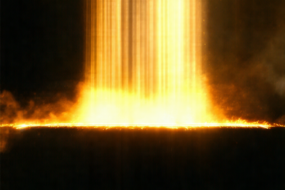
When the ancient seers spoke of turning base matter into spirit, they were referring to something far more precise than poetic fancy. They understood that there exists within all substance a latent spiritual essence—a subtle fire, or quintessence, as they called it—which holds the key to transmutation. This inner fire is not heat in any ordinary sense but rather an invisible principle of life and movement that has been subdued by matter’s outer shell until proper arts are applied to release it.
The seers recognized this substance as essentially identical with what we might call divine breath, a spark from the original creation that permeates all things though only rare minds possess the skill to perceive it. When they performed their work of transmutation, they were not creating something new but rather releasing this trapped spirit from its prison within base matter and recombining it in forms capable of supporting higher states of existence.
The Art of Transmutation
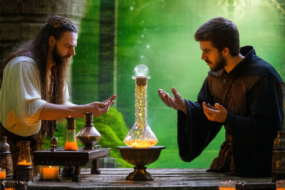
To turn base matter into spirit requires a process involving several distinct stages: purification, dissolution, multiplication, fermentation, and final transmutation. Each stage corresponds to particular substances and operations designed to remove the coarse elements from base matter while exposing its inner spiritual essence. Lead, for example—the most basic metal according to ancient thought—must first be purified of all impurities through repeated melting and filtering before it can begin its ascent toward divinity.
The art requires not only precise knowledge of which substances possess what properties but also exact timing in their operations. There are moments when the moon’s influence affects transmutation directly, hours during which certain preparations will succeed where others fail, seasons that favor particular stages over others. Ancient practitioners kept detailed records of these conditions and built entire systems around them.
What Makes Matter Spiritual?
The key to understanding why base matter becomes spirit lies in recognizing that spirit is not some foreign element added to matter but rather the hidden quality within matter itself—the inner fire, as I mentioned, which carries with it qualities such as lightness, purity, and immortality. When transmutation succeeds, what remains is matter transformed so thoroughly that it can no longer be distinguished from spirit: gold becomes the most perfect metal precisely because its structure mirrors this highest spiritual state.
This explains why alchemists described their work in terms both scientific and mystical—because they recognized at once that what they observed was simultaneously material change and something beyond material, a transformation of substance so complete that it seemed to transcend ordinary categories entirely.
The Enduring Legacy
What ancient seers knew when they spoke of turning base matter into spirit remains true today: beneath the surface appearances of things lies an infinite richness capable of endless refinement. Every substance carries within it not merely its particular character but also a spark of divinity waiting to be uncovered by those who possess both the knowledge and patience to find it. The art of transmutation is therefore not merely about producing gold or discovering new substances; it is about revealing what was always there, hidden in plain view, waiting only for someone skilled enough to recognize its true nature.












No Comments