


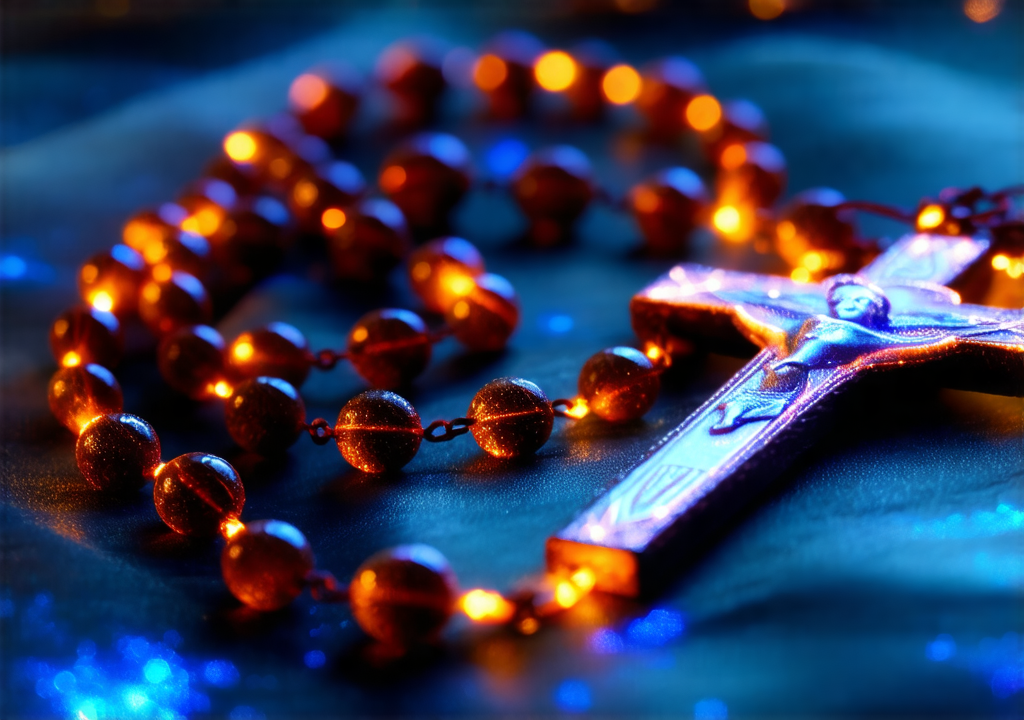
How A Simple Practice Changed My Life — And It Might Change Yours Too
I discovered that ancient Greek word—theourgia, or “divine work”—by accident, in a dusty library book about Neoplatonism. What I found was not just another philosophical system, but an actual practice: a way of communing with divine beings through deliberate ritual action, rather than mere petition.
Theurgy differs from prayer in crucial ways. Prayer asks gods to intervene; theurgy invites them near. Petition is a request; theurgy is a meeting. In Theurgy, we don’t merely speak to the divine—we create conditions for genuine encounter.
What Is Theurgic Prayer?
Etymology matters here: theos (god) + ergon (work). Not “divine speaking” or “divine listening,” but divine work. From Iamblichus’s 4th-century treatise On the Mysteries, we learn that Theurgy involves symbolic actions—sacramental gestures, invocations of divine names, contemplation of sacred images—that participate directly in the divine reality they represent.
Unlike ordinary prayer, which may express devotion or ask favors, Theurgic Prayer functions as a ladder: each rung elevates the practitioner toward actual union with the beings invoked.
Why This Matters Now
In our age of spiritual individualism and superficial religious practice, Theurgy offers something rare: a structured path to transcendence. It doesn’t require abandoning reason—it integrates it. It doesn’t demand blind faith—it transforms it into active participation. Most importantly, it recognizes that the divine is accessible here, not only in distant heaven or future life.
A Simple Practice that Changed My Life
Before Theurgy, I thought prayer was something one “did”—saying specific words at certain times, preferably with the right posture and attitude. Then I read about how the ancient practitioners prepared their minds, invoked divine names aloud, contemplated sacred images in meditation, and used physical gestures to align themselves with higher realities.
I tried it on a morning when everything seemed chaotic. Instead of asking God for something—asking was so passive—I sat quietly, recited sacred words I’d found in Iamblichus’s text, held a simple stone symbolizing divine presence, and contemplated what that presence meant. Something shifted.
Not dramatically—not a vision or voice from heaven—but a deep sense of connection, as if the veil between my inner world and outer reality had thinned briefly. The thought I’d been carrying around for days seemed to arrive from outside myself.
It’s simple practice now: five minutes each morning, ritual preparation before starting the day. It might seem trivial—truly trivial compared to some mystical practices—but that’s precisely its power. Small enough to do daily; profound enough to change how you relate to reality itself.
How to Practice Theurgic Prayer
Choose a time and place. Consistency matters more than grandeur. Ancient practitioners used early morning, when the mind is most receptive.
Prepare your environment. Light candles if you wish; hold something that represents divine presence—a stone, a symbol, an image. This isn’t superstition; it’s participation in sacramental reality.
Invoke by name and contemplation. Say sacred words aloud—not as formula, but as actual naming of the divine. Then sit in silence and contemplate what those names mean: not intellectually, but viscerally.
Use gestures physically. Raise hands if you wish; close your eyes or gaze at a symbol; these aren’t empty motions—they’re actions that draw divine presence down into your own being.
The Philosophical Foundation
Theurgic Prayer rests on Neoplatonic cosmology: the universe as hierarchical, extending from pure Intellect through soul to material body. Between human and divine exists not a gap but a bridge—what Plotinus called “the philosopher’s ladder,” each rung bringing one closer to genuine communion with beings higher than oneself.
Iamblichus taught that Theurgy transcends mere knowledge: it’s not enough to know about gods; one must become like them through actual practice. This is where Iamblichus diverges from earlier Neoplatonists: for him, theurgy works even without perfect philosophical understanding—so accessible that ordinary people can participate in divine life directly.
Why We Need It Today
Consider what we’ve lost: a sense of sacramental reality; the capacity to commune with beings beyond ourselves; practices structured for genuine transformation rather than mere habit.
Modern prayer often reduces to either petition (asking God for things) or meditation (finding peace). Theurgy offers both, but also something more: actual participation in divine action. It recognizes that divine beings are real and accessible—and that our relationship with them can be active, dynamic, and genuinely transformative.
Final Thoughts
The simplicity of the practice belies its depth. Five minutes each morning. Recite sacred words. Contemplate their meaning. Let something shift between you and whatever you call “God,” whether you name it deity, Logos, Brahman, or simply the deepest layer of reality.
I believe Theurgy is one of humanity’s most ancient practices—and also its most accessible. It requires no special beliefs, no particular religion, only willingness to engage with what lies beyond everyday consciousness.
How A Simple Practice Changed My Life — And It Might Change Yours Too.


















No Comments