


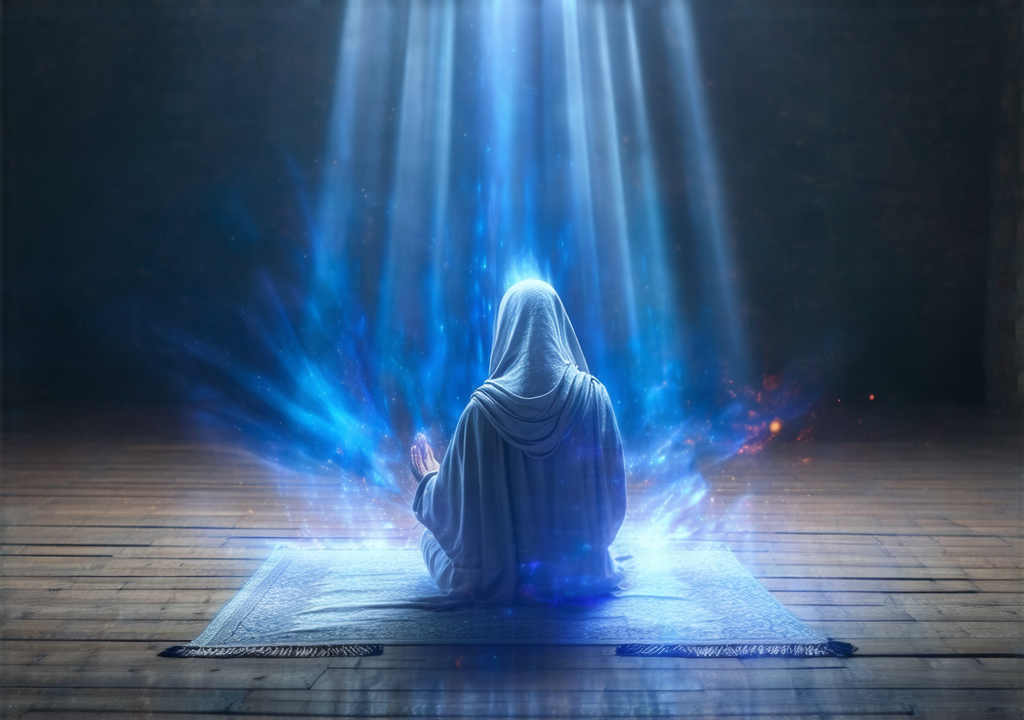
For centuries, the most powerful prayer method in Western tradition has been hiding in plain sight, disguised as something old-fashioned and unremarkable. Most people today have settled for a modern approach to prayer that feels efficient but lacks depth. They pray with their minds turned outward—petitioning God for things, listing requests, negotiating terms. But there is another way, one older than most Western churches, which has been quietly preserved by contemplative traditions: Theurgic Prayer.
The Distinction Between Prayer and Theurgy
To understand why this method is secretly superior, we must first distinguish between two kinds of prayer that have coexisted throughout the Christian East since antiquity. Prayer is what most people practice—talking to God from below, lifting up requests and supplications. Theurgy, however, comes from the Greek θεουργία (theourgia), meaning “divine work.” It is not merely asking but participating in divine life. Where prayer asks for blessings, Theurgy participates in them. Where prayer petitions, Theurgy becomes a medium of communion.
What Is the Old Method, Exactly?
The method we’re calling “old” traces back to Neoplatonic philosophy and was adopted by early Christian mystics like Pseudo-Dionysius, whose Celestial Hierarchy (circa 5th century) laid out a cosmology where prayer ascends through stages—from vocal petition to silent contemplation, from asking to becoming. This is not merely meditative relaxation or mindfulness with a Christian veneer. It is, rather, a disciplined ascent of consciousness that mirrors the ancient understanding of reality as an interconnected hierarchy: matter → soul → intellect → divine spirit.
How Modern Prayer Falls Short
Modern prayer tends toward transactional thinking. We approach God as if we are negotiating with a cosmic vending machine—insert faith, receive blessing. We list our requests, sometimes add a plea for forgiveness, and occasionally throw in some praise before concluding the performance. This is not wrong per se; it simply addresses only one dimension of what prayer can be.
By contrast, Theurgic Prayer does not merely communicate with God but aims to participate in divine life itself. It moves beyond petition to contemplation, beyond supplication to participation. It asks the soul to become what it already is in principle: a participant in divinity.
How Does This Old Method Work?
Traditionally, practitioners engaged in theoria—contemplation of divine realities—not as passive observation but as active participation. The early Christians understood that prayer was not simply words rising toward heaven; it was a channel through which heavenly grace descended into human consciousness. Prayer became liturgy (from λείτουργια, “public work”), and the individual participant in prayer was participating alongside angels, archangels, and cosmic powers.
The method involves several movements:
- Purification — turning inward, away from distraction
- Illumination — opening to divine presence
- Union — entering communion beyond words
These three stages correspond exactly to the ancient understanding of prayer not as a religious obligation but as an existential encounter.
Why Is This Old Method Secretly Better?
Because it addresses what modern life lacks most: depth. Modern prayer is often shallow—quick, efficient, and easily forgotten. Theurgic prayer lingers; it transforms. It does something to the one who prays, not just something for them. When you practice contemplative ascent, your mind changes shape as you pray—not through effort of will but through participation in divine reality itself.
The old method demands more at first—a commitment to silence, to presence, to stillness—but it yields more because it engages the soul’s deepest capacities rather than merely its surface requests.
The Practical Difference
If modern prayer is “God, please do X,” then Theurgic Prayer is “let me participate in the doing.” Where one remains outside looking in, the other draws near and becomes part of what it contemplates. This is not mystical theory alone; it is a practical method that anyone can adopt: begin each session with stillness, move from petition to contemplation, end in silence.
Conclusion
The ancient prayer method has been quietly superior all along because it does what only one thing can do—turn the soul toward God and back again, carrying divine life into human consciousness as a living reality rather than an abstract belief. This is why the old ways endure: they work not by force but by participation. And when you pray this way, you are no longer merely speaking words upward—you are participating in something far older than language itself.
















No Comments