



By Dr. Eleanor Voss
Clairvoyance — those mysterious, time-honored words carry deep resonance for seekers of hidden knowledge across cultures and centuries. Derived from French clair (clear) and voir (to see), the term captures precisely what this ancient art accomplishes: clear seeing beyond ordinary perception. Yet beyond its etymology lies a complex framework worth understanding in full, especially as modern practitioners seek to reconcile intuition with structure.
The Nature Of Clairvoyance
At its core, clairvoyance is not merely psychic sight but rather perception beyond the visible spectrum. While most people rely on their five senses — what we might call “ordinary perception” — a clairvoyant operates through an expanded channel of awareness that perceives events hidden from normal view. This extended perception can manifest in several distinct ways: visions, inner pictures, mental impressions, or even synesthetic experiences where sensory modalities blend together.
The historical record reveals practitioners throughout human civilization who developed this capacity independently. From the seers and prophets of ancient Greece to the shamans who communicated with invisible spirits across continents, clairvoyance appears consistently as a recognized ability. Yet what distinguishes true clairvoyance from mere imagination is something subtle: clarity, consistency, and specificity in perception. A genuine clairvoyant doesn’t merely see or feel things — they receive distinct impressions that can be verified through subsequent events.
Developing Clairvoyant Sight
For those seeking to cultivate their own clear-sight ability, several foundational methods exist. The most essential practice involves regular meditation on the third eye point, situated between the eyebrows and slightly above the center of the forehead. This area — traditionally called Ajna in Sanskrit traditions — serves as the primary locus for clairvoyant perception.
Begin by sitting comfortably, eyes closed or half-open, focusing gently on this inner point while breathing slowly and deeply. Through consistent practice over weeks and months, practitioners report experiencing subtle visual impressions: colored lights, geometric shapes, images of people or places, and occasionally brief flashes of understanding that seem to arrive unbidden from within.
Other practices include developing sensitivity through regular meditation, learning to discern between mental imagery and genuine clairvoyant impression, practicing “reading” on simple objects, and building a daily record of impressions received during meditation or quiet reflection.
The Three Primary Modes Of Clairvoyance
Clairvoyance manifests in three principal ways: visionary, perceptive, and intuitive.
Visionary clairvoyance involves actual visual images — literal pictures that appear in the mind’s eye as clearly as if one were looking at them directly. Perceptive clairvoyance operates through impressions of knowing without specific images; a practitioner might simply know that something is true or about to occur. Intuitive clairvoyance combines feeling and image, where emotional impressions accompany visual content.
Each mode has its own strengths. Visionary perception proves particularly valuable for artistic applications and detailed description; perceptive clarity excels in practical divination; intuitive sight offers rich contextual information alongside literal images.
The Clairvoyant’s Toolkit: Common Techniques
Several techniques serve practitioners as they develop their gifts. One of the most accessible is the Clairvoyant Journal, where practitioners record visions, impressions, and predictions over extended periods. This practice serves dual purposes: it builds consistency in perceiving and provides a reference for verifying genuine clairvoyant impressions against subsequent events.
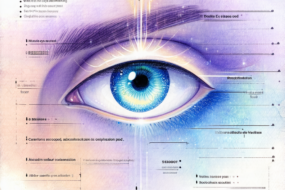
Another technique involves learning to distinguish between what we might call “inner seeing” versus external seeing. The inner eye — that subtle faculty of perception — operates independently from the physical eyes, capable of receiving information even when the physical eyes are closed or gazing elsewhere. Developing this capacity requires practice in quieting the mind’s constant chatter so that clearer impressions can surface.
Beyond these techniques, practitioners develop their clairvoyance through systematic application: regular meditation with specific intentions, practicing reading on objects (the art of “dowsing” with sight), learning to trust first impressions rather than second-guessing them, and developing sensitivity through exposure to subtle energies in daily life.
The Structure Of Clairvoyant Knowledge
Clairvoyance works best when practitioners understand its structure — not as random visions or disconnected insights but as a coherent system of perception that can be cultivated deliberately. The framework includes several essential components: the intention (what we seek to perceive), the receptivity (our capacity to receive impressions clearly), and the discernment (ability to distinguish genuine impressions from mental noise).
This triad forms what practitioners call “the complete framework” — a systematic approach that transforms raw psychic ability into reliable knowledge. Without intention, impressions lack direction; without receptivity, even true visions may be missed or dismissed; without discernment, practitioners cannot reliably differentiate genuine clairvoyant sight from ordinary imagination.
Practical Applications In Modern Life
Beyond the mystical realm of divination and prophecy, clairvoyance offers practical applications in daily life: making important decisions with greater clarity, perceiving hidden aspects of situations that ordinary perception misses, understanding the true nature of people and circumstances beyond surface appearances, and developing a deeper connection to one’s own inner wisdom.
Many contemporary practitioners find that clairvoyant sight enhances not only divination practices but also everyday perception — bringing heightened awareness to ordinary moments while maintaining clear-eyed objectivity about extraordinary ones.
Conclusion: The Art Of Seeing Clearly
Clairvoyance represents far more than a mystical gift; it embodies a sophisticated method of perceiving reality beyond the visible spectrum, offering clarity where others see confusion and insight where most perceive only surface phenomena. By understanding its nature, practicing its methods regularly, and applying them consistently, practitioners can develop genuine clairvoyant sight — clear-sight indeed.
The complete framework encompasses intention, receptivity, discernment, technique, and practice — all working together to transform latent psychic potential into reliable knowledge that serves seekers across their journey toward deeper understanding of both the world beyond ordinary perception and the world within.


Recent Post



Gallery






Featured Videos







No Comments