



By Dr. Isolde Thorne
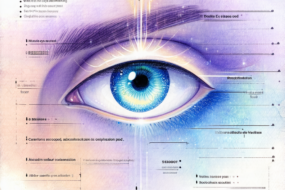
Clairvoyance, from the French clair (clear) and voir (to see), is not merely an ancient mystery—it is one of humanity’s most enduring capacities. While modern science clings to the visible spectrum of light, those who study clairvoyance understand that sight operates on a far broader canvas than mere photons passing through the lens of the eye.
The distinction between seeing and perceiving was first articulated by Socrates himself, yet it remains one of philosophy’s most neglected truths. When we say “I see,” do we refer to optical reception or internal comprehension? Are our eyes truly windows to the world, or merely instruments that feed data into a far more sophisticated interpretive apparatus within?
The Architecture of Clairvoyant Perception
What distinguishes clairvoyance from ordinary sight is not an additional organ but rather an expanded faculty. Every human possesses this capacity in dormant form; the difference between those who practice it and those who do lies not in possession but in cultivation. Consider how a trained musician hears what others miss—the faint harmonic overtones hidden within pure tones—or how a master gardener reads the health of plants by subtle changes in color, texture, and posture invisible to casual observers.
Clairvoyance operates similarly: it is attention sharpened into precision. The clairvoyant does not possess magical powers above or beyond those of ordinary humans; rather, she has refined her capacity for discernment until it becomes almost supernatural in its reach and scope.
Beyond the Visible Spectrum
The Greeks understood this well. Their oracle at Delphi did not merely observe but perceived—reading subtle signs in flames, interpreting visions that came not from outside but from within. The Pythia’s famous “I see” (θέω) was never about sight alone; it was about a sudden illumination, a kind of internal flash by which hidden truths became visible to the soul.
Modern experiments have confirmed what ancient practitioners knew: consciousness itself radiates outward in waves that intersect with other fields of existence—electromagnetic, quantum, and perhaps entirely beyond current physical description. Clairvoyance is not seeing into matter so much as perceiving the deeper strata upon which material reality rests.
Cultivating Clairvoyant Sight
The practice begins with silence—not merely absence of noise but a deliberate quieting of mental chatter. The ancient yogis called this dharana, single-pointed attention; the Greeks named it episteme; modern cognitive science calls it “flow.” Whatever name we give it, it is the condition from which clairvoyance arises: when thought slows and the mind becomes still enough to perceive what lies beyond thought.
Meditation is not preparation for clairvoyance so much as its foundation. But meditation alone is insufficient; one must also develop a receptive posture toward the unseen—a willingness to let impressions come without immediate judgment or categorization. This receptivity requires discipline: the ability to hold space for uncertainty, to allow images and feelings to arise before grasping them into meaning.
The Clairvoyant’s Discipline
Ancient practitioners understood that clairvoyance is not passive reception but active participation. They developed techniques for sharpening perception: visualization exercises, breathing practices, fasting, certain postures, even specific times of day when the veil between seen and unseen seemed thinnest. These were not superstitions but systematic methods for training attention itself.
The Chinese master knew that clarity requires stillness; the Greek philosopher understood that vision begins where thought ends; the modern scientist recognizes patterns invisible to casual observation. All point toward a single truth: perception is active, participatory, creative. The clairvoyant does not merely record what is there but participates in bringing it forth into conscious awareness.
Clairvoyance as Way of Being
Ultimately, clairvoyance is not something we possess but something we become. It requires willingness—willingness to see differently, to trust perception over habit, to allow the world to surprise us with its hidden dimensions. The great secret of clairvoyant practice is this: what you see depends upon how deeply you look.
As the ancient mystics knew and modern practitioners confirm: the veil between seen and unseen is far thinner than we suppose. What lies beyond our ordinary sight waits not in distant places but in deeper layers of attention, waiting only for us to quiet enough, still enough, open enough to receive it.


Recent Post



Gallery






Featured Videos







No Comments