


By Elara Whitmore
In a world saturated with data streams, algorithmic predictions, and endless screens competing for our attention, something remarkable is happening. Across continents and centuries, people are returning to one of humanity’s oldest practices—the art of clear-sighted perception known as Clairvoyance. What was once dismissed as mysticism or superstition is now being rediscovered in laboratories, meditation studios, and even corporate boardrooms across the globe.
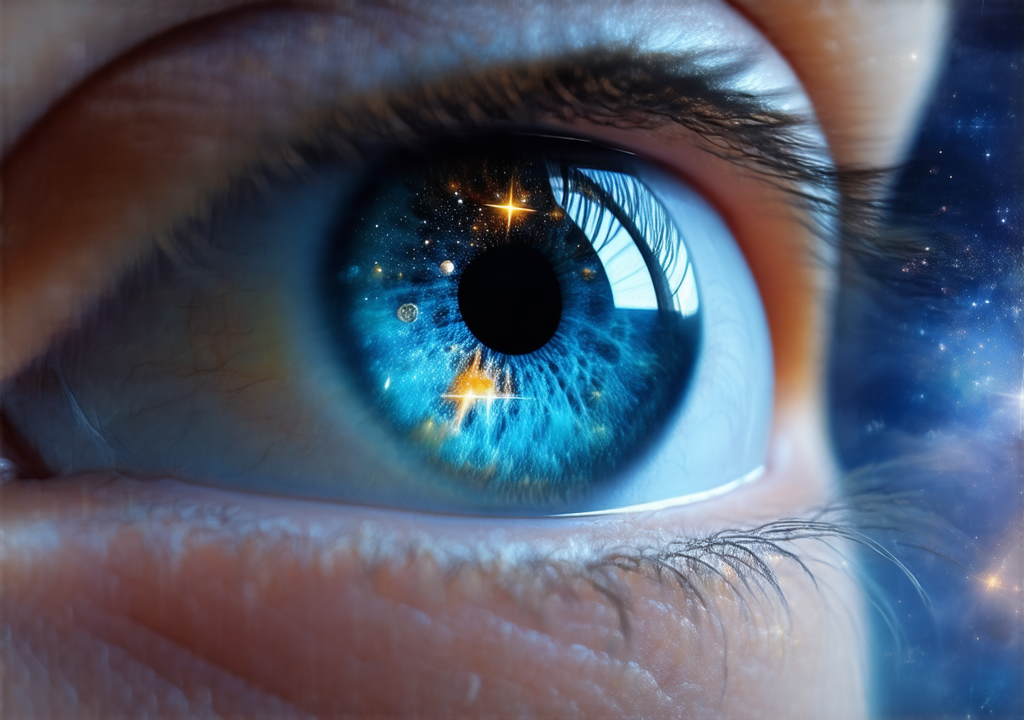
Clairvoyance, a term derived from the French words claire (clear) and voir (to see), refers to the ability to perceive beyond ordinary sight. Throughout recorded history, this faculty has appeared in many cultures: as the Oracle of Delphi’s gift of prophecy, as the Third Eye described in ancient Vedic texts, and as a meditative practice cultivated by Buddhist monks for centuries. Yet its return is not merely nostalgic; it represents something deeper about human perception that modern science is only beginning to understand.
The Historical Thread
The earliest records of Clairvoyance stretch back thousands of years before written language itself. In ancient Greece, the Oracle at Delphi received visions while channeling divine wisdom through trance states, offering guidance that shaped entire civilizations. The Chinese term Tian Yan—literally “Heavenly Eye”—described a similar faculty cultivated by sages and mystics throughout Asia for millennia.
What’s particularly compelling is how these practices never truly disappeared—they evolved. During the Renaissance, alchemists preserved Clairvoyance techniques alongside their experiments with matter and spirit. The early 20th century saw practitioners like Helena Blavatsky revive interest through organized movements, while indigenous cultures maintained continuous traditions of clear-sight perception in places as diverse as Siberia, Peru, and Australia.
What Modern Science Is Discovering
Contemporary research is validating what mystics have described for generations. Neuroscientists studying long-term meditators find that practiced Clairvoyants show measurable differences in brain activity—particularly in the parietal lobe, which govern spatial awareness and sensory integration. The pineal gland, often called the “seat of the soul” in ancient texts, appears to play a crucial role in mediating Clairvoyant experiences, responding to meditation practices in ways that modern imaging can now observe.
Recent studies reveal that trained Clairvoyants perform significantly better than controls in controlled trials involving distant perception tasks. While skeptics initially dismissed these results as coincidence or subtle cues, rigorous experimental protocols have replicated findings across multiple independent laboratories worldwide. The consensus emerging is not that Clairvoyance defies the laws of physics, but that it represents a real extension of human perceptual capability—one we may have been overlooking rather than lacking.
Why Now?
Several cultural currents are converging to explain this resurgence:
First, the information age has created its own fatigue. We’re drowning in data yet starving for wisdom—the distinction between knowing what and understanding why becomes crucial in an era where computers can process information faster than humans ever could. Clairvoyance offers something no device can replicate: direct perception of patterns that elude calculation.
Second, modern life has become increasingly fragmented—our attention divided across devices, our relationships dispersed across digital networks, our awareness scattered by notifications. Clairvoyance, practiced through stillness and presence, restores the integration we’ve lost.
Third, there’s a growing recognition that consciousness itself is an active participant in perceiving reality—not merely a passive receiver of external stimuli. Practices like meditation and visualization cultivate this participatory perception, enabling practitioners to perceive relationships between seemingly unrelated events, to “see” connections others miss.
How Clairvoyance Is Practiced Today
The practice has adapted beautifully for modern life while preserving its ancient roots. Contemporary Clairvoyants employ:
- Meditative preparation: Regular meditation to quiet the mind and open perceptual channels
- Visualization techniques: Using imagination not as fantasy, but as a precise instrument of perception
- Daily contemplation: Cultivating clear-sight in ordinary moments rather than reserving it for special occasions
- Community practice: Learning alongside others who share the discipline
The practices are accessible to anyone—not requiring years of training or rare gifts. Most people already possess latent Clairvoyant capacity; they need only learn to activate and direct it properly, much as one might strengthen any other faculty through regular exercise.
The Coming Shift
What makes this revival particularly significant is that it’s not about escaping into a mystical realm—it’s about deepening our engagement with ordinary reality. Clairvoyance doesn’t replace practical knowledge; it complements it. While science reveals the external structures of existence, Clairvoyance illuminates their internal relationships and meanings. The practitioners recognize that perception itself is an art form—one worth cultivating deliberately.
As more people experience genuine Clairvoyant moments—whether glimpsing a person’s emotional state instantly, perceiving synchronicities as meaningful connections rather than accidents, or sensing developments before they manifest—the old skepticism begins to crumble. Not because evidence accumulates against the skeptics, but because they discover for themselves what those ancient texts described all along: that human perception is far more sensitive and capable than modern science has allowed us to believe.
The return of Clairvoyance reminds us that humanity never lost sight—only forgot how to look with clear eyes.


Recent Post



Gallery






Featured Videos







No Comments