



By Dr. Eleanor Voss
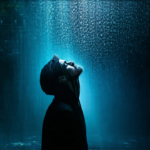
When a clairvoyant closes their eyes, they do not enter darkness as the rest of us do. Instead, they open themselves to a different kind of sight—one that operates outside the constraints of physical light and visible matter. The question we must ask is not whether these visions are real or imagined, but rather what specifically passes through their mind’s eye when ordinary vision fades from the picture entirely.
Beyond Physical Vision
The word “clairvoyance” comes from French: clair meaning clear and voyance meaning seeing. But this etymology hardly does justice to the phenomenon. When practitioners close their eyes, they often report perceiving scenes that are happening hundreds of miles away at any given moment—scenes without any physical light reaching them. They may see a loved one’s face in vivid detail while miles distant; they might glimpse an entire cityscape unfolding like an aerial photograph; or they could perceive the inner workings of a person as clearly as if peering through skin and bone.
The sensation itself is quite distinct from ordinary mental imagery. When you imagine a lemon, your mind constructs something approximating a lemon based on memory and expectation. But when a clairvoyant sees a vision, many report it arrives with an undeniable sense of external reality, as though the image exists independently in space before being perceived by the inner eye.
The Inner Eye Opens
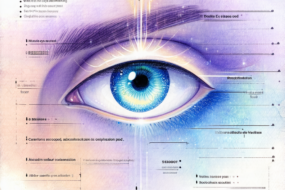
The process begins not with eyes closed but with attention turned inward. While most people’s gaze drifts outward when their eyes shut—catching stray thoughts, remembering recent events—the clairvoyant’s attention moves beyond immediate memory into a different order of perception entirely. It is as though the mind itself becomes transparent, revealing layers and patterns that were always present beneath ordinary sight but normally go unnoticed.
Many accounts describe this shift in spatial terms: where ordinary vision is directed outward along an axis running from eye to object, clairvoyant vision unfolds inward and outward simultaneously, radiating from some central point within consciousness. The practitioner does not see inside their own head so much as they perceive a field of awareness expanding beyond the boundaries of body and environment.
Common Types of Clairvoyant Sight
What do these practitioners report seeing when they close their eyes? Several patterns emerge across centuries of documented cases:
Remote Vision: Perhaps the most well-documented form, where distant scenes appear clearly—sometimes with remarkable precision regarding detail such as weather, clothing, or even specific objects in a room hundreds of miles away.
Astral Projection: Practitioners report feeling themselves float beyond physical boundaries, observing their own bodies from above while simultaneously perceiving environments that seem to exist in another dimension altogether.
Clairvoyant Reading: When practitioners focus on people, they may perceive not just external appearance but emotional states, character qualities, past events, and even future developments arranged like threads in a tapestry.
Symbolic Vision: Not everything appears as literal images. Many clairvoyants report seeing symbols—geometric patterns, letters, numbers, or abstract shapes—that carry meaning directly to the perceiving mind without any linguistic mediation.
Why Close Your Eyes?
A natural question follows: why should closing one’s eyes improve sight? The answer lies in understanding that ordinary vision is actually an obstruction as much as it is a help. Light enters through the eye, but the brain interprets signals from only what enters this specific channel. When eyes close, visual input diminishes—but attention remains active and can turn inward toward subtler phenomena.
The body does not become blind when eyes shut; rather, vision becomes unfiltered by external light’s overwhelming presence. The mind opens to receive impressions that would otherwise compete with ordinary sight for attention. Ancient observers noticed this clearly: sages and seers in every tradition developed practices of meditative closure—whether through eye-gazing, meditation upon dark space, or simply resting the eyes while keeping awareness alert.
Historical Testimonies
The practice stretches back millennia. In Vedic traditions, the inner eye (or ajna chakra) was regarded as a seat of higher perception. Early Christian mystics described visions that occurred during prayer and meditation with closed eyes. Islamic Sufis spoke of “the eye of the heart” (qalb), which sees what ordinary sight misses. Even modern scientific observers have documented cases where individuals reported seeing distant events in real-time before receiving any external report confirming them.
Conclusion: What Do They See?
What clairvoyants see when they close their eyes is not a single thing but many things, depending upon their focus and training. Some see physical scenes beyond the range of ordinary sight; others perceive non-physical realms or symbolic visions that carry deep meaning. The common thread is not what specifically appears but how it appears: with vivid clarity, unfiltered by ordinary visual constraints, often arriving without warning as if stepping through a doorway from one world into another.
The eyes close, and the inner eye opens.


Recent Post


Gallery






Featured Videos







No Comments