



By Alistair Thornfield
The human eye is a remarkable instrument, yet it perceives only a narrow slice of reality—a sliver of light between the ultraviolet and infrared that our ancestors might have called ordinary. But beyond this mundane threshold lies a vast landscape of impressions, symbols, and truths waiting to be seen by those who awaken their inner sight.
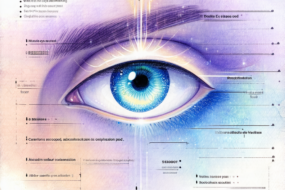
Clairvoyance—the clear seeing—is perhaps humanity’s oldest form of perception. Ancient seers gazed into flames, water, and stars; modern practitioners develop it through meditation, dream work, and intentional practice. Whatever the method, the result is the same: a window opens behind the eyes, revealing a world that was always there, merely waiting for us to notice.
The Anatomy of Clairvoyance
Clairvoyance is not mystical magic divorced from reality; rather, it is a refinement of ordinary perception—a tuning of faculties so subtle that even practitioners often fail to distinguish where sight ends and knowing begins.
The clairvoyant perceives images in the mind’s eye with an immediacy rivaling physical sight. These visions may appear as flashes of insight during meditation, as symbols in dreams, or as spontaneous knowledge that seems to arrive fully formed from beyond thought itself. What makes these perceptions truly clairvoyant is their independence from sensory input: they occur when the external senses are quiet, either through deep relaxation or deliberate withdrawal.
Developing Clear-Sight
The path from darkness to clear-sight begins with stillness. Before one can see clearly, one must first become still enough to perceive at all. Modern life offers little respite from its constant visual and informational bombardment—yet this is precisely why the practice of inner sight matters more now than ever.
Meditation remains the most accessible gateway to clairvoyance. Sit in silence each morning for fifteen minutes, gently directing your gaze toward a single point between the eyebrows while softening your attention into receptivity rather than active seeing. When you begin—perhaps within days or weeks—you’ll notice images appearing: shapes, colors, perhaps even faces and symbols that carry meaning though you cannot yet name them.
Dream recall serves as another powerful training ground. Keep a journal beside your bed; upon waking, record whatever fragments remain, however incomplete they may be. Over time, dream visions will become more vivid, and eventually you’ll begin to recognize certain images across nights—a particular symbol recurring with increasing clarity, like a message repeated by the subconscious mind until it finds its way into waking consciousness.
Visionary reading offers yet another path: lying in silence with eyes closed while someone reads from an open book or rolls of paper selected at random. The clairvoyant’s role is not to interpret but simply to receive whatever images arise spontaneously during the reading, allowing them to appear fully before turning their attention back outward.
Why Clairvoyance Matters Today
In an age drowning in information yet starving for wisdom, clairvoyance offers something fundamentally different: knowledge that arrives directly rather than being assembled from external sources. It is knowledge not constructed by thought but perceived as one perceives light—immediately, without reasoning required.
The gift itself does not require any special talent beyond willingness to pay attention. Every person possesses some degree of clairvoyant capacity; the difference between those who use it and those who do not lies simply in practice and cultivation.
The Journey Ahead
Perhaps most compelling is how this inner sight develops—not as a sudden revelation but as an ongoing journey from darkness into clarity, with each moment offering another opportunity to see what was always present just beyond ordinary perception.
Those who walk this path find themselves increasingly comfortable holding mystery without needing answers immediately. They learn that clear-sight does not mean having all the questions resolved; it means being able to perceive more clearly than before—to distinguish truth from illusion, signal from noise, essence from accident.
From Darkness into Clear-Sight: this is where our work begins and where it continues, day by day, until even ordinary moments are touched with something extraordinary.


Recent Post



Gallery






Featured Videos







No Comments