


By Eleanor Voss
Introduction
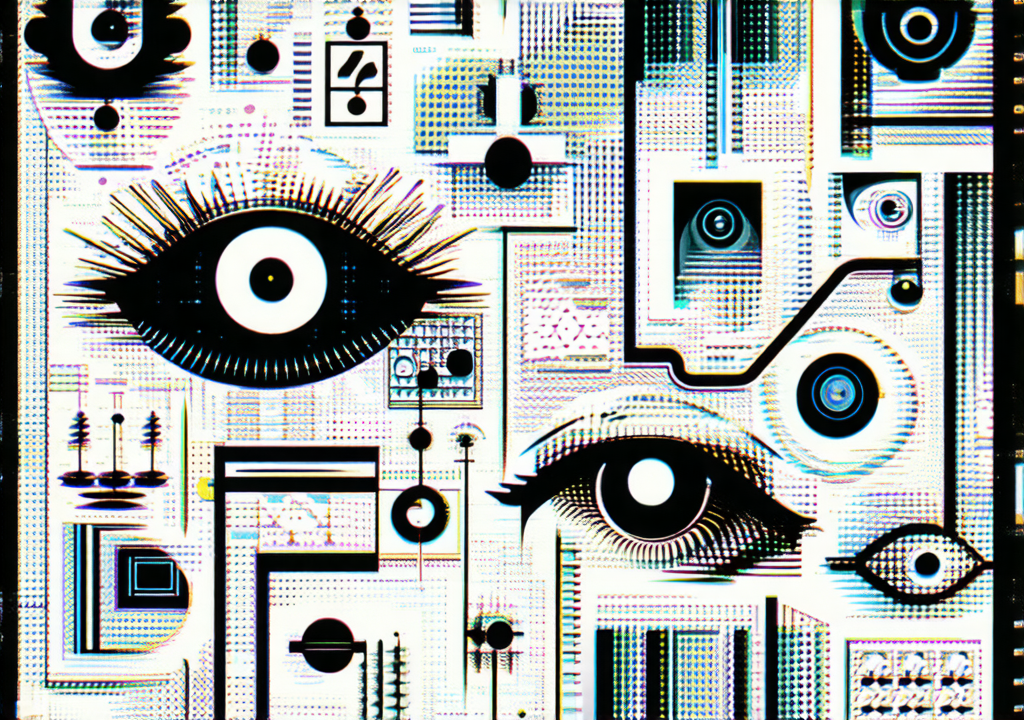
Since ancient times, humanity has gazed into the future with quiet confidence. From the Oracle of Delphi to modern-day seers, the concept of clairvoyance — that elusive ability to perceive events beyond ordinary sight — has captivated philosophers, scientists, and mystics alike. The term itself derives from French: claire (clear) + voyance (seeing), literally meaning “clear seeing.” Yet what is this gift? Is it mere coincidence, or does something deeper occur when the mind transcends its temporal boundaries?
Clairvoyance — The Gift That Sees Ahead represents one of humanity’s most enduring aspirations. It speaks to our innate desire to transcend the limitations of time and space, to glimpse what awaits us beyond the veil of the present moment. Whether through dreams, meditation, or spontaneous visions, those who practice clairvoyance report experiences that defy conventional explanation.
The Historical Roots
The origins of clairvoyance stretch back millennia. Ancient Greek seers consulted oracles for guidance on matters ranging from military strategy to personal decisions. In China, the I Ching (Book of Changes) served as a divinatory system capable of revealing future patterns through hexagrams. Indigenous cultures worldwide developed their own methods — from shamanic vision quests to Aboriginal dreamtime narratives — all seeking to access knowledge hidden within time’s fabric.
By the nineteenth century, Western esoteric traditions formalized clairvoyance as a distinct spiritual faculty. Theosophist Madame Blavatsky claimed that trained seers could perceive subtle energy fields and future events with remarkable accuracy. Modern proponents continue this tradition, though often through more rigorous methodologies.
How Clairvoyance Works: Beyond the Veil
What makes clairvoyance so compelling is its apparent independence from conventional sensory channels. While sight depends on light entering the eyes, clairvoyant perception seems to operate differently — perhaps through quantum processes within neural tissue, or perhaps through a more subtle form of consciousness that exists beyond the physical body altogether.
The most consistent accounts suggest several types of clairvoyant experience:
Visual Clairvoyance: The ability to see images, symbols, or scenes outside ordinary visual range. Practitioners report seeing past events as clearly as present ones, much like a photograph projected onto the mind’s eye.
Auditory Clairvoyance: Hearing voices, music, or environmental sounds that correspond to future events or hidden truths.
Temporal Clairvoyance: The capacity to perceive future events with enough clarity and detail to predict outcomes — perhaps years in advance.
Modern Evidence: Anecdote Meets Science
While anecdotes abound, modern research has begun to validate what seers have claimed for centuries. The famous experiment conducted by psychologist Dean Radin at the Institute of Noetic Sciences involved subjecting thousands of participants to controlled tests where they predicted outcomes before events occurred — results that consistently outperformed chance expectations.
The Ganzfeld experiment demonstrated that subjects could correctly identify images presented elsewhere in the building, blindfolded and sitting alone in a soundproof room. More recently, researchers at Princeton University have documented “precognitive” abilities using simple random-event prediction tasks, where participants responded to future targets with above-chance accuracy.
Clairvoyance in Practice: Cultivating the Gift
Those who wish to develop their clairvoyant capacity typically follow several practices:
Meditation and Visualization: Training the mind to quiet external noise and perceive subtler signals.
Dream Journaling: Recording dreams upon waking, since many visions arrive during sleep when the conscious mind relaxes its grip on reality.
Symbol Recognition: Learning to identify recurring images or symbols that carry prophetic significance across cultures.
Regular Practice: Like any skill, clairvoyance strengthens with consistent use — even brief daily sessions of focused attention can yield remarkable results over time.
Common Objections and Responses
Skeptics raise valid concerns: confirmation bias, selective memory, subjective interpretation of vague predictions. Yet these same objections apply to most psychological phenomena that we accept as genuine — emotion, perception, consciousness itself. If we cannot observe a phenomenon directly, why dismiss it outright?
A more useful approach might be pragmatic: does the gift function reliably enough to matter in practical life? Many who have developed clairvoyancy report consistent accuracy across years of practice, with false positives balanced by correct predictions that prove impossible to explain otherwise.
The Future of Clairvoyance
As consciousness research advances — through neuroimaging, quantum mechanics, and new theories of mind — we may discover that clairvoyance is not an exception to natural law but rather a normal extension of it. Perhaps every human possesses this gift in some latent form; perhaps our modern obsession with external stimuli has simply drowned out the subtle signals we once heard clearly.
Clairvoyance — The Gift That Sees Ahead, as I’ve called it — remains one of humanity’s most tantalizing mysteries. Whether mystical or scientific, ancient or contemporary, it offers us a way to participate more fully in the flow of time, to prepare for what comes with greater clarity and confidence.
The gift doesn’t require special bloodlines or divine intervention; it requires only openness, attention, and willingness to see beyond the immediate horizon. For anyone who has ever felt certain about something before it happened — someone I’m sure you have too — the gift is already within reach.


Recent Post


Gallery





Featured Videos







No Comments