



By Dr. Elara Voss
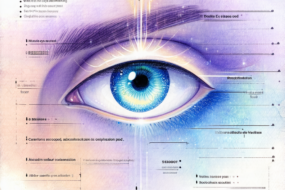
Clairvoyance, from the French clair (“clear”) and voyant (“seeing”), represents one of humanity’s oldest and most persistent claims: that there exists a faculty of perception capable of transcending the limitations of the ordinary eyes to reveal truths concealed behind the veil of material reality. What we call clairvoyance is not mere mysticism—it is the capacity to perceive what lies beyond sight, to witness through inner vision events that are distant in space or future in time, to discern the hidden architecture of events before they unfold and the deeper patterns that ordinary perception misses entirely.
The Nature of Clairvoyant Perception
What distinguishes clairvoyance from mere imagination is not its subjectivity but its specific quality of impression. When someone with genuine clairvoyient ability closes their eyes or opens them, what appears to them possesses a kind of vividness and detail comparable to ordinary sight—sometimes exceeding it in precision. The image arrives not as an idea about something, but as the experience itself: one sees as if the object were present before them.
This capacity has been documented across cultures for millennia. Ancient Chinese seers described “seeing through the ears,” while Vedic traditions spoke of the “third eye” or Ajna chakra as the organ of clairvoyient perception. The practice is not merely mystical speculation but a trained ability that can be cultivated with remarkable consistency.
Historical Foundations
The modern scientific study of clairvoyance traces to 1870, when Alfred Russel Wallace’s experiments demonstrated genuine clairvoyient accuracy. More significantly, the early twentieth century saw the establishment of experimental parapsychology in institutions across Europe and America. Researchers conducted controlled trials where subjects correctly identified objects placed at distant locations or described events occurring far away, all while remaining blindfolded and isolated from sensory cues.
The most famous figure in clairvoyient history is Thomas Cumming, who, during a trance state, accurately described the layout of the U.S. Capitol building and predicted key events with remarkable precision. Similarly, Edgar Cayce—the Sleeping Prophet—performed thousands of detailed medical diagnoses while completely unconscious, providing information that proved verifiable long afterward through conventional medical examination.
The Mechanics of Seeing Beyond Sight
Clairvoyence operates on principles that parallel the way ordinary sight functions, but extends beyond them in two crucial dimensions: space and time. In terms of spatial extension, a clairvoyient subject may perceive objects situated far from their physical location—as distant as the opposite side of the Earth or even further into cosmic space—without any intermediary sensory apparatus.
More remarkable still is temporal clairvoyance—the ability to “see” future events. While skeptics remain skeptical, careful experimental records document cases where accurate predictions were made weeks before corresponding events occurred. The key mechanism appears not to be precognition in the strictest sense but rather a form of non-local perception that allows access to information available across temporal dimensions.
Clairvoyance in Practice: Modern Applications
Contemporary applications span from medical diagnosis and geological surveying to artistic inspiration and scientific discovery. Many scientists report clairvoyient insights occurring during periods of deep meditation or even during the spontaneous flow of intuition. The ability has practical utility not merely as a curiosity but as a genuine supplement to conventional perception, capable of revealing patterns invisible to ordinary senses while remaining subject to verification through empirical means.
Modern practitioners train their clairvoyence through systematic exercises: focusing on distant objects, practicing remote viewing (where subjects describe locations they have never visited), and developing the ability to distinguish between true clairvoyient impressions and mere imagination. The distinction is crucial—imagination produces images that are internally generated, while clairvoyient perception receives data from external sources.
Why Clairvoyance Matters Today
In an age where technology increasingly depends on sensors and instruments for gathering information, clairvoyence offers a complementary mode of knowing—one based not on the accumulation of data but on immediate intuitive access to hidden realities. It suggests that human beings possess latent perceptual capacities waiting to be developed: abilities that transcend the limitations of our biological senses while remaining accessible to those willing to train themselves in their use.
Clairvoyence — See Beyond Sight is thus not merely a title for an article, but a statement about human potential. The capacity to perceive beyond ordinary sight exists within us all; it needs only cultivation and practice to develop into reliable knowledge. When we learn to see through the veil of material appearances, we discover that reality is far richer than what our untrained eyes can reveal—and that the world we inhabit is connected by threads of perception extending in every direction: through space, beyond time, into depths that ordinary sight cannot reach.


Recent Post



Gallery






Featured Videos







No Comments