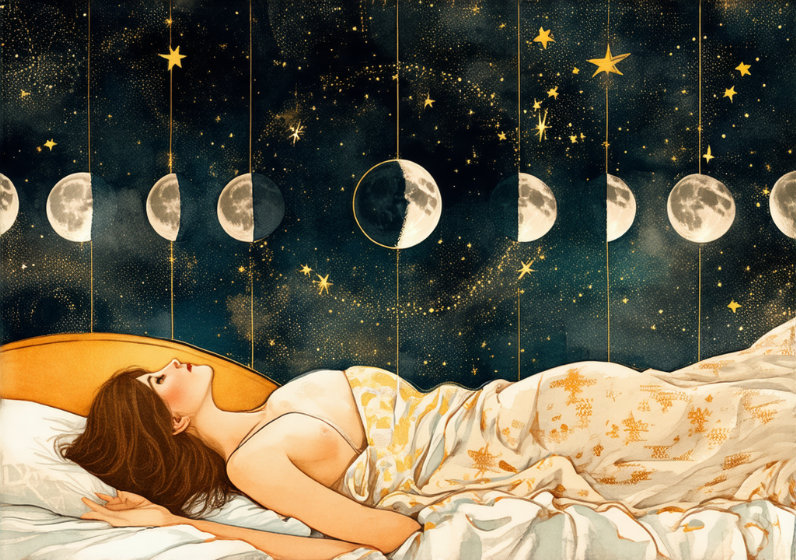
Writing Your Own Clairaudient Grimoire: A Step-by-Step Framework
🕯️ The Listening Archive: A Practical Ritual for the Clairaudient Writer
There is a peculiar silence that lives at the edge of perception. It is not empty, nor is it quiet in the way a library or a snowfield is quiet. Instead, it hums with a low-frequency vibration, a subliminal chorus of voices, words, and intonations that most people filter out as noise. To the clairaudient practitioner, however, this silence is a room filled with conversation. It is a crowded salon where the walls are made of ether, and every surface whispers.
Writing one’s own clairaudient grimoire is not merely an act of record-keeping; it is an architectural project for the soul. In traditional occultism, a grimoire is a book of spells—a collection of formulas, invocations, and rituals used to command spiritual forces. But for the clairaudient, the grimoire becomes something more intimate: it is a codex of listening. It is the place where you document not just what you hear, but how you hear it, why certain frequencies resonate with your particular nervous system, and how to translate that auditory spirit work into tangible reality.
Many practitioners make the mistake of thinking that clairaudience is a passive gift—that one simply stands still and waits for the voice to arrive. This is only half-true. While the reception of sound requires a degree of passivity, the integration of that sound requires immense active labor. The grimoire is the bridge between the two. It is where the ephemeral becomes concrete, where the whisper becomes a written word, and where the intuitive hunch becomes a tested formula.
This framework for creating your personal listening archive is designed to be practical, structured, and deeply respectful of the metaphysical nature of the craft. It assumes that you already possess a baseline ability to hear subtle auditory phenomena—whether that be clear verbal messages from spirits, environmental sounds that seem to carry symbolic weight, or internal voices that feel distinct from your own ego-voice. If you are still in the early stages of developing this sense, treat this framework as a training journal; if you are experienced, treat it as a systematization tool.
I. Defining the Acoustic Personality
Before you write a single line about the voices you hear, you must understand your own auditory signature. Just as some mediums work primarily with images (clairsentience or clairvoyance) and others with emotions (empathy), clairaudients have distinct preferences in how they process sound. Your grimoire should begin with a self-assessment that maps out your specific acoustic personality.
Ask yourself the following questions:
Verbal vs. Non-Verbal: Do you primarily hear words? Sentences? Or do you hear tones, hums, knocks, and rhythmic patterns that communicate meaning without language? A "word-centric" listener focuses on transcripting dialogue. A "tone-centric" listener focuses on capturing the emotional texture of sound waves.
Internal vs. External: Do the voices feel like they are coming from outside your head (like someone speaking in another room) or do they feel like a thought forming behind your eyes? This distinction is crucial for ritual work, as external sounds often require different "containment" rituals than internal ones.
Frequency Range: Are you more sensitive to high-pitched, sharp, urgent communications? Or are you drawn to low, rumbling, slow-paced voices? Some clairaudients act as "radio towers," picking up a wide band of frequencies; others are like tuned forks, resonating only with specific vibrational matches.
Write this section first. It is the foundation of your grimoire. For example:
"My hearing is predominantly verbal and external. I tend to hear clear English sentences that feel like they originate from just behind my left ear. I struggle with low-frequency rumbles, which often overwhelm me and require grounding before I can process them."
This self-knowledge allows you to design rituals specifically for your needs. If you are overwhelmed by noise, your grimoire will include more silence-building rituals. If you miss subtle whispers, it will include amplification techniques.
II. The Material Components of the Grimoire
A grimoire is a physical object (or at least a dedicated digital space). It should feel special but not so precious that you are afraid to dirty its pages with ink and tears. Consider the following elements:
The Book: Choose a notebook or journal that feels comfortable in your hands. Leather-bound journals tend to hold static energy well, which can be beneficial for protecting the writer from energetic bleed-over. Paperbacks are more casual and may feel less "formal," which can help if you find yourself becoming too stiff during listening sessions. The pages should be large enough to allow space for diagrams, sound-wave sketches, or marginalia.
The Ink: Use an ink that resonates with your intention. Black ink is traditional, neutral, and grounding. Blue ink suggests communication and truth. Green ink can signify growth and healing. Red ink may be used for urgent matters or protective bindings. Some practitioners use different colors to denote different sources of the voice (e.g., red for ancestral spirits, blue for angelic guides, gold for higher self).
The Pen: A fountain pen requires a reservoir of water and stillness; it forces you to slow down. A mechanical pencil is precise and cold. Choose based on whether your listening practice is fluid or structured.
The Environment: Your grimoire should have a designated place. It does not need to be in a temple, but it should not be kept in a drawer with receipts and bills. Give it a shelf, a box, or a dedicated corner of your desk. This creates a "psychic boundary" where the object is recognized as a tool for work, not just storage.
III. The Structure of Entry: A Standard Template
Consistency is key to any grimoire. If you use different formats every time, reviewing your work becomes a chore rather than a resource. Create a standard template that you can copy into each new page or chapter. Here is a recommended structure for clairaudient entries:
1. The Header
Date and Time: Precision matters in spirit work. Spirits often communicate at specific times—dawn, dusk, midnight. Recording the exact time helps identify patterns.
Location: Where were you physically? Home, workplace, transit, nature?
State of Mind: Briefly note your emotional state before listening began. Were you calm? Anxious? Tired? This provides context for how clear or distorted the message might have been.
2. The Session Log
This is the core of the entry. Do not filter, edit, or "improve" the words as they come to you. Write exactly what you hear or feel. Use brackets [like this] if a word is unclear or if your intuition suggests a word that wasn't spoken but was felt.
Example:
"The voice came in low and slow. It said: 'The key is not in the door, but in the hand.' I felt a sensation of cold air moving through my chest. Then it shifted to a brighter tone: 'Look at what you have discarded.'"
3. The Sensory Map
Clairaudience rarely exists in isolation. It almost always comes with somatic (body) or visual cues. Document these:
Somatic: Where did you feel the sound? A ringing in the ears? A vibration in the throat? A pressure in the temple?
Visual: Did you see flashes of light, colors, or images while listening? Even if they were fleeting.
Olfactory/Gustatory: Some listeners report tasting metal, smoke, or flowers when receiving messages.
4. The Interpretation
This is where you move from reception to integration. What does this message mean in the context of your current life? Do not force an interpretation if it doesn't make sense yet. Write: "Waiting for clarity." Often, the meaning of a clairaudient message unfolds over days or weeks as your life circumstances change. This section is living; revisit it later.
5. The Ritual Response
How did you respond to the message? Did you perform a small ritual? Light a candle? Offer water? Write a letter? Speak an affirmation? Documenting your action closes the loop between spirit and self. It transforms the message from passive data into active magic.
IV. Categorizing Your Voices: The Taxonomy of Sound
As your grimoire grows, you will realize that not all sounds are created equal. You need a system for categorizing what you hear so that you can distinguish between different "types" of clairaudient input. Here is a practical taxonomy you can adapt:
1. The Verbal Channel
These are clear words and sentences. They may come from specific entities (ancestors, guides, departed friends) or from the collective unconscious. These messages often address specific situations in your life—questions you have been asking, decisions you need to make, warnings about upcoming events.
Sub-category: Direct Address. The voice speaks "to" you.
Sub-category eavesdropping. You hear a conversation between two or more entities that is not directed at you but reveals information relevant to your path.
2. The Resonant Channel
These are non-verbal sounds that carry meaning through tone, rhythm, and quality. This includes:
Tones: Humming, chanting, singing. These often relate to emotional states or energy fields. A low hum might indicate stability; a high, sharp tone might indicate alertness or anxiety in the spirit realm.
Rhythms: Knocks, taps, bells. These are often used as confirmations. If you ask a question and then hear three distinct knocks, it is likely an affirmative answer.
3. The Environmental Channel
This is where clairaudience blends with environmental listening. You might hear a bird singing in a specific pattern that feels symbolic. You might hear the wind moving through trees in a way that spells out a word or phrase. This channel requires a strong connection to nature and intuition. It is the most subtle form of clairaudience and often requires the longest period of practice to master.
4. The Internal Channel
These are "thought-voices" that feel distinct from your own ego. They may offer wisdom, correction, or comfort. Distinguishing these from your own inner critic is a common challenge. A good rule of thumb: Your ego voice tends to be judgmental, fearful, and urgent. The internal spiritual voice tends to be calm, observational, and patient.
Create index tabs in your grimoire for each of these channels. As you add entries, tag them with the appropriate category. This allows you to look back and see which channel is most active on certain days or seasons. You might find that the Resonant Channel is more active during new moons, or that the Verbal Channel dominates during times of major life transitions.
V. Rituals for Preparation and Closure
A grimoire is not just a book; it is a ritual object. Using it requires preparation (opening) and conclusion (closing). These rituals help you enter a receptive state and protect your energy after the session.
The Opening Ritual
Before you begin listening, perform a simple grounding and clearing ritual:
Cleanse the Space: Use sage, palo santo, or sound (bells, singing bowls) to clear residual energies in your working area.
Ground Yourself: Stand barefoot on the earth if possible, or visualize roots growing from your feet into the soil. Breathe deeply for five minutes.
Invoke Protection: Light a candle and state your intention: "I open my ears to truth and clarity. I invite only helpful voices to speak. I set aside my ego, my fears, and my desires."
Prepare the Grimoire: Open the book to a blank page. Hold it in your hands and feel its weight. Say: "This page is ready to receive. Write what comes. Filter nothing."
The Closing Ritual
After you have finished writing your entry, do not simply close the book and walk away. Transition gently back into daily life:
Seal the Work: Read through your entry once to ensure it captures your intent.
Thank the Sources: Acknowledge the voices or energies that communicated with you. Say: "Thank you for sharing. I will reflect on this and act as needed."
Ground Again: Take three deep breaths. Stretch your body. Drink a glass of water to help metabolize the energetic exchange.
Store the Grimoire: Close the book gently. Place it in its designated spot. If you used a candle, let it burn down or extinguish it carefully.
VI. Maintenance and Review: The Living Grimoire
A grimoire is not a static document. It needs to be tended like a garden. Here are best practices for maintaining your listening archive:
1. Monthly Reflection
Set aside time once a month to review your entries from the past four weeks. Look for patterns:
Are certain themes repeating? (e.g., messages about career, relationships, health)
Which channel is most active?
How accurate were the messages? Did predictions come true?
What emotions dominated during sessions?
Write a brief "Monthly Summary" at the end of each month's entries. This summary will help you see the macro-trends in your clairaudient work, which are often missed when looking only at individual entries.
2. Annotate and Cross-Reference
As your grimoire grows, you will start to see connections between entries from months or years apart. Use a pencil (so it can be erased if needed) to draw lines connecting related entries. Add marginal notes like "See entry from March 14, 2023—same voice, different context."
3. Update Your Acoustic Personality
Your hearing ability evolves over time. Revisit your "Acoustic Personality" section every six months or year. You may find that your sensitivity has shifted, new channels have opened, or old ones have closed. Update the description to reflect your current state.
4. Protect the Grimoire
Treat your grimoire as a private document. It contains intimate details of your spiritual life and personal struggles. Do not share it casually with others unless you are in a trusted circle of practitioners. If you lend it, ensure the reader understands its sacred nature. Some practitioners believe that a grimoire should be read only by its owner, as it is a direct channel to their unique spiritual connection.
VII. Common Pitfalls and How to Avoid Them
Even experienced clairaudients fall into traps. Here are some common mistakes in maintaining a listening grimoire:
1. Over-Interpreting
Pitfall: You hear a vague message like "be careful" and immediately assume it means you should cancel a trip, even though there is no specific danger present.
Solution: Stick to the facts in your entry. Write what was said, not what you think it implies. Let interpretation develop over time.
2. Ego-Filtering
Pitfall: You hear a message that contradicts your beliefs or desires, so you subconsciously edit the words to make them more comfortable.
Solution: Write quickly and without pause. Use a shorthand system if necessary. Trust that the voice is speaking, not you.
3. Neglecting Somatic Cues
Pitfall: You focus only on the verbal content and ignore the physical sensations accompanying the message.
Solution: Make the "Sensory Map" section mandatory in your template. The body often knows more than the mind.
4. Inconsistent Practice
Pitfall: You work intensely for a week, then stop for a month due to life circumstances. When you return, your sensitivity feels duller.
Solution: Treat grimoire keeping as a daily or weekly habit, even if the session is short. Consistency builds and maintains neural pathways for clairaudience.
5. Treating It as Static
Pitfall: You write an entry once and never look at it again.
Solution: Commit to regular review cycles (monthly/yearly). The grimoire is a tool for insight, not just storage.
VIII. Advanced Techniques: Deepening the Practice
Once you have mastered the basics of recording your experiences, you can explore more advanced techniques in your grimoire work.
1. Dialogue Recording
If you are comfortable with verbal communication, try engaging in active dialogue rather than passive reception. Ask specific questions and wait for answers. Record the Q&A format:
Q: "Is this decision aligned with my path?"
A: "The river flows east."
This transforms the grimoire into a record of spiritual consultation, similar to how one might keep a diary of advice received from mentors or therapists.
2. Sound Mapping
For those who hear non-verbal sounds, create visual maps. Draw diagrams showing where in your body you feel vibrations. Use color codes for different tones. Over time, these maps can reveal "acoustic chakras" or energy centers specific to you. You might find that a certain type of hum always resonates with your heart center, while another resonates with your crown.
3. Collaborative Grimoire
If you have a trusted partner or teacher who is also clairaudient, consider keeping a collaborative grimoire. Compare notes on shared experiences. You might find that you both hear the same "background noise" or that your individual sensitivities complement each other. This can provide external validation for subjective experiences.
4. Archival Preservation
If your grimoire becomes extensive, consider digitizing it. Scan pages and store them in a secure cloud folder. Back up the digital files to an external drive. Your grimoire is a historical record of your spiritual journey; preserve it as you would any valuable manuscript.
IX. The Philosophical Core: Why Write It Down?
In a world where we can listen to audio recordings, podcasts, and streaming music 24/7, the act of writing down a heard voice might seem redundant. But there is a profound difference between listening and writing.
When you hear a voice in your head or in the room, it exists in time. It speaks, and then it fades. The sound waves dissipate into silence. If you do not write it down, that message is lost to memory. And memory is a fickle, distortive tool. We edit our memories to fit our narratives, soften harsh truths, and amplify comforting ones.
Writing the message down pins it in place. It becomes an artifact of truth. It says: This happened. This was said. I heard this. The written word carries weight that sound does not. You can return to a page from five years ago and read the exact words, in the exact order, with the exact emotional context you noted at the time.
Furthermore, writing is an act of creation. In the occult tradition, the scribe is a creator. By transcribing the voice into text, you are participating in the creative process. You are turning ephemeral sound into lasting matter. This is magic. It is alchemy. You are taking the invisible and making it visible; the silent (in terms of physical sound) and giving it form.
Your grimoire becomes a testament to your life. It records not just the voices you heard, but who you were when you heard them. The questions you asked reflect your struggles. The interpretations you wrote reflect your wisdom at that moment in time. Reading back through your grimoire is like reading a biography of your inner life.
X. Final Thoughts: The Sound of Your Soul
Creating your own clairaudient grimoire is an act of self-honesty. It requires you to admit that you hear things, even if no one else does. It requires you to trust your senses in a world that values only the measurable and the visible. And it requires you to respect the voices you hear by giving them the dignity of the written word.
Start small. Buy a good notebook. Write down three observations this week. Note the time, the place, and what you heard. Do not judge it. Do not explain it. Just record it.
As your practice deepens, the grimoire will become more than a book. It will become a companion, a witness, and a mirror. It will hold your secrets, your questions, and your revelations. And when you open its pages in years to come, you will find not just a collection of messages, but a map of your soul's journey through the vast, humming silence of the world.
The voices are always there. They have always been there. Your grimoire is simply the key that lets you hear them clearly—and keep them forever.