What Every Great Thinker Knew About Numbers
The Geometric Key to Fate
By Thaddeus Vane, Keeper of the Ninefold Circle
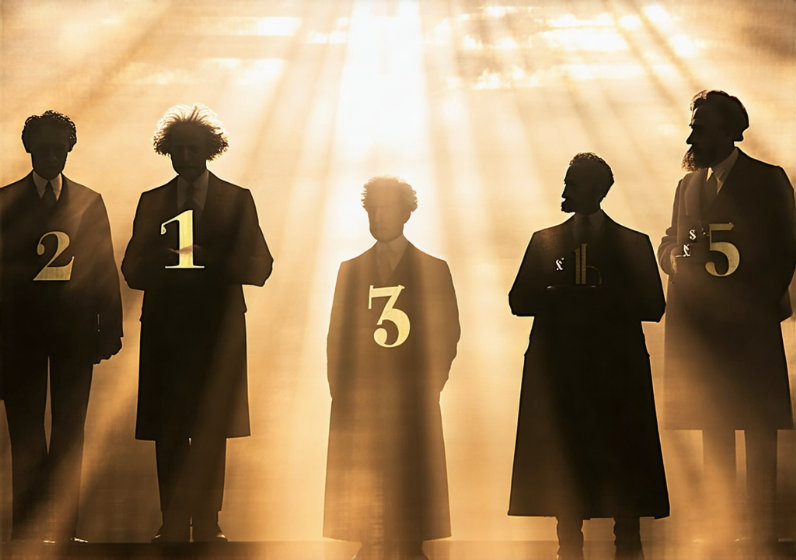
The ancients did not merely count; they communed. To them, numbers were not cold abstractions but living spirits—archetypes that dictated the rhythm of existence and the architecture of the soul. While modern minds have reduced digits to mere tools for commerce and calculation, every great thinker from Pythagoras to Nostradamus understood a profound truth: numerology is the secret language woven into the fabric of reality. This article explores the core principles that distinguish true numerical mysticism from pop superstition.
The Living Alphabet of the Cosmos
At its heart, numerology recognizes that everything has a number, and every number carries an essence. The numbers 1 through 9 represent distinct energetic signatures:
1 is the spark of creation, the lone pioneer.
2 is the duality of partnership and shadow.
3 is the creative expansion, the triangle of mind-spirit-body.
4 is the foundation, the square of stability.
5 is movement, change, and the crossroads.
6 is harmony, home, and responsibility.
7 is introspection, mystery, and the search for hidden truth.
8 is power, karma, and material manifestation.
9 is completion, compassion, and the end of a cycle.
These are not arbitrary labels; they are vibrational frequencies that resonate within human consciousness and cosmic order. A great thinker does not see these numbers as static but as dynamic forces—like elements in alchemy—that interact, conflict, and transform.
The Pythagorean Legacy: Harmony as Law
Pythagoras believed that "number is the ruler of the universe." His school saw geometry and mathematics as sacred keys to understanding divine order. For them, numerology was not fortune-telling but philosophy—the study of how numeric relationships produce harmony or discord in human life and society. The perfect number 10 (the Tetrad) symbolized completeness: 1+2+3+4 = 10, representing the four elements and their integration into a unified whole.
This legacy reminds us that numerology is first about balance. Each person’s birthdate or name reveals a dominant vibration—their "life path number"—which acts as both gift and challenge. A life path 7 seeks truth but may struggle with isolation; an 8 seeks power but must master the karmic lessons of wealth and ego. The wise thinker uses these insights not to predict destiny, but to align actions with inherent strengths and weaknesses.
Numerology as a Mirror for Self-Discovery
Modern numerologists often reduce the art to simple "vibration charts," yet its true purpose is introspective. When we calculate our core numbers from birthdate or full name, we uncover patterns that mirror psychological tendencies:
Life Path Numbers reveal our fundamental orientation in life—whether toward growth (7), expression (3), or structure (4).
Karmic Numbers expose recurring lessons tied to past-life energies.
Personal Year Cycles show how external circumstances shift based on cosmic timing.
The ancient thinkers understood that numbers are not destiny but tendencies—they are the terrain upon which free will operates. A person born under a strong 5 vibration is predisposed to change; without awareness, they may chase novelty endlessly. With wisdom, they harness this energy to become adaptable leaders rather than restless wanderers.
The Hidden Language of Symbols
Beyond personal numbers, symbols hold immense power. In occult tradition:
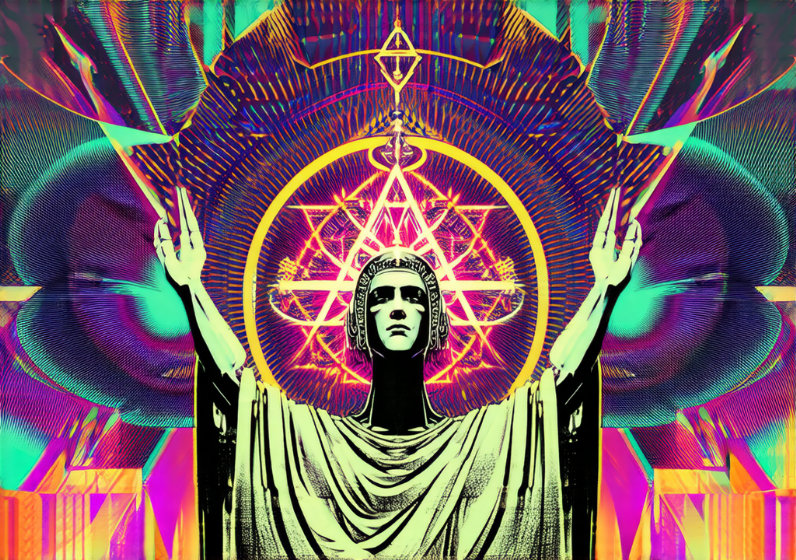
Triangles represent manifestation and the triad of spirit-soul-body.
Squares signify stability and earthly grounding.
Circles denote infinity, unity, and the divine cycle.
These geometric forms appear throughout sacred texts and rituals because they encode numeric principles visually. A circle divided into 12 parts (the zodiac) reflects time; a square inscribed in a circle represents matter bound by spirit. Numerology thus connects to geometry, astrology, and even music—the "music of the spheres" where harmonics produce order out of chaos.
Why Most People Miss the Point
Popular numerology often focuses on lucky numbers or simple compatibility checks, missing deeper truths. The great thinkers knew that numbers operate on multiple levels:
Microcosmic: Personal patterns and life rhythms.
Macrocosmic: Universal cycles affecting humanity as a whole.
Symbolic: Archetypal meanings guiding spiritual development.
To ignore any level is to read only fragments of the book. A true numerologist studies all three, integrating them into a holistic worldview where numbers become a map for navigating existence—not just predicting events but understanding their deeper significance.
The Numerical Awakening
In an age obsessed with data yet starved for meaning, numerology offers a bridge between science and spirit. It reminds us that behind every statistic lies a story; behind every equation, a mystery. Great thinkers throughout history used numbers as both tool and oracle—recognizing that while mathematics describes the physical world, numerology reveals the soul of reality.
To study numerology deeply is to recognize that we are part of an intricate numeric tapestry woven by cosmic forces. Our names carry vibration; our birthdates hold blueprints; our choices create new patterns. When we awaken to this understanding, we stop seeing numbers as foreign objects and begin to see them as familiar allies—guides who whisper guidance if we learn their ancient tongue.
For the seeker willing to look beyond surface calculations, numerology remains one of humanity's oldest and most reliable keys to self-mastery and universal harmony. The question is not whether numbers hold power—it always has—but whether we possess the wisdom to wield them.