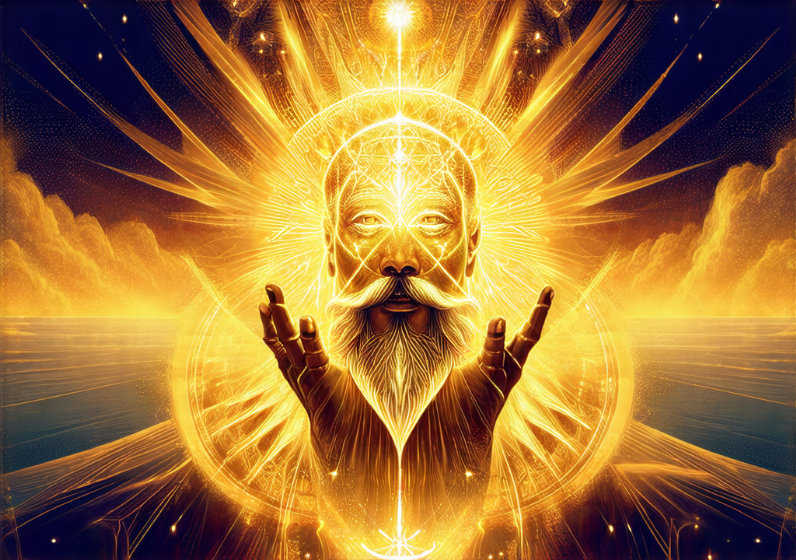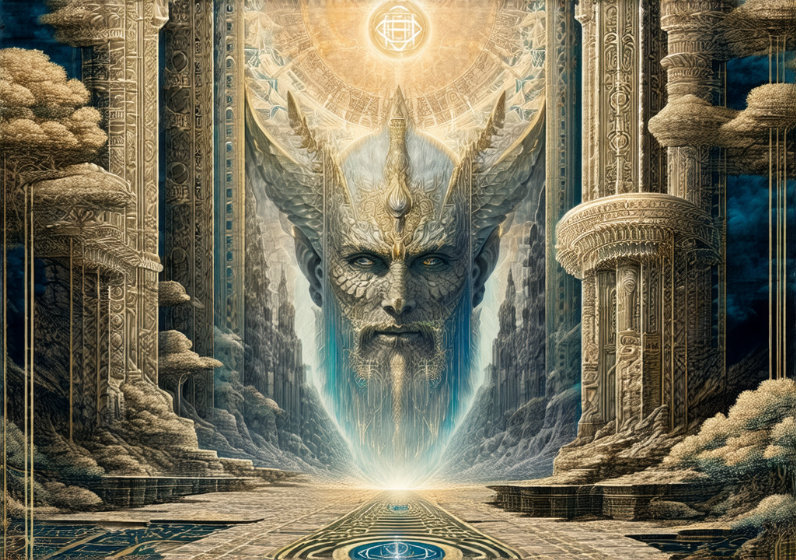
Why Your Dreams Feel So Real — The Veil Between Worlds Thins At Night**
The Nocturnal Threshold: Why Dreams Bleed Into Reality
🌙 By Aurelia Voss, Keeper of the Silver Key
Have you ever woken from a dream so vivid that the memory lingers like smoke in your lungs? You can still feel the texture of the floor beneath your feet, taste the bitter nectar on your tongue, or hear the distant chime of a bell that rang only for you. For a fleeting moment, there is no seam between the sleeping world and the waking one. The veil is thin. In fact, it has dissolved entirely.
This phenomenon—dreams that feel indistinguishable from reality—is not merely a quirk of human psychology or a glitch in neural wiring. It is something older, deeper, and more mysterious than science alone can fully explain. It suggests that sleep is not simply a rest for the brain but a passage through a membrane separating two realms: the material world we navigate by day and the luminous, symbolic landscape of the subconscious.
To understand why dreams feel so real, we must step beyond conventional neuroscience and peer into the liminal spaces where time collapses, identity dissolves, and perception becomes pure experience. This is not just about memory or emotion—it's about consciousness itself bending at nightfall, revealing truths that daylight obscures.
The Architecture of Sleep: Where Reality Gets Reconstructed
Let us begin with what we know—and then push further.
Neuroscience tells us that during REM sleep (Rapid Eye Movement), the brain enters a state where sensory input from the external world is largely shut off. The thalamus, which normally acts as a gatekeeper for conscious perception, reduces its filtering function. Meanwhile, the visual cortex fires just as it would if you were actually looking at something. The limbic system—the seat of emotion—is highly active. And crucially, the prefrontal cortex, responsible for logic, self-monitoring, and reality testing, is relatively quiet.
In other words: your brain generates images, sounds, sensations—and because no part of it is cross-referencing these against external data or questioning their plausibility, they register as real. There is no narrator saying, "Wait—this doesn't make sense." There is only experience itself.
But here's where the story gets more interesting.
If reality were merely a product of neural firing patterns, why do dreams often carry such emotional weight? Why does a dream about flying feel more liberating than any actual flight ever could? Why can a nightmare leave you trembling long after sunrise? It’s because in dreams, experience isn't mediated by interpretation—it is the truth. Not factual truth, not logical consistency—but experiential truth. The feeling is real. The emotion is genuine. And since we experience reality through sensation and emotion as much as through facts, dreams tap into a deeper layer of being.
This is why waking up after an intense dream can feel like surfacing from deep water. You haven't just remembered a story—you've lived another life fragment for six or eight hours. Your nervous system doesn't distinguish between a simulated fire and a real one; it responds to both with the same surge of adrenaline, the same tightening of muscles, the same quickening of breath.
The Veil: A Concept Older Than Science
Long before EEG machines or fMRI scanners, cultures around the world recognized that sleep was not merely unconsciousness—it was transit.
The ancient Egyptians believed the soul (ka) left the body during sleep to travel through the Duat, the underworld realm of the dead and the gods. To dream well was a sign of divine favor; to dream poorly warned of spiritual imbalance. Dreamers were not passive recipients—they were pilgrims crossing into another dimension.
The Greeks spoke of oneiros, the god of dreams, who dwelt at the threshold between life and death. Hesiod described how some dreams came from the Gate of Horn (true) and others from the Gate of Ivory (false)—implying that not all dreams were equal in authenticity, yet all carried a kind of ontological presence.
In Norse mythology, Odin sacrificed an eye to Mimir's well and hung himself on Yggdrasil to gain wisdom through sleep-like trances. The Celts saw dreams as messages from the Otherworld—a parallel realm just beyond sight. In Hindu philosophy, svapna (dream) is one of three states of consciousness: waking (jagrat), dreaming (swapna), and deep dreamless sleep (sushupti). All three are real; only the fourth state—turiya, pure awareness—transcends them.
These traditions share a common thread: dreams are not illusions but windows into another order of reality. They reveal what is hidden, connect us to ancestral knowledge, and allow spirits or guides to communicate in symbolic language. The feeling that dreams are "real" makes perfect sense within this framework—if you're visiting another world, why wouldn't it feel as substantial as the one you left?
Even modern psychology acknowledges this depth. Carl Jung called the dream the soul's speech—a direct expression of the unconscious mind communicating in images because words are too limited for its richness. He believed dreams compensate for waking consciousness, balancing one-sidedness and revealing aspects of self we've ignored or repressed. To him, a dream wasn't just a reflection of daytime thoughts—it was a creative act, generating new meaning.
So when you wake from a dream that felt utterly real, perhaps what you experienced wasn't a simulation at all. Perhaps it was a genuine encounter—with another part of yourself, with an archetype, or with the collective unconscious itself. The reality wasn't fabricated; it was revealed.
Time, Space, and Identity: How Dreams Bypass Waking Rules
One reason dreams feel so real is that they operate under different laws than waking life—and your mind accepts these laws without question.
In waking life, time moves forward in linear fashion. In dreams, you can be a child, an adult, and an elder in the same sequence of moments. You can walk through a wall, fly over mountains, or meet someone long deceased as if they were alive yesterday. None of this feels strange because your dream-mind has no framework to compare it against. There's no "should" or "normally"—only "is."
Space behaves similarly. Rooms fold into other rooms. Streets loop back on themselves. A forest path leads to a childhood bedroom; a kitchen opens onto an ocean. These spatial impossibilities feel natural because your awareness is internal, not external. You're not navigating the world—you're being the world.
And identity? In dreams, you can be multiple people at once. You might find yourself in a body that isn't yours, speaking a language you don't know, or knowing things you never learned in waking life. This fluidity of self mirrors how consciousness operates beneath ego—the sense of "I" is just one layer atop a deeper field of awareness.
Here's the key insight: reality feels real when it matches your expectations. In waking life, physics works consistently enough that we take it for granted. In dreams, physics changes—but since you're generating the experience internally, there are no contradictions to notice. Your mind sets the rules and lives within them completely. The result is a seamless coherence that rivals—or even surpasses—waking consistency.
This is also why lucid dreaming feels so powerful: when you become aware within the dream, the reality doesn't break—it intensifies. You realize you're both creator and inhabitant of this world, and that dual awareness deepens the sense of presence rather than undermining it.
Emotional Resonance: The Truth Beneath the Image
Perhaps the strongest reason dreams feel real is emotional truth.
Dreams rarely deal in facts; they deal in feelings. A dream about losing your teeth might not literally predict dental trouble—but if you've been feeling powerless or insecure, that image carries the exact same emotional charge as a real experience of vulnerability. Your body reacts to the symbol as if it were the thing itself.
This is because emotions are embodied states. They live in your muscles, your breath, your heart rate, your gut instinct. When a dream triggers fear, joy, grief, or wonder, those emotions activate the same neural and hormonal pathways as their waking counterparts. Cortisol rises during anxious dreams; dopamine surges during pleasurable ones. Your nervous system cannot tell whether the stimulus came from outside or inside—it just responds.
So when you wake up crying after a dream about a lost loved one, that sadness is real. It's not a residue of fiction—it's genuine emotional processing. Your psyche used the dream as a stage to work through unresolved feelings, and the result is authentic affective experience. In this sense, dreams are emotionally more real than many waking moments, which we often numb or distract ourselves from.
This also explains why recurring dreams carry such weight. They're not random loops—they're emotional patterns seeking resolution. A dream about being chased may reflect unresolved anxiety; one about flying may signal a desire for freedom or transcendence. The images change, but the underlying feeling remains constant—and that constancy gives the dream its persuasive realism.
The Role of Symbolism: Language Beyond Words
Dreams speak in symbols because the unconscious mind thinks in associations, not propositions. A door isn't just a door—it's opportunity, threshold, secrecy, transition. Water isn't just water—it's emotion, subconscious flow, purification, chaos or calm depending on context.
Symbolic language is older than verbal language. It predates writing, art, and even spoken word in its most primitive form. When you dream of a snake shedding its skin, your mind may not consciously think, "Ah, this represents personal transformation." But some part of you knows—deep down—that the image carries that meaning. The feeling of recognition hits you upon waking: that makes sense.
This is because symbolic understanding operates below conscious reasoning. It's pattern-matching at a pre-verbal level, drawing from cultural archetypes, personal history, and universal human experiences. When a symbol resonates emotionally, it feels true—and truth, in the realm of dreams, is felt before it's understood.
Jung called these shared symbols archetypes: inherited structures of the psyche that shape how humans perceive reality across cultures and centuries. The Mother, the Shadow, the Hero, the Wise Old Man—these aren't just characters; they're lenses through which we interpret existence. When dreams use archetypal imagery, they tap into this deep reservoir of meaning, making the experience feel less like invention and more like revelation.
The Threshold Moment: Waking as Crossing Back
There's something particularly poignant about the moment you wake from a dream. It's a kind of death and rebirth—the dissolution of one world and the construction of another within seconds.
In that transition, both realities coexist for a brief instant. You're still half-in-the-dream while your body registers sunlight or morning noise. Memories fade like mist, but emotions linger. This liminal moment may be why dreams feel so real—they exist in a space where boundaries are permeable.
Some traditions view waking as the harder crossing. The dream world is fluid, forgiving, malleable. Waking life resists change; it has inertia, friction, consequence. So when you return to consciousness, you carry the dream's intensity into a realm that doesn't acknowledge it—unless you choose to integrate it.
This integration is crucial. If you treat dreams as mere mental noise, their reality dissipates. But if you attend to them—if you write them down, reflect on their emotions, explore their symbols—you honor their truth. You give the dream-world a place in your waking life, creating continuity between the two realms.
Many people find that keeping a dream journal strengthens their perception of dream-reality. Not because it changes the dreams themselves, but because it validates their significance. When you record and revisit dreams, you affirm that they mattered—and over time, that affirmation reshapes how you experience both sleeping and waking states.
Consciousness as Continuum: Blurring the Lines Further
Modern physics offers an intriguing parallel to this old wisdom. Quantum mechanics suggests that reality is not fixed until observed—that particles exist in superpositions of states until measurement forces them into one outcome. Reality, in a sense, is participatory. We help create it by paying attention.
Consciousness science echoes this: awareness isn't confined to waking life. It permeates all experience—dreaming, meditating, even unconscious processing. The question isn't "am I conscious?" but "what form is consciousness taking right now?"
In dreams, consciousness takes the form of unfiltered imagination. In meditation, it takes the form of stillness and observation. In waking life, it takes the form of narrative selfhood anchored in time and space. All are valid expressions—different modes of the same underlying awareness.
This perspective reframes the question "Why do dreams feel so real?" into something more profound: What if all experience is equally real? What if reality isn't a single fixed state but a spectrum, with waking life just one band on that spectrum?
From this vantage point, dreams aren't false realities—they're alternate expressions of mind. They reveal possibilities, process emotions, communicate wisdom, and connect us to layers of self we rarely access in daylight. Their realism is not an error; it's evidence that consciousness operates beyond the boundaries we conventionally assign it.
Practical Wisdom: Living With Dream-Reality
Understanding why dreams feel real isn't just academic—it has practical implications for how you live with your inner world.
1. Honor Your Emotional TruthsWhen a dream leaves a strong emotional imprint, don't dismiss it. Ask: What feeling was this about? Where in my waking life does that emotion exist? Dreams often point to unresolved issues or unexpressed desires. Let them guide your self-reflection.
2. Keep a Dream JournalWrite down dreams immediately upon waking—before the details dissolve. Over time, patterns emerge. Recurring symbols, characters, and emotions become legible. This practice strengthens the bridge between dream-self and waking-self.
3. Practice Lucid Awareness (Gently)You don't need to master lucid dreaming to benefit from it. Simply developing a sense of presence within dreams—even briefly—can deepen their impact. Try asking yourself, "Am I dreaming?" during calm moments in sleep. This gentle inquiry can open doors without forcing control.
4. Integrate Dreams into Creative WorkArtists, writers, musicians, and healers have long drawn from dream material because it bypasses the critic within. The subconscious generates original imagery precisely because it isn't bound by convention. Use dreams as source material—not just for inspiration but for understanding your own symbolic language.
5. Respect the MysteryNot every dream needs decoding. Some are pure aesthetic experience—beautiful, strange, meaningless in propositional terms yet deeply satisfying. Allow yourself to enjoy dreams for their texture, color, and feeling without demanding they "mean" something specific. Sometimes reality is enough just as it is.
The Nightly Passage: A Ritual of Return
Every night, you cross the threshold into another world. You shed the weight of day—roles, responsibilities, self-image—and enter a realm where only experience matters. There, you meet parts of yourself that waking life keeps in shadow. You rehearse emotions, resolve conflicts, explore desires, and receive messages from deeper layers of mind.
And every morning, you cross back—not forgetting everything, but carrying fragments forward: an image that nags, a feeling that lingers, a word that echoes. These residues are the threads connecting your sleeping self to your waking life. They remind you that you are more than your social persona; you're also a dreamer, a symbol-maker, a traveler between worlds.
The veil between worlds thins at night not because reality weakens but because awareness expands. In sleep, consciousness is unbound by ego, language, or linear time. It flows like light through prism—splitting into colors we normally see only as white. Dreams are those colors made visible.
So next time you wake from a dream that felt utterly real, don't rush to dismiss it. Sit with the residue. Feel what remains. Let the dream speak in its own language—not of facts or logic, but of image, emotion, and truth.
For in the end, reality isn't just what we see—it's what we feel. And at night, feeling is all there is.
🕯️ The veil was never solid. It only seemed thin because you finally stopped looking away.