Why Modern Witchcraft Needs Ancient Rituals Back
The Unbroken Thread: Restoring Ancient Rites to Contemporary Craft
The modern practitioner of witchcraft often finds themselves at a crossroads, standing between the digital convenience of the present and the earthy gravity of the past. In an age where a spell can be conjured with a quick scroll through a social media feed, where ritual supplies are delivered to the doorstep within days, and where spiritual guidance is available in an infinite stream of podcasts and forums, the ancient rhythms that once anchored the witch to the cosmos risk becoming mere aesthetic choices. We have curated our craft so beautifully that we have accidentally hollowed it out. The incense burns, the candles glow, and the words are spoken, yet there is a missing frequency—a deep, resonant hum of continuity that only comes from rituals that have survived centuries of human experience, failure, reverence, and survival.
To understand why modern witchcraft needs ancient rituals back, one must first examine what has been lost in the translation. Contemporary witchcraft, largely born from the mid-twentieth century revivalism of figures like Gerald Gardner and Doreen Valiente, was itself a reconstruction. It borrowed heavily from folk magic, Wiccan theology, and academic anthropology to create a coherent system that felt accessible to the modern person. This was necessary and beneficial. However, as generations have passed, this reconstructed tradition has become its own orthodoxy. Newer practitioners often view rituals through the lens of efficiency and personal preference rather than lineage and necessity. We choose what feels good in the moment, and we discard what feels difficult or archaic. We treat ritual as a tool to be used, not a discipline to be mastered.
Ancient ceremonial witchcraft—rooted in the esoteric traditions of Hermeticism, Kabbalah, and pre-Christian folk observances—understood ritual as architecture. It was structural. The movements were precise because they mirrored celestial mechanics. The words were specific because they carried phonetic power. The timing was exact because it aligned with planetary hours or lunar phases that had been tracked since the time of Babylon. When we lose this structural integrity, our rituals become performances rather than operations. We are no longer moving energy through a proven conduit; we are simply expressing ourselves. And while self-expression is valuable in art and therapy, it is insufficient for true magical work.
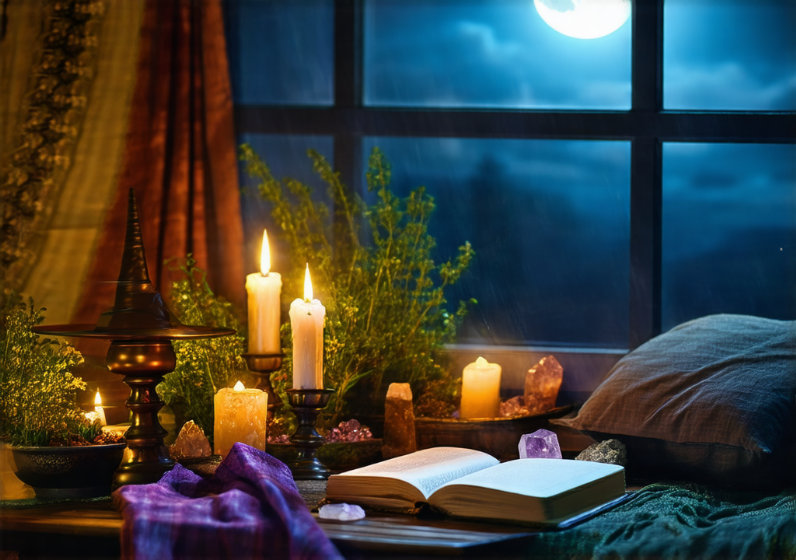
Consider the concept of the ritual space, or the temple. In ancient practice, the creation of sacred space was not merely about drawing a circle with chalk or crystals. It was an act of cosmic alignment. The priest or witch would orient the altar to the four cardinal directions, each associated with specific elemental forces and planetary rulers. East for Air, South for Fire, West for Water, North for Earth—these were not arbitrary choices but reflections of the macrocosm projected onto the microcosm of the individual practitioner. In modern practice, we often draw circles in living rooms or backyards without regard for orientation. We place candles where they fit aesthetically rather than where their elemental correspondence demands. This loss of spatial accuracy means that our ritual spaces are less effective as containers for energy. The circle becomes a boundary against intrusion, but not a lens for focus. By returning to the ancient method of orienting and structuring the temple, we reclaim a layer of precision that elevates the quality of our work.
There is also the matter of timing. Ancient rituals were deeply attuned to time—not just calendar dates, but the subtle fluctuations of hours, minutes, and even breaths. The practice of planetary hours, for instance, divides each day into twelve unequal parts, with one hour ruled by each planet in a specific sequence based on the day of the week. A ritual performed during the hour of Jupiter carries different energetic qualities than one performed during the hour of Saturn. Modern witches often schedule rituals based on convenience—weekends, evenings, or whenever there is free time. This is practical for a busy life, but it disconnects us from the cosmic timing that amplifies intent. When we align our small acts with the great movements of celestial bodies, we borrow their strength. We become part of a rhythm that has been constant since the beginning of recorded history. Returning to this temporal discipline does not mean we must abandon modern schedules; it means we can layer ancient precision onto our contemporary lives.
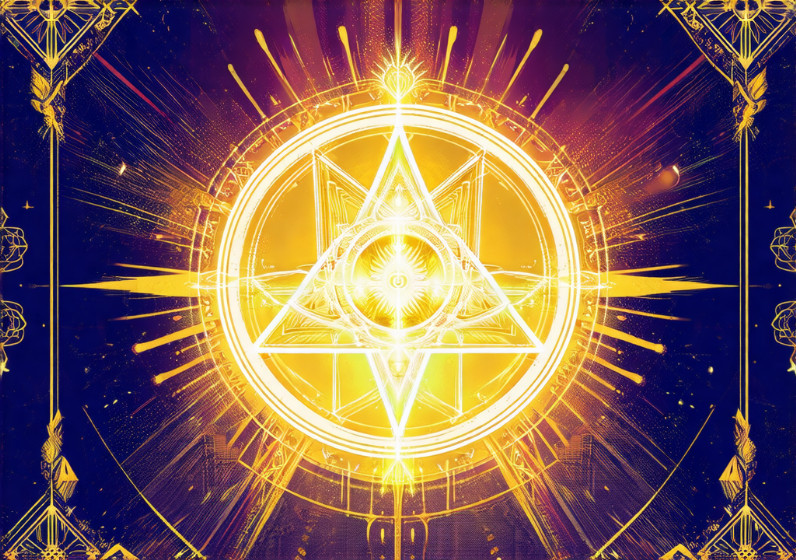
The role of symbols also warrants examination. In ancient ceremonial magic, every element in the ritual carried symbolic weight that was often literal or astronomical. The pentagram, for example, is not just a pretty star shape. It represents the five classical elements: Fire, Water, Air, Earth, and Spirit at the center. Its points correspond to directions and planetary associations. When we use symbols today, they are often decorative rather than functional. We wear pentagrams on our clothing because they look cool; we light candles of specific colors because a blog post said so. But do we understand the deeper symbolic architecture? Do we know why a particular color corresponds to a particular element or planet? By studying the original symbolic systems—Hermetic, Kabbalistic, astrological—we deepen our understanding and make our symbols active participants in the ritual rather than passive props.
Another area where ancient rituals offer richness is in the use of the body. In ceremonial magic, the practitioner’s body is an instrument. Movements are choreographed to correspond with directions and elements. The hand positions—mudras or gestures—are precise. The voice is trained for projection and resonance. In modern witchcraft, we often stand still or move casually during rituals. We speak in a conversational tone rather than a declarative one. This casualness reflects our culture’s comfort level but reduces the physical engagement with the ritual energy. Ancient practice understood that the body must be fully mobilized to channel spirit. The arms spread wide to embrace the elements, the feet grounded to connect with the earth, the voice raised to command attention from the divine. When we restore these physical disciplines, we transform ourselves into better conduits for magical work.
The question of secrecy and mystery also plays a role in why ancient rituals feel more potent to some practitioners. In many ancient traditions, rituals were kept within lineages, passed down from teacher to student with specific instructions on what could be shared and what had to remain hidden. This created an atmosphere of reverence and depth. Modern witchcraft is often transparent—shared openly online, discussed in groups, demystified for accessibility. While this openness is inclusive and welcoming, it can also dilute the sense of mystery that makes ritual feel sacred. When everything is known, nothing feels special. By incorporating elements of personal secrecy—keeping certain parts of our practice private, studying texts quietly, practicing without an audience—we restore a layer of intimacy between the practitioner and their craft.
It is important to note that “ancient” does not necessarily mean old in the sense of obsolete. It means proven. These rituals have been tested over centuries by practitioners across cultures and continents. They survived because they worked. There is a reliability to them that modern innovations, however creative, cannot yet claim. When we blend ancient structures with modern sensibilities, we create a practice that is both timeless and contemporary. We honor the lineage while making it accessible to our lives. This synthesis is where the true power lies—not in rejecting modernity or revering antiquity blindly, but in weaving them together into a cohesive whole.
For many modern witches, the return to ancient rituals feels like a homecoming. There is a comfort in using forms that have been used before. It connects us to an unbroken thread of human spiritual practice stretching back thousands of years. We are not inventing something new; we are participating in a tradition that predates our individual lives by millennia. This sense of continuity provides stability in a world that feels increasingly unstable and transient. When the digital world crashes, when social media platforms disappear, when trends shift overnight, the ancient rituals remain. They are anchored to the earth, the stars, and the human need for meaning.
Furthermore, ancient rituals often emphasize community or at least the awareness of a larger spiritual society. In many traditional systems, the witch was part of a coven, a temple, or a family lineage. Rituals were collective acts that reinforced social bonds and shared belief. Modern witchcraft is often solitary. While this suits modern lifestyles, it can lead to isolation in one’s practice. By studying ancient communal rituals—even if practiced alone—we remind ourselves that our work exists within a larger context. We are not operating in a vacuum; we are part of a human story of seeking the divine and understanding the natural world.
The challenge for modern practitioners is not to abandon what works today but to enrich it with depth. It is not about replacing convenience with inconvenience, but adding layers of meaning to our actions. A simple candle lighting can become an act of solar invocation if we understand its symbolic weight. A basic grounding exercise can become a ritual of elemental connection if we engage the body and mind fully. The tools remain the same; only our understanding deepens.
There is also a pedagogical value in studying ancient rituals. They teach us about magic itself—how it works, what it requires, what it produces. Modern witchcraft often focuses on outcome: “Do this spell to get X result.” Ancient ritual focuses on process: “Perform this action with this intention, at this time, in this manner, and the energy will move accordingly.” This shift from transactional thinking to relational thinking changes how we approach our practice. We stop treating magic as a service and start treating it as a discipline. And like any discipline—music, dance, martial arts—it requires study, repetition, and patience.
For those who feel their modern practice has become superficial or stagnant, the return to ancient rituals can be rejuvenating. It introduces new questions: Why is this symbol used? What planet rules this day? How does my body position affect the energy flow? These questions lead to deeper study and more intentional practice. They transform witchcraft from a hobby into an art form, and perhaps even a vocation for some.
In essence, modern witchcraft needs ancient rituals back not because the old ways are superior in every way, but because they provide structure, depth, and continuity. They ground us in something larger than our individual desires or trends. They connect us to a human heritage of spiritual exploration that spans centuries. And they remind us that ritual is not just about doing; it is about being—being present, being precise, being part of a cosmic order.
As we move forward, let us embrace both the modern and the ancient. Let us use technology to study old texts, share knowledge, and find community. But let us also step away from the screen and stand in our ritual spaces with full awareness. Let us align ourselves with the stars, ground ourselves in the earth, and speak with clarity and intent. In doing so, we honor the past while creating a future for our craft that is rich, resonant, and rooted.
The thread is unbroken. We simply need to pick it up again.