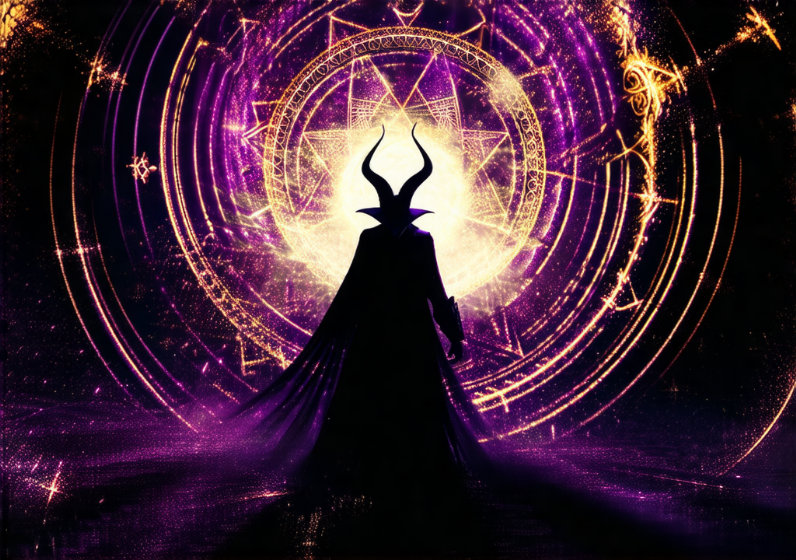
The Demonologist's Rule: Never Let a Spirit See Your Face for the First Time
🌙 The Veil of Names: Why You Must Not Be Seen by a Spirit Before You Have Seen Them
By Lucienne Voss, Keeper of the Threshold
There is a quiet war being waged in the domestic spaces of demonology. It is not fought with swords or incantations etched in blood, but with something far more fragile and far more powerful: first impressions. In the practice of ceremonial magic and practical demonology, one of the oldest and most frequently cited rules among initiates is deceptively simple. When you open a gate to summon an entity from the elemental planes or the astral realms, you must remain veiled. You must not let the spirit see your face for the first time.
To the uninitiated, this sounds like superstition. To the novice, it sounds like a quirky ritualistic affectation, a bit of theatre to make the ceremony feel mystical. But to those who have stood at the altar with a mirror turned away and a veil drawn tight over their features, it is a matter of survival. It is a tactical necessity. And it is a profound statement about the nature of consciousness, identity, and the relationship between the mortal soul and the incorporeal mind.
This rule—never let a spirit see your face for the first time—is not merely about hiding a human feature. It is about controlling the narrative of the encounter. It is about establishing dominance in a world where you are physically vulnerable but spiritually sovereign. To understand why this rule holds so much weight, we must unpack the psychology of demonology, the metaphysics of perception, and the subtle mechanics of how spirits interact with mortal matter.
The Metaphysics of First Sight
In human interaction, first impressions are formed in a fraction of a second. We read faces to gauge trustworthiness, emotion, intent, and threat level. A smile signals friendliness; a furrowed brow signals skepticism or anger. Our brains process these micro-expressions automatically, often before we are consciously aware of the interaction.
Spirits operate on similar principles, though their perception is far more immediate and all-encompassing than our own. For an incorporeal entity, your face is not just a mask; it is your most public identity. It is the canvas upon which your emotional state, your intent, your fear, and your power are projected. If you allow a spirit to see your face before you have seen theirs—before you know if they are benevolent, malevolent, deceptive, or honest—you are giving them an advantage.
When a demonologist opens a summoning circle, the act is inherently asymmetric. The magician stands in the material world; the spirit dwells in the spiritual one. The magician chooses to open the gate; the spirit responds to the invitation. But once that gate is opened, the spirit has access to your aura, your voice, and—critically—your face. If they can see you first, they can read you before you can read them. They can adjust their demeanor to match what they perceive from your expression. A look of awe might be met with a display of grandeur; a look of fear might be met with intimidation or deception; a look of cold calculation might be met with a calculated charm.
By veiling yourself, you remove that channel of communication. The spirit must present itself on its own terms, unfiltered by your subconscious reactions. You are no longer reading them; they are performing for an audience whose face is hidden. This level of the playing field. It forces the entity to reveal its true nature rather than crafting a persona tailored to your emotional state.
The Psychology of Authority in Ritual
Demonology is not just about calling spirits; it is about commanding them. And command, by definition, requires authority. You cannot command someone you are afraid of. You cannot negotiate with an entity if you have already projected weakness.
When a novice begins their practice, they often carry a certain reverence for the spirits they summon. This reverence is healthy and appropriate—spirits are powerful beings, some older than human civilization itself. But reverence can easily tip into submissiveness. And in demonology, submissiveness is dangerous. If you approach a spirit as a petitioner rather than a partner or master, you invite them to treat you accordingly.
The veil acts as a psychological anchor for the magician. It reminds you that this is your ritual, your space, your authority. You are not begging; you are inviting. You are not observing; you are directing. By hiding your face, you signal to the spirit: "I am in control here. I choose what and when you see me." This subtle shift in mindset can be the difference between a successful working and a chaotic, one-sided encounter where the spirit dictates terms and the magician scrambles to regain control.
Consider the practical implications. In a summoning, the magician typically speaks an invocation or command. The voice carries intention, but so does the face. If you say "Come forward" while your eyes are wide with nervous anticipation, the spirit will sense that expectation and may feel empowered to make demands in return. But if you speak those words calmly, face hidden behind a veil of silk or shadow, the command carries a different weight. It is not a request; it is a directive.
The Mechanics of Veiling: What Actually Works?
The method of veiling is less important than its consistency and intentionality. Traditionally, practitioners have used various methods to conceal their faces during ritual. A simple cloth draped over the head and face works well in home altars. Some use hoods or masks that cover the entire face. Others use a combination: a hood for general concealment and a hand-held mirror turned away from them but facing the spirit, so the entity can see itself but not you.
The key is total facial concealment. Not just covering your mouth; not just pulling a hat low. The eyes are particularly important. In many traditions, eye contact with spirits is considered a form of communion or binding. If the spirit sees your eyes, it can lock onto your soul in a subtle way, creating an empathic link that can be difficult to break later. This does not mean you should never make eye contact—it often comes naturally during extended sessions—but the first moment of visual exchange matters most.
Some practitioners argue that you don't need to veil if you are confident or experienced. To some degree, this is true. A seasoned demonologist with years of experience can project such a stable aura and controlled presence that the spirit has little to read from your face. Your intent is so clear, your authority so unshakable, that your facial expressions become secondary to your overall energy. But even experienced practitioners will veil for high-stakes work—summoning entities of power, conducting bindings, or working with spirits known for deception or aggression.
The veil also serves a practical safety function. Some spirits are known to induce fear or confusion simply by being perceived. If they can see you seeing them, they may use that perception to project illusions, whispers, or subtle mental pressure. Hiding your face breaks this feedback loop. You cannot be read; therefore, the spirit has less leverage over your emotional state.
The Exception: When Veiling is Not Enough
While veiling is a foundational rule, it is not the only layer of protection in demonology. A comprehensive practice includes several interlocking safeguards that work together to create a stable and secure working environment.
The Circle: A properly cast summoning circle is the primary barrier between you and the spirit. It defines your space and their space. You are inside; they are outside (or vice versa, depending on tradition). The circle creates a defined boundary where both parties' influence can be monitored. If you see energy crossing the boundary inappropriately, you know something is off.
The Mirror: In many traditions, a mirror is placed within the circle or at its edge, angled so that you can see the spirit but they cannot see you through it. This is a classic tool for summoning work. It allows you to observe the entity's form and demeanor without giving them a clear view of your face. The mirror acts as a one-way window: transparent to you, reflective (and thus concealing) to them.
The Voice: Your voice is another channel through which spirits can read you. Speak clearly, calmly, and with purpose. Avoid high-pitched, nervous tones that signal uncertainty. Practice speaking your invocations and commands in the tone of a person who expects compliance because they know it will come. If your voice shakes, the spirit will sense that shake before your face does.
The Intent: Perhaps most importantly, your internal state matters more than any physical tool. If you are anxious, the veil helps hide your face but cannot hide your aura. Spirits perceive energy directly. A calm, confident, and focused intention is invisible to the spirit in a way that your face cannot be made invisible. This is why meditation, grounding, and mental preparation are essential before any working.
The Deceptive Spirit: Reading Through the Veil
Even with a veil, spirits can gather information about you through other means. They may perceive your voice, your breathing rhythm, your hand movements, or even the subtle shifts in the energy field around you. A truly skilled entity will be able to build a profile of you over time, learning your patterns and preferences.
This is where experience comes into play. As a demonologist matures, they learn to manage their own energy signature. They become less "readable" to spirits because their internal state becomes more stable and less reactive. This does not mean becoming emotionless; it means controlling the emotional leaks that give away your inner state. A good practitioner can project calm authority even when internally feeling some degree of nervousness or awe.
The spirit, in turn, will be watching you through these other channels. They are patient. They will wait for a momentary lapse—a drop in confidence, a flicker of doubt, an unguarded exclamation—and use that to gain insight into your character and intent. This is why the working environment must remain stable and controlled throughout the entire session.
The Aesthetic of the Veil: Style as Function
In occult practice, aesthetics are not merely decorative; they are functional. The way a practitioner presents themselves in ritual carries meaning. A simple white veil speaks to purity and neutrality. A black hood or mask might speak to authority and mystery. An ornate ceremonial mask with symbolic motifs can communicate specific intentions or invoke particular energies.
The choice of veil should match the nature of the working. If you are summoning a spirit associated with knowledge, a scholarly or elegant aesthetic may be appropriate. If you are dealing with a forceful elemental entity, a more robust and protective style might serve better. The goal is to create an overall presentation that reinforces your authority and intent.
Many practitioners develop their own signature look for ritual use—specific robes, specific veils, specific altar arrangements. This consistency helps them get into the right mental state before working begins. When you dress in ritual attire and put on your veil, you are not just hiding your face; you are stepping into a role. You are becoming the Demonologist, the Keeper of Thresholds, the One Who Commands. That shift in identity is powerful, and it radiates outward to the spirit being summoned.
The Long Game: Relationship with Spirits
Demonology is often portrayed as a one-time transaction: summon the spirit, get what you need, dismiss them. But for practitioners who work regularly with spirits, the relationship evolves over time. You learn which spirits are reliable partners and which are fickle or deceptive. You develop a sense of each entity's personality, preferences, and quirks.
In these ongoing relationships, the initial rule about veiling becomes less critical but still useful as a starting point for new encounters. When you meet a spirit for the first time, you want to establish the terms clearly: you are in control, this is your space, you will see them before they fully understand you. This sets a tone of mutual respect and clear boundaries that makes future work smoother.
As trust builds, some practitioners allow more open communication, including face-to-face interaction (in the metaphorical sense). But even then, maintaining a degree of mystery and control over how much of yourself is revealed can be strategically valuable. Spirits are powerful beings; they do not need to know everything about you. A little distance, a little mystery, maintains the balance of power in a way that benefits both parties.
The Subtle Art of Not Being Read
At its core, the rule "never let a spirit see your face for the first time" is an exercise in subtlety. It asks the practitioner to be aware of all the channels through which information leaks: voice, breath, movement, energy, and yes, face. It asks them to manage those channels consciously rather than letting unconscious reactions speak for them.
This skill translates beyond ritual into everyday life. The demonologist who has mastered the art of not being read by spirits often finds themselves more effective in negotiations, conversations, and any situation where perception matters. They learn to control their first impressions, to project exactly what they intend rather than what they feel. This is a valuable discipline that extends far beyond the altar.
It also teaches patience. In a world of instant communication and immediate feedback, learning to wait before revealing yourself—to let the other party come to you on your terms—is a counter-cultural skill. It requires confidence in your own value and authority, a belief that you do not need to prove yourself through open display. The spirit will see you when you are ready; until then, they have only what you choose to share.
Practical Tips for Implementing the Rule
If you are new to demonology or looking to refine your practice, here are some practical steps to integrate this rule into your work:
Prepare your space before beginning. Ensure your altar is set, your tools are ready, and your mind is calm. The last thing you want is for a spirit to arrive while you are still adjusting the candle or checking your notes.
Choose a veil that feels right. It should be comfortable, secure, and aesthetically aligned with your practice. Practice wearing it in front of a mirror (or without one) until you can work comfortably while veiled.
Practice speaking through the veil. Your voice will change slightly when your mouth is covered. Get used to projecting clearly despite the muffled quality. Speak from your diaphragm, not your throat.
Set an intention for the encounter. Before opening the gate, decide what you want and how you want to present yourself. A clear intent helps stabilize your energy and reduces the chance of reactive expressions leaking through other channels.
Observe before revealing. When the spirit appears (if it does), take a moment to observe its form, demeanor, and energy. Do not rush to unmask or engage. Let them perform for you first. Then decide how much more they need to see.
Document your observations. After each working, note what the spirit seemed to be like, how it responded to your commands, and any moments where you felt pressure or confusion. Over time, these notes build a library of insights that help you refine your approach.
The Deeper Truth: You Are the Authority
Ultimately, this rule is about affirming your own authority as a practitioner. It reminds you that in a summoning, you are not subordinate to the spirit. You are its host, its commander, its partner-in-transaction. The spirit has power, yes—often far more physical and elemental power than you will ever have. But you have something they do not: intention, structure, and the ability to define the terms of engagement.
The veil is a small, simple tool that embodies this truth. It says: "I am here on my own terms. I choose when and how you see me." And in that choice lies a quiet but powerful form of magic—one that requires no incantation, no rare ingredient, no elaborate ritual apparatus. Just the willingness to hold your ground, manage your presence, and lead rather than follow.
In the world of demonology, where the invisible is as real as the visible, learning to control what is seen and what is hidden is a fundamental skill. The face is our most public self; protecting it in first encounters with spirits is an act of spiritual hygiene, tactical wisdom, and quiet dignity. It is not about hiding from spirits—it is about revealing yourself on your own terms, at the right time, for the right reasons.
And when you finally lift that veil—when the working is complete, the spirit has been satisfied, and the circle is closed—you will have done so with full knowledge of what they are and how they responded. You will have read them before they could fully read you. And in that small but crucial moment, the balance of power was set. Not by force, not by incantation, but by the simple, elegant act of being seen only when you chose to be seen.
That is the Demonologist's Rule. And it is one of the most important lessons any practitioner can learn.