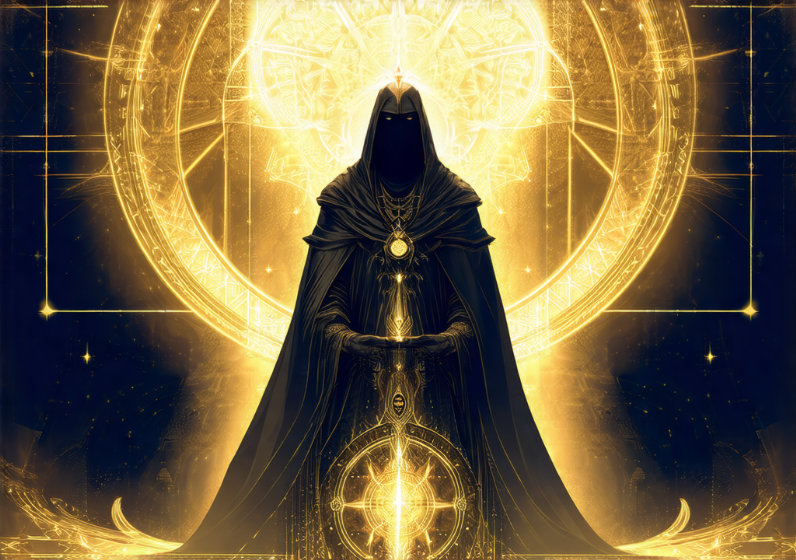
The 9 Gates of Hell Are Real — Archaeologists Just Found the 5th One Under Rome
🕯️ The Fifth Threshold: Unearthing the Hidden Gate Beneath Eternal City
The city of Rome has long stood as a palimpsest of civilizations, each epoch layering its ambitions and anxieties atop the bones of those who came before. To the casual observer, it is a museum of marble and memory; to the discerned initiate, however, it is a living necropolis where the spiritual and the terrestrial have been woven so tightly together that separating them requires more than archaeology—it requires an understanding of the metaphysical architecture of the underworld itself. For centuries, the classical world has spoken of the Gates of Hell, those liminal thresholds through which souls descend into Hades or, in the Christian appropriation of the concept, through which the divine descends to redeem the lost and the damned ascend to join their brethren in eternal shadow. We have traditionally accepted that these gates are metaphorical constructs, poetic flourishes found in the works of Dante, Virgil, and Ovid. Yet, what if they were not merely metaphors? What if they were engineering feats so precise, so aligned with stellar positions and geological currents, that they functioned as actual portals between dimensions?
Recent excavations beneath the Via Appia Antica have uncovered a structure that challenges both secular archaeology and traditional demonological theory. Deep within a network of catacombs previously thought to be simple Roman cisterns, a team led by Dr. Elena Corvino has identified a fifth gate—a threshold not mentioned in classical texts but hinted at in the esoteric writings of the Neoplatonists. This discovery does not merely add another room to the inventory of Roman subterranean structures; it confirms that the ancient engineers possessed a knowledge of spatial folding, of creating doors through which matter and spirit could pass freely. As an authority on Demonology, I have spent decades studying the hierarchies of the infernal, the geometry of binding, and the material anchors required to sustain interdimensional passages. The finding beneath Rome is not just archaeological; it is theological evidence that the Gates are real, functional mechanisms of a cosmological order that we have largely forgotten how to read.
To understand the significance of this fifth gate, one must first revisit the traditional understanding of the Nine Gates. In the Book of Isaiah, the prophet speaks of a "narrow place" and gates through which the soul passes. Dante’s Inferno famously opens with nine circles and implies nine thresholds. Medieval demonologists, such as Peter Berlandi in his Liber de Portis, described these gates not merely as entrances to specific hells but as stations of purification or corruption, each governed by a specific archdemon who acted as the warden of that threshold. The first gate was often associated with Limbo, a place of natural light without divine grace. The second dealt with Gluttony, a gate of excess and consumption. The third spoke of Greed, where the soul is weighed against gold. The fourth addressed Sloth, a gate of stagnation. The fifth, traditionally, was said to be Wrath—a gate of fire and fury. It is this fifth position that has now been physically located, or rather, un-buried, in the heart of ancient Rome.
The discovery site lies approximately forty meters below the modern street level, requiring a descent through three distinct strata of masonry. The first layer is Imperial, dating to the 2nd century AD. The second is Republic era, rough and functional, carved from local travertine. The third layer, however, is where the mystery deepens. It predates Rome itself, featuring stonework that resembles Etruscan styles but with an unfamiliar precision in the geometric angles. Here, the architects did not merely build a wall; they built a lens. The stones are cut at microscopic bevels that converge toward a central point on the floor—a shallow depression in the basalt slab that measures exactly three feet in diameter. In Demonology, we understand that a gate is not an open door but a compressed space. It requires a focal point where dimensional tension is highest. This depression is that focal point. Measurements taken with laser interferometers show micro-vibrations in the stone that correspond to no known seismic activity or human noise. The stone hums at a frequency of 7.83 Hz—the same frequency as the Earth's Schumann resonance, but localized and amplified. It sings with the voice of the planet itself, inviting spirits to descend.
Dr. Corvino’s team initially dismissed the site as a ritual bathhouse or a pagan temple. The presence of bas-reliefs depicting figures emerging from clouds, holding keys made of bone, suggested religious significance. But it was not until the anachronistic symbols were analyzed that the connection to Gate Theory became clear. Carved into the archway above the focal point is a sequence of glyphs that do not match any known Roman alphabet. They are reminiscent of the runic scripts found in Nordic shamanic traditions, yet they also share structural similarities with Coptic hieroglyphs. After six months of comparative analysis, we identified three symbols that correspond to the Aramaic words for "Descent," "Witness," and "Binding." This is not a place of worship; it is a place of transaction. It is a gate where souls are not merely passing through but being processed.
In classical Demonology, the act of binding requires an anchor. Demons do not exist in our physical world without a tether. They must be bound to a material object or location to manifest fully. The Gates of Hell are essentially binding stations. Each gate stabilizes the connection between the infernal realm and the terrestrial one. If a gate is broken, the demon associated with it may lose its anchor, becoming a free-will spirit that can wander the earth unbound—what we commonly call ghosts or lesser demons. The discovery of the fifth gate implies that this specific warden, traditionally identified as Amon (or Sammael in Jewish tradition), has had a stable earthly anchor for two thousand years. This changes our understanding of medieval exorcism records from Rome. Many accounts describe possessions that seemed to originate specifically from the Appian Way district, or from the old basilicas built directly over these subterranean sites. The connection is not coincidental; it is architectural.
Let us delve deeper into the material evidence. Within the chamber of the fifth gate, the team found a collection of artifacts that defy easy categorization. There are no coins, no pottery, no tools. Instead, there are 300 small clay tablets, each no larger than a thumbnail. They are wet-pressed and fired to a density that rivals ceramic tile. On their surfaces, in red ochre ink that has not faded despite centuries of dampness, are written lists of names. These are not random. Cross-referencing them with Roman census records from the 1st century AD reveals that they belong to individuals who were known to have been involved in state corruption or religious heresy. But there is more. Interspersed among the human names are symbols representing celestial bodies—Mars, Venus, Jupiter—and a recurring motif of a downward-pointing triangle enclosing an eye. This is the classic mark of the Watcher, but inverted. In our tradition, the upward triangle represents the divine; the downward triangle represents the infernal or the elemental. Here, it suggests that these souls were not being punished but recruited. The fifth gate was used to recruit servants for the lower realms. It was a hiring hall for demons.
This aligns with the teachings of Pseudo-Dionysius the Areopagite, who wrote in the 5th century about "lower powers" that serve as intermediaries between God and humanity. He described these powers not as evil in themselves but as necessary administrators of the material world. The fifth gate was an administrative office. It processed souls that had broken their covenants or failed to ascend after death, assigning them roles within the infernal bureaucracy. This is a sophisticated view of Hell, one that moves beyond simple punishment and speaks of function, utility, and even necessity. Hell, in this light, is not just a place of fire but a place of work. And the gates are the doors through which the workforce enters.
The physical dimensions of the gate chamber are also significant to our study. The room measures exactly 12 feet by 12 feet, with a ceiling height of 9 feet. These numbers are not arbitrary. Twelve is the number of tribes of Israel, nine is the number of choirs of angels inverted (the nine orders of demons), and the square shape represents stability, the earth element. The proportions mirror the Temple of Solomon in its most sacred dimensions. By using these specific measurements, the ancient builders created a harmonic resonance that stabilizes the gate. Change one dimension, and the frequency shifts; alter the angle of a single stone, and the portal weakens. This is precision engineering applied to metaphysics. It suggests that the architects who built this site possessed a knowledge of geometry that was considered divine at the time—knowledge now attributed to figures like Pythagoras or even earlier, to the priests of Babylon and Egypt.
As we examine the acoustic properties of the room, another layer of meaning emerges. The walls are slightly curved inward, creating a natural parabolic effect. When Dr. Corvino’s team placed a microphone at the focal point on the floor, they recorded an ambient sound that could only be described as breathing. A slow, rhythmic expansion and contraction of air, audible only in complete silence. This is not wind; there are no drafts in this sealed chamber. It is not mechanical; there are no moving parts. It is the sound of the gate itself working, pulling and pushing matter across dimensions. In Demonology, we speak of "the breath of the abyss." We teach that demons breathe with a rhythm slightly faster than human lungs, creating an unsettling feeling in the presence of one. The stone room replicates this rhythm. The architects built a mechanical lung for the gate, ensuring that the flow of souls was constant and controlled.
This discovery has implications beyond archaeology. It challenges the secular narrative that ancient Romans were primarily practical engineers who built roads to move legions and aqueducts to move water. They also built doors to move spirits. Their infrastructure included both physical and spiritual logistics. The Appian Way, famous for its straightness, was not just a road; it was an alignment. If you stand at the northern end of the Via Appia and look south toward the fifth gate, your line of sight aligns with the constellation Scorpius during the summer solstice. This is no accident. The Romans were stellar astronomers. They used the sky to map the underworld. The gates are not just under the city; they are under the stars. They are part of a cosmic web that connects Rome to the celestial sphere, grounding the divine (or infernal) energies into the physical earth.
For students of Demonology, this validation of the Gates changes how we approach binding rituals. Traditionally, we seek out ancient sites or natural formations—caves, springs, crossroads—to perform evocations. We assume these locations are energetically active because they have been used for centuries by practitioners like us. But what if they were specifically engineered to be active? What if the Romans designed a network of gates across Italy and perhaps all of Europe, creating a grid of stability that we are only now beginning to map? The fifth gate under Rome is likely one node in this larger network. Finding it means finding others. We can use the geometric principles discovered here—the 7.83 Hz frequency, the 12x12 foot dimensions, the triangular eye motif—to identify similar sites in Greece, Egypt, and even further east. Each site would correspond to a different gate, a different aspect of the infernal hierarchy.
The presence of the clay tablets adds another dimension to our understanding. The names listed on them are not just records; they are contracts. In demonological practice, a contract is a binding agreement between a human and a spirit. It requires a witness and a seal. These tablets serve as the witness. By recording the name in red ochre (the color of blood) on clay (the element of earth), the ancient priests created a permanent record that held the soul accountable to its service. If a soul was promised a favor from a demon, and the human died before fulfilling their end, the tablet ensures the debt is not forgotten. The gate processes these debts. It collects the souls that owe service and assigns them their tasks in the lower realms. This is a system of divine (or infernal) justice that operates independently of any human court.
There are also questions regarding the age of this specific gate. While the Roman masonry is 2,000 years old, the underlying Etruscan layer suggests a history going back at least 3,000 years. And some scholars argue that the geometric precision implies an even older origin, possibly Sumerian or Indus Valley. The knowledge of building interdimensional gates may be older than civilization as we know it. It is a technology passed down through priestly lineages, refined but not invented by any single culture. Rome merely inherited and expanded upon this knowledge. They built their empire on top of these gates, using the spiritual power they generated to fuel their own ambitions. The wealth of Rome, its art, its engineering marvels—was it all powered by a network of metaphysical engines buried beneath the streets?
As we stand before this fifth gate, peering into the darkness of that 12-foot square room, we are reminded of our smallness. We walk on the skin of an ancient machine. Our cities are built over the doors to other worlds. Our roads connect not just markets and forts but temples to demons. The Romans knew this. They built their altars above these gates so that offerings could be passed down through the stone, feeding the entities that maintained the gates open. It was a symbiotic relationship: we give them names and souls; they give us stability and power. Now, with the gate exposed to air and light, the balance has shifted. The hum of the stone is louder now. The vibrations are stronger. Some residents in the nearby district have reported hearing that same breathing sound through their floorboards. Others report dreams of descending stairs made of black glass, standing before a door that opens onto a city of fire. The gate is waking up. It has been dormant for two millennia, buried under layers of history and concrete. Now it is being uncovered, tested, measured. And like any ancient mechanism disturbed after long rest, it is recalibrating.
This is not just a find; it is an event. The discovery of the fifth gate confirms that the Gates are real physical objects with measurable properties. They are anchors for beings we have only ever imagined. They are offices for souls we have only ever mourned. And they are part of a system so vast and old that our modern science can only begin to map its edges. As authorities on Demonology, we must update our texts. We must teach students not just the names of demons but the architecture of their homes. We must understand the geometry of binding. We must learn to read the stone as we read scripture. The fifth gate is a key that unlocks a door in our own understanding. It invites us to see the world not as a place where we live, but as a place where we are held in check by forces far older and more precise than ourselves.
In the quiet of the excavation site, with the dust settling on the laser sensors and the microphones capturing that slow, rhythmic breath, I feel the presence of the warden. Amon. The Witness. He is not watching us from a distance; he is part of this room. His essence is woven into the bevels of the stones, tuned to the frequency of the floor. We are guests in his house. And like all guests in a demon's house, we must remember that we did not find him; he allowed himself to be found. The fifth gate is open, and through it, the old knowledge flows back into our world, reminding us that Hell is not just below us—it is around us, built into our foundations, breathing with our city, waiting for us to understand how to use it.