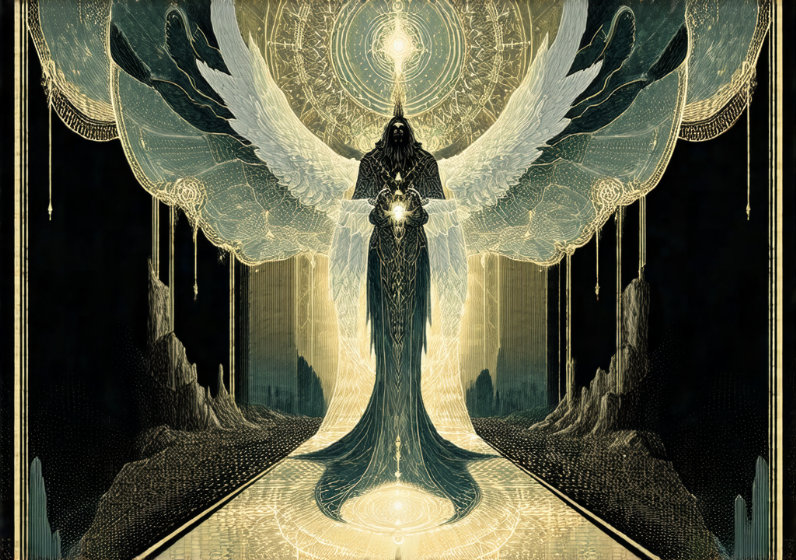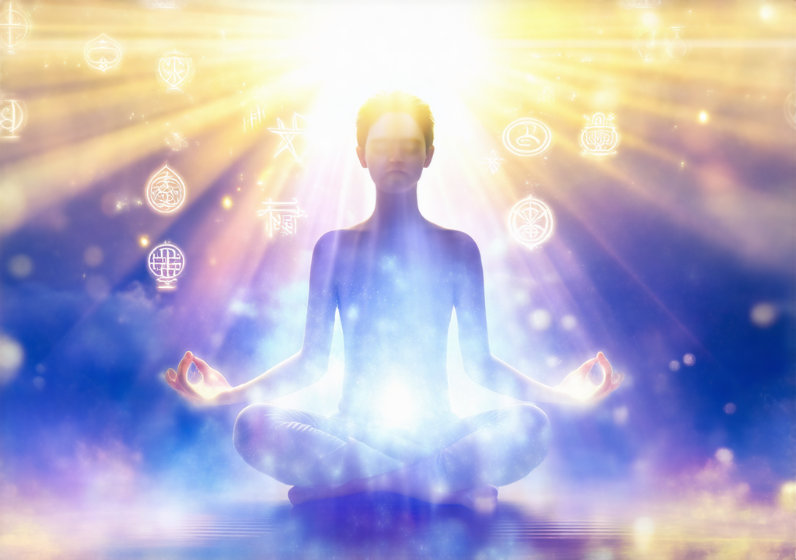
The Enchanted World Around You (And How to Harness It)
🌙 The Veil Is Thin: Seeing the Hidden Architecture of Your Everyday Life ✨
There is a quiet magic in your kitchen. A secret alchemy in your morning coffee. A silent congregation of spirits in your garden. And you have likely never noticed any of it, because you were trained—by school, by work, by culture—to see only what can be measured, weighed, and explained by the laws of physics alone.
But ceremonial witchcraft asks something different from you. It doesn't ask for blind faith. It asks for attention. It asks that you look closer at the world around you and realize: this is not a dead place. This is a living text. Every object, every corner of your home, every season, carries symbolic weight. And if you learn to read it, you can begin to write back.
This is not about burning sage in every room or wearing velvet robes while chanting in a basement. Ceremonial witchcraft, at its core, is the disciplined practice of recognizing that the visible world is only the surface layer of a far richer, more interconnected reality. And once you see it, you can harness it.
Let's begin with what ceremonial witchcraft actually is, because the term gets used loosely these days. Then we'll walk through how to build your own practice step by step—grounded in principle, not just aesthetics.
What Ceremonial Witchcraft Actually Is (And Isn't) 🕯️
Ceremonial magic has roots stretching back millennia. The Egyptians used it. The Greeks codified it. Medieval European magicians refined it into elaborate systems of ritual, symbol, and invocation. And in the 20th century, figures like Aleister Crowley, Paul Deacon, and the Golden Order lineage shaped much of what we now associate with "ceremonial" practice—rituals performed with precise timing, sacred geometry, elemental correspondences, and a clear intent behind every gesture.
But here's the thing: you don't need to join an order or memorize Sanskrit invocations to practice ceremonial witchcraft. What defines it is structure. Where folk magic might be more intuitive—hanging a bundle of herbs over the door because your grandmother said so—ceremonial practice adds layers of symbolic meaning, ritual form, and deliberate correspondence. You don't just light a candle; you light that candle, in that color, at that time, in that direction, for this specific purpose.
It's the difference between singing to your garden and conducting an orchestra. Both are music. But one has more architecture behind it.
Ceremonial witchcraft is also deeply personal. You don't need a coven or a temple. You need:
A space — even just a corner of a room
A calendar — the rhythm of seasons, moon phases, and your own life cycles
A set of principles — correspondences you choose to work with (elements, directions, colors, herbs, crystals)
Ritual form — a way of beginning, acting, and closing that gives your practice weight
That's it. That's the skeleton. Everything else is flesh you grow over time.
The Correspondence System: Your Personal Grammar 🔮
If ceremonial witchcraft has a grammar, correspondences are the alphabet. They're the relationships you assign between things—and they matter because magic works through meaning. If red means passion in your system, then working with red when you want to ignite desire isn't arbitrary decoration. It's functional language.
Here's a simple starting framework:
Four Elements & Directions
North / Earth: stability, foundation, body, stone, salt, brown and green, the color of roots
East / Air: breath, thought, speech, light blue or white, feathers, paper, incense smoke
South / Fire: passion, will, transformation, red, candles, sunlight, spice
West / Water: emotion, intuition, memory, deep blue or silver, shells, tears, wine
Moon Phases & Intent
New Moon: setting intentions, beginning new cycles
Waxing Moon: growth, building, accumulating
Full Moon: peak energy, manifestation, release
Waning Moon: letting go, purification, rest
You don't have to use these exact correspondences. Many traditions differ. The point is consistency. Pick a system and stick with it so your rituals speak the same symbolic language every time.
Building Your Altar: A Focal Point for Attention 🕸️
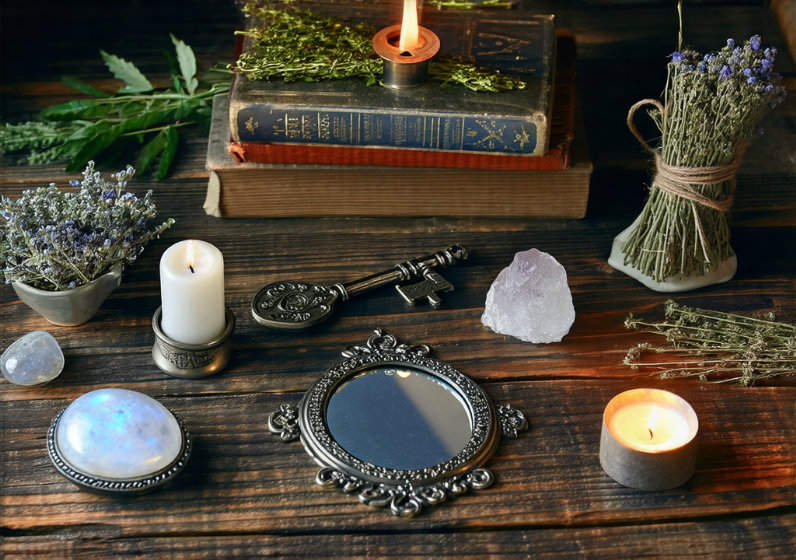
Your altar doesn't need to be beautiful in the decorative sense. It needs to be functional—a place where you can gather, focus, and perform ritual without distraction.
A minimal altar might include:
A surface (a shelf, a table, even a flat stone)
One candle (white for general work; specific colors for specific intents)
An incense burner or simple stick of incense
A small water vessel (a glass of water is enough)
A grounding object (a stone, a crystal, a handful of salt in a dish)
Something personal—a photo, a letter, an heirloom—something that anchors the space to your life
Arrange them deliberately. In many Western ceremonial traditions:
Water goes West
Fire (candle) goes South
Earth (salt/stone) goes North
Air (incense smoke or a feather) goes East
This creates a microcosm of the four elements surrounding your central point. You're not just decorating; you're building a symbolic map that your conscious and subconscious mind can orient to when you sit before it.
The Ritual Structure: How a Ceremony Actually Works 📜
A ceremonial ritual, even a simple one, follows an arc. Think of it as the narrative shape of any good story—beginning, middle, end—with added layers of symbolic action.
1. Preparation & Purification (Opening)
Before you begin, clear your mind and space. Light a candle or burn incense to mark the transition from everyday life into ritual time. Some practitioners use sound—a bell, a chime, a single struck tuning fork—to signal that ordinary noise is being set aside.
A simple opening might be:
"I call this place sacred. I call myself present. Let all distraction fall away."
You don't need to say it in Latin or Old English. Speak in the language your heart knows best.
2. Invocation & Grounding (Setting Intent)
Ground yourself—literally feel your feet on the floor, breathe deeply, notice the weight of your body. Then state your intention clearly. Not vaguely ("I want love"), but specifically: "I call clarity into my career decisions." "I release the resentment I carry from Monday's meeting." Specificity gives the ritual a target to aim at.
3. The Work (The Body of the Ritual)
This is where you do what you came to do. Write in a journal. Speak an affirmation aloud. Perform a simple action that symbolizes your intent—lighting and extinguishing a candle for a goal, pouring water into soil for growth, tying a knot in cord for binding or holding something close.
The key principle: action + meaning = ritual. The physical gesture is the verb; the symbolic meaning is the noun. Together they form a sentence your subconscious hears louder than words alone.
4. Closing & Gratitude (Sealing)
Never leave a ritual hanging in mid-air. Close it deliberately. Thank any spirits, elements, or forces you invoked (or simply acknowledge what you used—candle, incense, herbs). Blow out the candle or let it burn down. Collect your materials. Return to ordinary life with a conscious transition: "The circle is closed. I return in peace."
This last step matters more than most beginners realize. Without a closing, ritual energy lingers unresolved and can bleed into your day as low-level mental static. Closing seals the container.
Working With Time: The Rhythm That Makes It Stick 🌗
One of the most underused tools in personal witchcraft is time itself. You don't need to perform elaborate ceremonies every night. But aligning small practices with natural rhythms gives them compounding power.
Daily Micro-Rituals (5–10 minutes)
Morning: Light a candle, set one intention for the day, drink your first coffee in silence
Evening: Journal three lines about what you felt during the day; blow out the candle or extinguish it
You're training your nervous system to have two moments of sacred pause each day. Over weeks, this becomes an anchor—your mind learns that these pauses are real, not just routine.
Weekly Deeper Work (30–60 minutes)
Sunday evening: Do a full ritual with intention-setting for the week ahead
Or: A cleansing ritual to release what didn't work
Monthly Cycles (1–2 hours, at New and Full Moon)
New Moon: Write your intentions. Be specific. Read them aloud.
Full Moon: Review progress. Celebrate what worked. Release what needs to go.
This rhythm mirrors how most people already structure their lives—daily tasks, weekly reviews, monthly planning—but layers symbolic meaning onto it so the time itself becomes a tool rather than just a measurement.
Harnessing Your Space: The Invisible Architecture 🏡
Here's where ceremonial witchcraft gets practical and surprising. You don't need to move houses or buy expensive crystals. Start by noticing.
Thresholds matter. Doors, windows, the edge of your bed, the corner of a room—these are liminal spaces in symbolic terms. They're where one state transitions into another. Standing at a threshold before entering a room, taking three breaths, and setting an intention for that space is a simple but powerful micro-ritual.
Light changes everything. A dimly lit room feels different than a bright one—and it affects your emotional state in measurable ways. Use light deliberately: warm light for rest, cool white for focus, candlelight (real flame) for ceremony because the flicker forces you to slow down and attend.
Objects have memory. The mug you use every morning carries years of small rituals—warming hands, quiet mornings, conversations. Hold it before your first sip each day and feel its weight. That's not superstition; that's attention. And in witchcraft, attention is the first form of power.
Common Pitfalls (And How to Avoid Them) 🌿
Pitfall 1: Doing it for show.
Social media has made witchcraft performative. Pretty altars, elaborate props, aesthetic photos. But if no one's watching and you still do it—that's real practice. Your ritual doesn't need to photograph well. It needs to move something in your body or mind.
Pitfall 2: Collecting without practicing.
Buying ten crystals because a video said so means nothing if you never use them. Start with one or two objects and build outward as your practice deepens. Quality of attention beats quantity of props every time.
Pitfall 3: Forcing outcomes.
Magic is not a vending machine. You put in intention, do the work, and trust the process. Sometimes it works immediately. Sometimes it takes weeks. Both are valid. Ceremonial witchcraft teaches patience as much as power.
Pitfall 4: Neglecting the body.
Ritual without physical presence is just mental rehearsal. Ground yourself. Breathe. Feel the chair, the floor, your own heartbeat. Witchcraft is embodied. Your body is part of the ceremony, not an afterthought.
A Simple First-Rite You Can Do Tonight 🕯️
If you're new to this and want something concrete to try:
Find a quiet spot in your home—your desk, kitchen table, bedroom floor
Light one white candle (or use a small flame of any kind)
Place two hands on the surface before you
Take three slow breaths—in through the nose for four counts, out through the mouth for six
Say aloud: "I begin this ritual with clarity and intention."
State your specific intent in one sentence—write it down if possible
Sit in silence for two minutes, letting the flame's flicker settle your thoughts
Blow out the candle (or let it burn safely)
Say: "This space is closed. I return to my day with presence."
That's a complete ritual. Five objects at most—candle, surface, hands, breath, words. No incantations you don't understand. No 20-step process. Just structure, attention, and a small act of symbolic meaning.
Do this for seven nights in a row and notice how your relationship to that corner of the room changes. It becomes yours in a way it wasn't before. That's what ceremonial witchcraft does: it takes the ordinary and makes it speak.
The Bigger Picture: Why This Matters Now 🌍
We live in an age of constant stimulation. Notifications, feeds, noise, speed. Ceremonial witchcraft—any structured practice that demands you slow down, attend to a single moment, and act with intention—is almost radical by comparison. It says: you are not just processing information; you are a participant in a living world.
That's not naive idealism. It's practical. People who practice some form of ritual—religious or secular—report greater emotional regulation, stronger sense of identity, and more stable relationships than those who don't. The structure gives the mind somewhere to rest. The symbols give the subconscious language to work with. The repetition builds neural pathways that make intention feel less like a wish and more like a habit.
You don't have to believe in spirits or gods to benefit from this. You just have to believe that you are not separate from your environment—and that small, deliberate acts of attention can shift how you move through the world.
Your Next Steps (A Gentle Roadmap) 🗺️
Week 1:
Choose a simple space for your practice
Get one candle, a notebook, and something to burn (incense or a stick of sage/cedar—whatever smells good to you)
Do the five-step rite above every evening for seven nights
Journal after each: What did I notice? How did my body feel?
Week 2:
Add one more element—a small stone, a glass of water, an object that's meaningful to you
Begin aligning your practice with the moon phase (check a lunar calendar app)
Write three specific intentions for the month ahead at the New Moon
Month 1 onward:
Deepen: Add one new ritual element per week
Explore correspondences: Pick two or three herbs, crystals, or colors and learn their traditional meanings
Begin keeping a "ritual journal"—date, intent, actions taken, observations. This becomes your personal grimoire over time
Final Thought 🌙
The enchanted world isn't out there somewhere. It's the texture of your own life, seen with more attention than most people allow themselves to give. The candle you light before bed is a small ceremony. The way you greet someone in the morning can be an act of blessing. The garden you tend is a living altar.
Ceremonial witchcraft doesn't add magic to your world. It helps you see that it was there all along—woven into every object, every season, every breath. And once you see it, you can work with it. You can harness it. Not by controlling the world, but by entering into relationship with it through structure, symbol, and sustained attention.
That's enough to start. That's really all it takes.
Light a candle. Set an intention. Begin. 🕯️✨