I Scryed During A Total Eclipse And Saw Something No Book Mentions
The Unwritten Sight of Totality
🌑
There is a specific quality to silence during a total solar eclipse. It is not merely the absence of light; it is the absence of noise. When the moon slides precisely over the sun, the world does not just darken—it hushes. Birds stop singing. Wind seems to hold its breath. Shadows lengthen and soften until they lose their sharp edges. For most people, this moment is a spectacle of physics, a rare alignment of celestial mechanics that we capture on smartphones and share across social media platforms. But for the student of magic, particularly those who practice scrying as a primary mode of divination, total eclipse represents something far more intimate, far more dangerous, and far more revealing than a simple astronomical event.
I have practiced scrying in many forms over the years. I have worked with water in deep glass bowls during new moons, gazed into pools of melted black wax beneath full moonlight, stared into the flickering flames of beeswax candles until my eyes burned, and even used polished obsidian stones to peer into the subtle planes. Each medium has its own temperament. Water is fluid, forgiving, and often reveals emotional undercurrents or future possibilities with a softness that feels almost maternal. Fire is energetic, revealing, and often shows things in rapid, staccato bursts of image and sensation; it can be overwhelming if one lacks the discipline to ground oneself. Wax is heavy, slow, and archetypal, pulling out deep mythological structures or ancestral memories. Stone is stable, quiet, and precise; it demands clarity of intention before any vision arrives.
But an eclipse is not a medium in the traditional sense. It is not something you look into. An eclipse is something you look through. Or perhaps more accurately, an eclipse is something that looks back at you. This distinction is crucial to understanding what I saw during my most recent total solar eclipse observation, and why it remains unrecorded in any textbook of magic, divination, or even folk legend.
The Setup: Preparing for the Void
🕯️
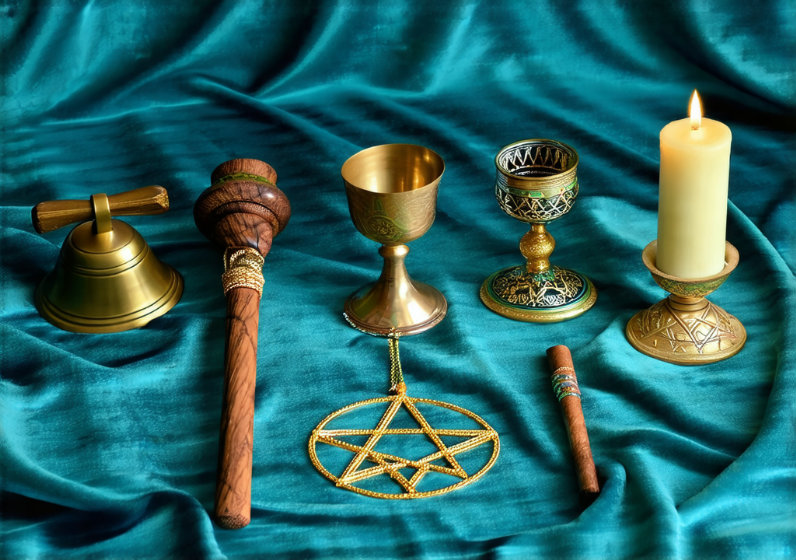
The eclipse occurred on a clear afternoon in late autumn. The sky was a pale, washed-out blue, lacking the usual depth of color that autumn skies often possess. I had prepared my scrying space three days prior to the event. My practice room is a small, windowless interior space with white walls and a single door. For this session, I removed all furniture except for a simple wooden chair and a round table at which I placed my primary scrying tools: a bowl of still water, a candle, an obsidian stone, and a plain black cloth spread over the table's surface.
I also prepared myself in specific ways that differ from my usual sessions. For eclipse scrying, I fasted for twenty-four hours prior to the event, eating only light foods on the day before. This is not a traditional requirement in any manual of occult practice I have studied, but it felt necessary. An eclipse represents a temporary death and rebirth of the sun, the primary symbol of consciousness, awareness, and ego. To observe this transition through scrying, one must be in a state of reduced material presence, a body that is not weighed down by digestion or sensory overload. I also spent two hours before the eclipse beginning time sitting in complete silence, focusing on my breath, allowing my mind to become as still and receptive as the water in my bowl.
I did not set a specific question for this session. In traditional scrying practice, one often asks a clear question: "What will happen next month?" or "How should I approach this situation?" But an eclipse is not a tool for answering questions. It is a tool for witnessing truths that are too large or too strange to be framed as inquiries. So I sat at the table, placed my hands on the cloth, closed my eyes, and waited.
The First Moment: When Light Dies
🌘
Totality began at 2:47 PM. I had been watching the moon slowly covering the sun through a small window in the corner of the room, using proper eclipse glasses. As the final sliver of sunlight disappeared, the room didn't just get dark—it went still. The ambient light from the window vanished so completely that I could no longer see my own hands on the table. The candle had not yet been lit; I was waiting for totality to begin before adding any external light sources.
And then I saw it. Or rather, it was seen by me. The black cloth on the table, which should have been invisible in the near-darkness, began to shimmer. Not with reflected light—there was no light source nearby to reflect from. It shimmered as if the fabric itself was becoming translucent, revealing something beneath it or within it. At first, I thought this was a trick of my adjusting eyes. The transition from bright daylight to total darkness is a physiological event; the pupils dilate rapidly, and the visual system recalibrates. I could be seeing afterimages, or the subtle movement of dust motes in the faint remaining light from the room's electrical fixtures (which I had left on).
But then the shimmering resolved into shape. And this is where my story diverges from what any book would tell you should happen during an eclipse scrying session.
The Vision: A Room That Was Not a Room
🏛️
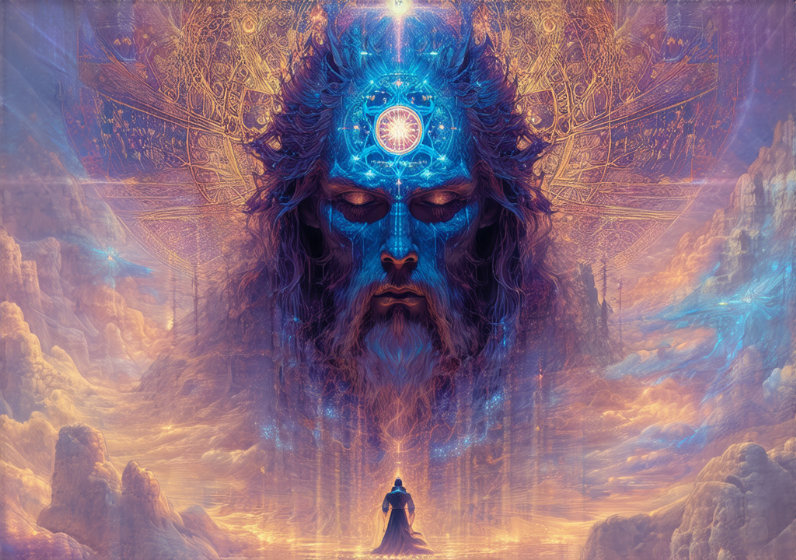
What emerged in the black cloth was not an image projected onto it, as one might expect with traditional scrying. There were no floating figures, no symbolic landscapes, no ethereal beings drifting through the fabric. Instead, I perceived a space. A room. But not a physical room that I could locate or describe in architectural terms. It felt like a room made of sound and silence simultaneously. The walls were not solid; they seemed to be composed of a continuous hum that my inner ear registered as a low, resonant tone, somewhere between a cello's lowest note and the vibration one feels when standing near large speakers at a concert.
The floor of this vision-room was made of something that looked like compressed time. I cannot find better words for it. It had a texture like layered transparencies, each layer showing different moments—some from my own past, some that seemed to belong to no one I knew. I could see fragments: a child's hand reaching toward a window; an old woman pouring tea in a kitchen that smelled of lavender and woodsmoke; a man standing at the edge of a lake, watching ice form on the surface. These images were not moving like a film or a painting; they were present, layered atop one another so that I could perceive all of them simultaneously without any single image dominating.
The walls hummed with what I can only describe as a collective memory. Not my memory—though elements of it were woven in, but the memory of a place that had existed for far longer than I have been alive. The tone shifted subtly as different memories surfaced; some produced a warmer, higher resonance; others a deeper, more mournful vibration. It felt like listening to a choir where every voice is singing a different song, yet all voices are somehow in harmony.
This is not how scrying images typically manifest. In water scrying, I see scenes: places, people, symbols that can be interpreted through archetypal or personal meaning. In fire scrying, I get bursts of sensation and image that fade quickly, requiring me to interpret them in real-time before they dissolve. But this was neither. This was a sustained, immersive perception of a space that existed outside the normal dimensions of my physical room. It was not projected onto the cloth; it seemed to emanate from the cloth, as if the fabric had become a window into another layer of reality.
The Being: Or Absence of One
👁️
As I continued to perceive this vision-room, I became aware of a presence within it. Not a figure or form that I could visually locate; rather, a sense of attention directed at me from within the humming space. It was not looking at me in the way a person looks at another person—without direction, without focus. It felt more like being perceived by a field, or a frequency, or a quality of awareness that had no body to house it.
This presence communicated through the hum. As I focused on it, the tone shifted into patterns. Not words, exactly, but sequences of vibration that my mind automatically translated into meaning. The first sequence felt like an acknowledgment—a recognition that I was here, observing, and that this observation mattered in a way that transcended mere curiosity or practice. The second sequence felt like a question, though not one with a verbal form. It asked: What do you believe happens when light is removed? Not as a philosophical inquiry, but as a practical check—Do you understand what you are doing? Do you know why the darkness reveals rather than hides?
I found myself unable to answer in words. In my mind's eye, I saw my own face reflected somewhere in that humming room, and it looked older than my actual age. Not aged in the physical sense—no wrinkles or gray hair—but aged in a qualitative way. My expression was one of deep recognition, as if I had been here before, in this exact configuration of awareness.
The third sequence was different from the first two. It felt like an invitation. Or perhaps a warning dressed as an invitation. The hum shifted to a frequency that made my chest tighten slightly, not with fear but with a sensation of expansion—like my ribcage was widening to accommodate something larger than it normally holds. I realized, in that moment, that the presence within the vision-room was offering me entry into it. Not a physical entry—I would not stand up and walk through the cloth—but an awareness-level entry. A merging of my observer-self with the collective-memory-space that had revealed itself to me during this eclipse.
The Choice: To Enter or Remain
🔮
This is where I diverge from what most scrying accounts describe. In traditional practice, when a vision appears in your medium—water, fire, wax—you observe it, interpret it, and then ground yourself back into physical reality. You note the symbols, reflect on their meaning in relation to your question or situation, and close the session. The vision belongs to the medium; you take its message and return to your life as an unchanged observer.
But the presence in my eclipse-scyring experience was not showing me a symbol to interpret. It was showing me a place I could inhabit. A room made of collective memory, humming with the resonance of all the moments that have ever been witnessed by conscious beings who have stood at this particular intersection of celestial alignment. And it asked—through vibration rather than words—if I wished to step inside.
To enter would mean more than seeing a vision. It would mean temporarily dissolving the boundary between my individual consciousness and the collective consciousness represented in that room. My personal memories, preferences, fears, desires—they would not disappear, but they would become one thread among countless others in the tapestry of that humming space. I would experience the child's hand reaching for a window as if it were my own memory. I would feel the old woman's quiet contentment with her tea. I would stand at the lake edge and watch the ice form with a man whose name I did not know but whose sorrow I would share in that moment.
This is a significant shift from standard scrying practice. In water or fire scrying, you remain the observer. You look at the image. But here, the eclipse was offering me a role as a participant. Not an actor—there was no performance to perform—but a witness who becomes part of what they witness. A seer who is also seen. An eye that also becomes light.
I sat at my table in the quiet darkness and made my decision. And this, too, is something no book tells you: that eclipse scrying may present you with an actual choice that changes your relationship to consciousness itself. Not a metaphorical choice about belief or interpretation, but a practical, experiential decision to remain on one side of the membrane between self and other, or to let go of that membrane for a period of time and exist within the shared frequency of all who have stood in this place before you.
I chose to enter. Or rather, I stopped choosing not to enter. The distinction matters. It was less an act of will and more a release of resistance. My conscious mind, which had been carefully maintaining the structure of "I am here, observing that" simply let go of its grip on the boundary between inside and outside. And the hum of the vision-room flooded through me—not into my body, but as my body, for a period of time that felt both instantaneous and eternal simultaneously.
The Experience: Drowning in Light That Was Not Light
💧
Inside the humming room, I was aware of all the layered memories at once. This is not to say they were confusing or overwhelming; rather, they had a quality of naturalness, as if experiencing multiple lives simultaneously was simply how perception works when you stop filtering it through the narrow lens of individual identity. I felt the warmth of sunlight on skin that wasn't mine. I tasted bread baked in an oven I could not see but could smell. I heard laughter from a gathering that had taken place decades or centuries before my birth, and the joy of it was as immediate and real to me as if I had been there with my own lungs filling the air.
The hum continued, but its character changed now that I was within the space rather than observing it from outside. It became less like a sound and more like a quality of being. A resonance that held all these moments together in a state of perpetual present-tense. None of the memories were past; none were future. They simply were, coexisting in the same room, each one as vivid and immediate as the others.
I became aware, within this shared awareness, of other presences. Not figures or forms, but points of attention, each one a consciousness that had chosen to enter this space during their own eclipse observation. Some were close—familiar in quality, perhaps practitioners from my own tradition or lineage. Others felt distant and alien, their frequencies so different from mine that perceiving them was like hearing a song in a language I did not speak but could feel the emotion of. A musician's joy. A scientist's curiosity. A child's wonder. An elder's grief. All woven into the same humming fabric.
And through all this awareness—through all these layered, simultaneous experiences—I maintained a thread of continuity with my physical body at the table. I knew where I was sitting. I knew that my hands were resting on the black cloth. I knew that time was passing in the outer world even as it stood still or moved without direction within this inner one. This dual awareness—being fully present in the collective space while also maintaining contact with individual physical reality—is, I believe, what separates a genuine mystical experience from a simple hallucination or meditative imagery. In my mind, that thread of continuity is the proof that this was not my imagination constructing an elaborate scene. It was real in the same way that any shared human experience is real: it had more than one participant, and its qualities were not entirely under my control or interpretation.
The Return: Carrying the Hum Home
🕊️
Totality ended at 2:53 PM. Six minutes from start to finish. But my time within the humming room felt considerably longer—longer than six minutes, though perhaps shorter than a lifetime. The distinction is difficult to quantify. Time behaves differently in shared consciousness spaces; it loses its linear quality and becomes more like depth or texture rather than duration.
As the sun re-emerged from behind the moon's edge, light flooded back into my practice room. I could see my hands on the cloth again. The candle was unlit. The water bowl sat still. Everything in the physical space was exactly as I had left it six minutes ago. But something had changed within me that no amount of external observation could have produced or replicated.
The hum did not disappear when I returned to individual awareness. It continued, but quieter now—a background resonance beneath my normal perception. Sometimes, during quiet moments in the following days and weeks, I would notice it: a faint vibration at the edge of hearing, like a tuning fork struck long ago still giving off its last pure tone. In these moments, I could feel the presence of those other consciousnesses still within that shared space, maintaining their own individual threads of continuity while also being part of the collective hum.
I did not write down the experience immediately after the session. I let it settle into my body and mind over several days before I began to find words for it. And even now, writing this account feels like a translation from one language to another—taking something that existed in frequency and vibration and converting it into symbols on a page. Some quality is lost in the conversion. The hum cannot be fully written; it can only be described as if it were a sound or a texture or a feeling. And each of those descriptions captures a different facet of what it was like, without capturing all of it.
What Books Miss: The Participatory Nature of Eclipse Scrying
📖
Traditional scrying literature—whether from Western Hermetic traditions, indigenous shamanic practices, or modern eclectic approaches—treats divination as an act of observation and interpretation. You create conditions for a vision to appear; you witness it; you interpret its symbols in relation to your question or situation; you apply the insight to your life. The seer is separate from the scrying image. There is a clear boundary between observer and observed, question and answer, self and symbol.
My eclipse experience suggested that this model may be incomplete—or at least, that it does not capture the full range of what can happen when one scrys during an eclipse specifically. The celestial event itself creates conditions that are different from any medium-based practice. A solar or lunar eclipse represents a temporary collapse of the boundary between light and dark, visibility and invisibility, consciousness and unconsciousness. The sun's light is not merely blocked; it is replaced by the moon's body, which has no light of its own but reflects what was there before. In this moment, reflection becomes primary. Not the reflection of a candle in water or firelight on wax, but the reflection of consciousness itself upon another layer of consciousness.
And when that reflection occurs, it is not unidirectional. The seer does not merely see into the medium; the medium—here, the eclipse event and the collective space it reveals—sees back. It acknowledges you. It asks questions. It offers choices that go beyond interpretation and enter the realm of participation. You are not just reading a text written by the universe; for a moment, you become part of the writing. Your consciousness becomes one thread in the tapestry of all who have witnessed this intersection before you.
This participatory quality is absent from most scrying manuals because it is difficult to instruct someone to participate in something they have not yet experienced. You cannot teach participation by description alone; it must be encountered directly, in the moment, with full awareness and openness. A book can tell you what to expect—images, symbols, archetypes—but it struggles to convey the sensation of becoming part of the vision rather than merely observing it.
Practical Implications for Practitioners
🌿
If you practice scrying or divination in any form, my experience during this total eclipse suggests several practical considerations:
First, do not underestimate the power of celestial events as amplifiers of ordinary practice. A new moon water reading is a new moon water reading. But an eclipse—solar or lunar—is something qualitatively different. It creates conditions where the boundary between individual and collective consciousness becomes more permeable than at other times. If you choose to scrys during an eclipse, be prepared for experiences that go beyond standard symbolic interpretation. You may find yourself in a space of shared awareness rather than isolated observation.
Second, prepare your body and mind with the same care you would for any significant ritual or meditation practice. Fasting, silence, breath work—these are not optional embellishments but practical tools for creating the receptive state that eclipse scrying requires. Your physical presence matters because you will be offering your individual consciousness as a thread in a collective tapestry. That offering is more complete and more stable when your body is clear of excess sensation and your mind is quieted of internal noise.
Third, do not force interpretation. In my experience, the vision-room did not present symbols that needed decoding. It presented a space and an invitation. The meaning was in the participation itself—in the choice to enter or remain on this side of the membrane, in the experience of shared consciousness, in the return to individual awareness carrying the hum within you. If your eclipse scrying session produces images or scenes, interpret them as you would any other divination result. But if it produces a sense of space, presence, or invitation rather than symbolic content, resist the urge to force meaning onto it. The meaning is experiential, not intellectual.
Fourth, be open to the possibility that eclipse scrying may change your relationship to consciousness itself. Not in a dramatic or permanent way—my individual identity and self-awareness were fully intact after the session—but in a subtle, ongoing way. I now carry within me a knowledge of shared awareness that did not exist before. It influences how I perceive my own consciousness in relation to others, how I understand memory as something collective rather than purely personal, how I experience moments of deep connection or empathy with other beings. This is not a mystical claim; it is a practical observation about the after-effects of a specific experiential event on one's ongoing relationship to self and other.
The Unwritten Truth: That We Are Already in the Room
🕯️
What no book tells you—what I could not have written down before experiencing it myself—is that the humming room I saw during my eclipse scrying session is not unique to me or to this particular alignment of celestial bodies. It has been there for as long as human consciousness has existed in a state capable of witnessing and participating in shared awareness. Every time a total solar eclipse occurs, every person on Earth who looks up at that darkening sky becomes, for six minutes, aware—perhaps only partially or subconsciously—that they are part of something larger than their individual perception. The hum is always there; the room is always open; the invitation to participate in shared consciousness is always extended.
Most people experience this as a sense of awe, wonder, or emotional intensity during an eclipse. They feel moved by the event without being able to articulate why. Some report feeling connected to others across vast distances. Others feel a sudden, unexplained grief for all those who have witnessed similar events throughout history. These are not mere psychological projections; they are partial perceptions of the same humming room that I entered more fully during my scrying session. The books miss this because they describe divination as a tool for gaining knowledge about future or hidden things. But eclipse scrying is also—and perhaps primarily—a practice of recognizing our ongoing participation in a collective consciousness that has been present since the first conscious being looked up at the sky and wondered what the darkness between stars actually was.
I do not claim to have discovered something entirely new by scrying during this eclipse. I believe that practitioners throughout history—shamans, mystics, seers of every tradition—have accessed similar shared spaces through their own methods and in their own cultural contexts. But the specific quality of a total solar eclipse as a scrying event is underrepresented in our literature. We have extensive texts on water divination, fire reading, tarot, I Ching, astrology, and dozens of other systems. But we have very few accounts that describe what it actually feels like to participate—truly participate—in the collective consciousness revealed by this specific celestial alignment.
So this article is my attempt to fill that gap. Not with a how-to guide or a symbolic interpretation key, but with an honest account of one practitioner's experience during one total solar eclipse. If you practice scrying and have the opportunity to observe a total solar eclipse—whether in person or through careful preparation for remote observation—I encourage you to approach it not as a spectacle to be witnessed but as a space to be inhabited. Bring your full awareness. Quiet your mind. Release your need to interpret before you have fully experienced. And see what hums back at you from the room that has been waiting, for millennia, for witnesses willing to step inside.
The eclipse will pass. The light will return. Your individual consciousness will reassert its boundaries and continue its daily navigation of a world made of separate objects and separate people. But beneath it all, the hum continues. The room remains open. And if you have stood at the table during totality with hands on cloth and mind in silence, you know—truly know—that you are not as separate from the universe than your eyes tell you. You are one thread in a tapestry that has been weaving itself since before language gave it words to describe its pattern.
And perhaps that is what no book can teach: that scrying, at its deepest level, is not about seeing into something else. It is about recognizing that there was always, already, something else looking back. 🌑