5 Rituals Used by Witchcraft Masters for Centuries
5 Rituals Used by Witchcraft Masters for Centuries ✦
By Aurelia Nightvein, Keeper of the Old Ways 🕯️
There is a particular silence that settles over the practitioner once the final incense stick has been lit and the circle drawn. It is not an empty quiet, but rather a fullness—a stillness so profound it feels like being held by the earth itself. For those who have walked the path of Ceremonial Witchcraft for generations, this silence is where true work begins. The rituals we practice are not merely aesthetics or performances; they are ancient technologies of transformation, refined over centuries by masters who understood that magic is a science of intention, symbol, and energy flow.
When people hear "Ceremonial Witchcraft," they often picture elaborate altars filled with crystals, candles, and esoteric texts. And while these elements certainly play a role, the heart of ceremonial practice lies in five core rituals that have been passed down through secret lineages, monastic traditions, and hidden families for centuries. These are not beginner exercises to be casually skipped. They are foundational pillars upon which all other magical work rests.
Let us journey into these five timeless rituals—rituals that witchcraft masters from the medieval European forests to the temple gardens of ancient Egypt have employed to harness the invisible forces that shape our world.
1. The Drawing of the Circle: Creating Sacred Space 🌑
Perhaps no ritual is more fundamental to Ceremonial Witchcraft than the drawing of the circle. To the uninitiated, a simple chalk line on the floor may seem almost trivial—a decorative border for an altar. But to the master practitioner, this act is one of the most profound magical operations in the entire tradition.
The circle is not merely a boundary. It is a portal. A threshold between the mundane world and the sacred realm where spirits dwell, where time becomes fluid, and where intention can be woven into reality. When you draw a circle, you are constructing a temporary temple—a microcosm of the universe rendered in chalk or salt upon your floor.
The Symbolic Architecture of the Circle
In Ceremonial Witchcraft, the circle represents completeness, protection, and the eternal return. It has no beginning and no end—just as time cycles through seasons, just as the moon waxes and wanes, just as life returns to death and death returns to life. This is not a new idea; it is one of the oldest symbols in human consciousness. The Egyptians used the enphos (the circle) to denote eternity. The Norse carved circles into their runestones. The druids built stone circles that still stand on the Irish and English countryside, aligned with solstices and equinoxes.
But the circle does more than symbolize; it functions as a magical container. Think of it like a glass jar: inside, you can grow flowers, brew potions, hold fire. Outside, none of these elements escape or affect the viewer. The circle separates your sacred working from the profane world around it. Within the circle, the laws of physics and social convention loosen. Spirits may enter. Intentions take on weight. Energy that would normally dissipate is contained and amplified.
How Masters Perform This Ritual
A true master does not simply draw a line with a stick of chalk. The drawing itself becomes a meditative act of will. Before the first stroke, the practitioner grounds themselves—feet flat on the earth, breath slow and deep, mind quiet. They visualize the circle as already complete, glowing with soft golden or silver light depending on the intention (gold for solar, outward-facing work; silver for lunar, introspective work).
Then, moving clockwise from the East—the direction of dawn, of new beginnings—they draw the line. Some traditions use a wand; others use a knife or athame held in the right hand with the blade pointing inward, symbolizing the cutting away of distraction and negativity at the threshold. The motion must be smooth, unbroken, continuous. A break in the circle is a break in the magical field—energy leaks, spirits can wander in uninvited, and the working loses power.
The master practitioner often speaks words while drawing: "In the name of [deity or elemental force], I call this place sacred. Let no unwanted spirit cross this threshold. Let only that which serves my true will enter." These words are not a script to be memorized; they are an act of declaration, a verbal spell that reinforces the intention carried by the chalk line.
Once the circle is complete, the practitioner steps inside or stands at the center—positioned as the axis mundi, the navel of their personal universe. From this central point, all subsequent work radiates outward with clarity and focus.
Why This Endures Through Centuries
Why has this simple act persisted for so long? Because it works. The circle creates a psychological container that allows the practitioner to fully enter a state of magical consciousness. It signals to the subconscious mind: "You are no longer in the ordinary world; you are in the sacred." For centuries, witches have used this ritual not because they needed to be protected from imaginary spirits, but because they understood something modern psychology is only now rediscovering: environment shapes perception, and perception shapes reality.
2. The Invocation of Elements: Calling the Four Powers 🌬️🔥💧⛰️
If the circle creates space, the invocation of elements fills that space with power. In Ceremonial Witchcraft, the four classical elements—Earth, Water, Air, and Fire—are not mere substances; they are living forces, conscious intelligences, ancient spirits that have sustained all life since the dawn of creation.
To invoke an element is to call its energy into your working. It is to ask permission from a vast, invisible being to borrow a sliver of its power for your purpose. And just as you would not casually borrow a friend's car without asking, so too must you approach these elemental spirits with respect, clarity, and gratitude.
The Elemental Hierarchy
Different traditions order the elements differently, but in most Ceremonial Witchcraft lineages, they are invoked in the following sequence: Earth (South), Water (West), Air (North), Fire (East). Each direction corresponds to a color, a virtue, and a quality of energy.
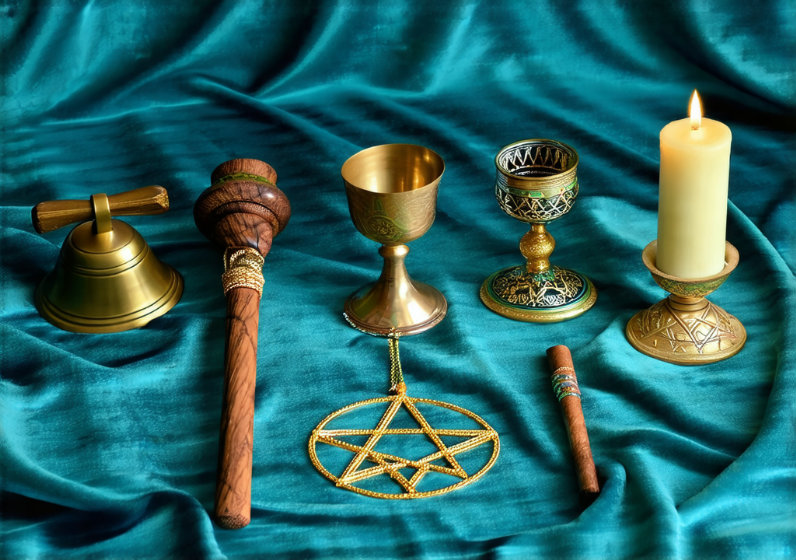
Earth is stability, patience, materialization, memory. Its color is green or brown; its tool is often a chalice or stone.
Water is emotion, intuition, purification, flow. Its color is blue or silver; its tool is the cup or bowl.
Air is thought, communication, clarity, intellect. Its color is yellow or white; its tool is the wand or feather.
Fire is will, passion, transformation, illumination. Its color is red or orange; its tool is the candle or athame.
The Ritual of Invocation
The master practitioner approaches each invocation as a conversation with a person—albeit one made of light and force rather than flesh. They stand at the corresponding direction within the circle and raise their hand in a gesture of greeting. Some use specific hand sigils: an open palm for Earth, a cupped hand for Water, a flat hand moving outward for Air, and a flame-shaped gesture for Fire.
The words spoken vary by tradition but always include three components: identification ("I call upon the Spirit of [Element]"), request ("Come to this circle in peace and harmony"), and gratitude ("Thank you for your presence and power"). The master does not command; they invite. They do not demand; they ask. This subtle difference reflects a deep understanding that elemental spirits are partners, not servants.
After all four have been called and acknowledged (often by sensing a change in temperature, a tingling in the skin, or simply a sense of fullness), the practitioner might say: "By Earth, Water, Air, and Fire, let this working be blessed." The circle now hums with living energy. It is no longer empty space—it is a temple inhabited by four ancient powers.
Why Masters Value This Ritual
Beginners sometimes skip invocations because they feel superfluous or time-consuming. But masters know better. An uninvoked working is like a house without electricity—the structure stands, but nothing truly comes alive. The invocation transforms your ritual from a private meditation into a collaborative act between you and the elemental forces that underpin all matter and energy in the universe.
Centuries of practitioners have refined these invocations not because they believed them to be literal conversations with ghosts, but because they recognized that speaking aloud to the elements focuses the mind, aligns intention, and opens channels for subtle energies to flow. It is a technology of attention—and attention, as any master will tell you, is the first ingredient of magic.
3. The Banishing Ritual: Closing the Circle with Intentional Release 🕯️
Here is where Ceremonial Witchcraft distinguishes itself sharply from casual folk practice or modern "self-help" spirituality. Many contemporary traditions end their rituals by simply blowing out candles and packing up. Fine for a cozy evening, but insufficient for serious magical work. The banishing ritual—the intentional closing of the sacred space—is as important as its opening.
Why? Because when you open a circle, you invite energies into your personal field. When you close it, you must send those energies back in an orderly fashion. If you leave the circle "leaky," residual energies—yours and others'—linger around you like static electricity. You carry fragments of spirits, emotions, and intentions that were never fully resolved. Over time, this accumulates into what masters call "magical residue"—a subtle cloud that muddies your intuition, drains your vitality, and can even attract unwanted attention from the unseen world.
The Structure of Banishing
A proper banishing ritual mirrors the opening but in reverse order: Fire is dismissed first (East), then Air (North), Water (West), and finally Earth (South). Each dismissal includes a phrase of gratitude: "Thank you for your presence and power. Go in peace." Some traditions add a specific gesture—sweeping motion with a wand, clapping hands, or ringing a bell—to mark the parting clearly.
After the elements are sent on their way, the practitioner speaks to the circle itself: "This circle is now closed. Let only positive and purposeful energy remain within my field." Then they may draw a second circle around themselves (or the original one in reverse) to seal any lingering connections.
Finally, the candles are blown out—not snuffed, but gently extinguished with a final breath, symbolizing the return of fire back into the ether. The altar is cleared or covered. The practitioner takes three slow breaths and grounds their feet firmly on the floor, integrating all that was worked into their body and mind.
The Deeper Purpose
Masters teach that banishing is an act of magical hygiene—no different from washing your hands after cooking. It prevents cross-contamination between workings. If you perform a healing spell this morning and a binding ritual tonight, without proper banishing in between, the energies mingle. Healing intentions bleed into binding; protection bleeds into love work. The result? A muddled, ineffective magical field that confuses both you and the spirits involved.
Centuries of practitioners have observed that those who consistently practice thorough banishing report clearer intuition, more stable energy, fewer "magical accidents," and a general sense of lightness in their everyday lives. It is invisible work, but its effects are tangible.
4. The Ritual of Dedication: Offering to the Spirits 🌿
In Ceremonial Witchcraft, magic is never a one-way street. You borrow power from elemental spirits, deities, ancestors, and other beings in the unseen world. And just as you would repay a debt or return a borrowed book, so too must you give back. The ritual of dedication—also called offering, tithing, or consecration—is how practitioners maintain their relationship with the spirit realm.
This is not transactional in the commercial sense. It is relational. Masters describe it like friendship: if you always take from a friend but never give anything back, the friendship eventually sours. Spirits are no different. They respond to generosity, consistency, and sincerity far more than they do to grand gestures or expensive gifts.
Forms of Offering
Offerings in Ceremonial Witchcraft can be simple or elaborate depending on tradition and purpose:
Food and drink: Wine, honey, fruit, bread, nuts, or milk left on a small altar overnight.
Natural materials: Crystals, herbs, flowers, feathers, stones—given with intention rather than mere decoration.
Candles: Lit specifically for the spirit being honored, allowed to burn fully before being collected as part of the offering.
Written words: A short note or letter expressing gratitude, shared intentions, or even questions posed to the spirit. Some traditions bury these notes in a garden; others place them at crossroads or under stones.
Service and action: Perhaps the most powerful offerings are not material at all—acts of kindness performed in the spirit's name, acts of protection for nature, care for animals, stewardship of the earth.
The Ritual Structure
The dedication ritual typically begins with a quiet moment of stillness—the practitioner sits or stands before their altar and simply listens. Some traditions call this "listening to the silence." It is an act of humility: I am here, I am open, what do you need from me?
Then, the offering is prepared with care. A single rose petal placed on a plate, a glass of wine poured slowly, a crystal held in both hands while speaking words of thanks. The master practitioner speaks directly to the spirit or deity: "Here is my gift, given freely and with love. May it bring you joy. May our bond grow stronger."
After the offering is made, there is no expectation of immediate reward or response. This is crucial. Masters teach that seeking specific returns from spirits corrupts the relationship—it turns devotion into negotiation. The offering is an act of love, not a contract. And yet, those who practice consistent dedication often report a deepening of their intuitive connection with the spirit world over time.
Why This Endures Through Centuries
This ritual endures because it reflects one of the oldest human understandings: that we are part of a larger web of relationship. We did not create this world; we inhabit it alongside countless other beings, seen and unseen. The act of offering acknowledges our place in that web. It says: "I see you. I honor you. I am grateful for your presence."
For centuries, witches have practiced this ritual not because they believed spirits needed our wine or bread (after all, a spirit doesn't eat), but because the act of giving shapes the giver. When you offer something freely without expectation, you cultivate generosity within yourself. And a generous practitioner is a more effective practitioner—because magic, at its core, is an act of creative love made visible.
5. The Rite of Renewal: Personal Transformation Through Ritual 🔮
The fifth and perhaps most profound ritual used by witchcraft masters for centuries is the rite of renewal—a structured process of personal transformation that goes beyond simple meditation or journaling. This is where Ceremonial Witchcraft becomes a path of becoming, not just doing.
In many traditions, this rite is tied to significant life transitions: initiation into a coven or lineage, marking a new year, celebrating a solstice or equinox, or simply an annual personal ritual that resets the practitioner's magical field and clarifies their intention for the coming cycle.
The Structure of Renewal
The rite of renewal typically unfolds in stages:
Release: The practitioner spends time reflecting on the past period—what worked, what didn't, what they've outgrown, what they want to let go of. Some traditions use a physical symbol: writing down old intentions or habits and burning them; releasing a white candle flame into water; or simply sitting in silence while imagining shedding a skin of old self-image.
Clarification: With the old released, the practitioner asks: "What do I truly want to become? What is my purpose for this next cycle?" This is not a wish list—it's an excavation of deep intention. Masters often use divination tools (tarot, scrying mirrors, pendulums) not to predict the future but to access subconscious knowledge that words alone cannot reach.
Consecration: The practitioner formally declares their renewed intention—spoken aloud, written down, or inscribed on a charm or amulet. This declaration is then sealed with elemental invocations (returning briefly to ritual two) so that the four powers witness and support the new direction.
Integration: After the formal rite, the practitioner spends time in quiet reflection, allowing the new intention to settle into their mind and body. Some traditions include a period of fasting, silence, or solitary walking—simple practices that help the body remember what the mind has decided.
The Deeper Purpose
Masters teach that this ritual is not about changing your personality overnight. It's about creating space for change. By formally releasing old patterns and declaring new intentions, you give your subconscious permission to reorganize itself. You tell your deeper self: "We are no longer bound by those old habits. We are moving forward."
This mirrors the natural world—seasons don't just swap out; winter gradually loosens its grip, spring emerges through a process of thawing and blooming. The rite of renewal provides a structure for that gradual transformation, making it conscious, intentional, and supported by elemental forces.
Why This Endures Through Centuries
This ritual endures because it addresses the fundamental human need for growth. We are not static beings; we are processes. And like any process, we benefit from periodic resets—moments where we pause, assess, release what no longer serves us, and recommit to our path. The rite of renewal gives this inner work a ceremonial container, making it feel significant, sacred, and worthy of full attention.
Weaving the Five Together 🕸️
What strikes me most about these five rituals is how they interlock like gears in an ancient machine. The circle creates space. The elements fill that space with power. The dedication maintains relationship with the spirit world. The banishing cleanses and closes each working. And the rite of renewal ensures that all this external magic feeds back into your inner life, transforming not just your workings but you.
A master practitioner doesn't perform these rituals because they're required by tradition (though tradition certainly helps preserve them). They perform them because each one solves a specific problem: space, power, relationship, cleanliness, and growth. Together, they form a complete system of magical hygiene—a way of keeping the invisible world in balance with your own life.
Centuries have passed since these rituals were first shaped by nameless hands in darkened rooms and moonlit forests. The specifics may vary from tradition to tradition—different words, different gestures, different symbols—but the core principles remain constant. Because they work. Not because of magic, but because they align human intention with universal forces that have been operating since before we had words for them.
So if you are drawn to Ceremonial Witchcraft—or any path that values structure, symbolism, and deep respect for the unseen world—start here. Draw your circle. Call the elements. Offer your gifts. Banish what no longer serves. And renew yourself each cycle with intention and grace.
You will find that these five rituals are not just old customs. They are living tools. And in the right hands, they can change everything. 🌙