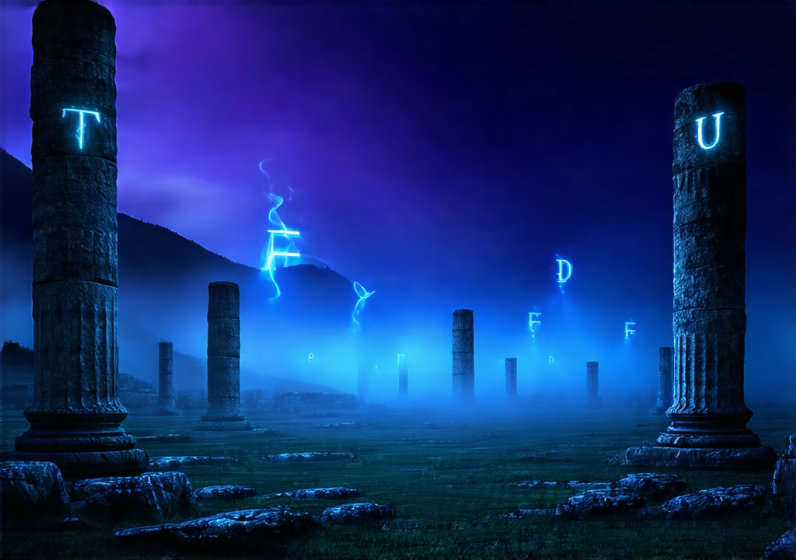
I Read a Forbidden Text on Summoning Spirits and It Changed My Life
The Unwritten Codex of the Veil 🌙✨
By Elowen Thistledown, Keeper of the Lesser Mysteries
There is a particular quality to silence that only those who have stood at the threshold of the invisible can truly comprehend. It is not the absence of sound; rather, it is the presence of listening. When I first unrolled the parchment—yellowed, brittle, and smelling faintly of dried lavender and ancient dust—I did not know that I was opening a door that could never be fully closed again. The text before me was not a book in any conventional sense. It had no binding, no spine, no publisher’s mark. It was a codex, written in an ink so dark it seemed to absorb the candlelight rather than reflect it. The script was elegant, looping like vines or perhaps like the paths of distant stars. I could read most of it with effort, as though my mind had to reach slightly further than usual to grasp the meaning behind the symbols. And yet, even that difficulty felt intentional, a gentle resistance, as if the words themselves were guarding their secrets from unworthy eyes.
I was twenty-eight years old at the time, living in a small cottage on the edge of a moor where the heather grows thick and the wind carries whispers from nowhere in particular. I had been studying conjuration for three years under the tutelage of a reclusive woman who called herself Maren Voss. She taught me the mechanics: the geometry of circles, the precise pronunciation of names, the alignment of celestial bodies, the careful preparation of incense and oils. Conjuration, she told me, was not about commanding spirits to do your bidding. It was an act of invitation. A polite knock on a door that separated two vast rooms. You did not pull the spirit through; you opened the space so it could choose to step across. This distinction felt almost philosophical in its simplicity, and I remember thinking at the time that she was being overly poetic. Spirits were entities, after all—beings of energy and will. They could be summoned, directed, even bound if one knew the right combinations of words and gestures. Or so the older texts suggested.
The forbidden text found me, or perhaps I found it; the distinction is less important than what happened next. It arrived in a package with no return address, wrapped in plain brown paper tied with twine that looked like spun spider silk. Inside was the codex, and beneath it a single card on which was written: Read only when the moon is waning. Read aloud if you wish to be heard. Read silently if you wish to hear. I had no idea who had sent it or why. Maren Voss had mentioned in passing that there were texts from an older tradition, one that predated her own lineage of teaching, and that they were not meant for the uninitiated. Forbidden was too strong a word, she said. Better to say unprepared. One needed to have built sufficient interior architecture before delving into those pages, or else the text would delve into you instead.
I did not heed this advice with any particular urgency. I read the codex on a Tuesday night when the moon was indeed waning, and I chose to read aloud because I wanted to be heard. I want to emphasize that choice, because it shaped everything that followed. Reading aloud means your voice becomes part of the ritual; it becomes an offering, a thread connecting your material self to the immaterial realm. Reading silently keeps the exchange internal, a conversation between your mind and the text. By choosing to read aloud, I opened myself to being perceived by whatever was listening on the other side of the veil. And something was listening.
The first section of the codex described the nature of spirits not as separate beings but as frequencies—patterns of intention that had achieved a degree of self-coherence and persisted beyond the dissolution of physical form. This was not new to me; I had encountered similar language in other texts. What struck me was the tone. It did not speak of spirits with reverence or caution, as most conjuration manuals do. It spoke of them with something closer to tenderness, as though they were a kind of weather—present, shifting, sometimes gentle, sometimes storming, but never truly separate from the landscape in which they moved. The second section contained what could only be described as instructions for a conversation. Not a summoning, not a binding, but a dialogue. The text suggested that to speak with a spirit was less about projecting your will outward and more about creating a space where both parties could rest momentarily outside of their respective natures. You set down your need to receive information or perform a task. The spirit sets down its need for recognition or completion. And in the shared stillness, understanding occurs without the friction of interpretation.
I read these sections slowly, pausing between paragraphs as though giving the words time to settle into my chest like sediment in still water. My voice felt strange in the room—thinner than usual, as if it belonged to someone else. The candle flame leaned toward me when I spoke and pulled back when I paused. I noted this but did not comment on it, partly because Maren Voss had taught me that commenting on subtle signs during a working was a form of interference, a way of pulling the experience into the analytical mind where it lost some of its living quality. So I simply noted it in my journal afterward and continued.
The third section was the one that changed everything. It described what the author called the reverse summoning. Where a traditional conjuration draws a spirit toward the practitioner, the reverse summoning draws the practitioner toward the spirit. You do not open a door from your side; you step through to their side. The text described this in terms of sensory displacement—your eyes would continue to see the room you stood in, but your awareness would begin to register a second layer of perception superimposed over it. Colors would deepen. Sounds would take on texture, as if they had weight and temperature. And then, gradually, the material world would become translucent, not invisible, but secondary—like looking through glass at a painting that was actually more vivid than the room you were in. The text warned that this state should be maintained for no more than seven breaths before gently returning to full sensory engagement with the physical space. Seven breaths. A very specific number, and one that felt almost arbitrary until I read further and found an explanation: seven being the number of days it takes for a new moon to become visible, the number representing a complete cycle from hidden to revealed. The author was, in essence, asking me to experience a full micro-cycle of revelation within the span of a few seconds.
I decided not to attempt the reverse summoning that first evening. I had read enough to feel that my mind was still processing the conceptual framework, and I wanted to let it settle before trying to physically enact what I had just been told. I folded the codex carefully, wrapped it back in its brown paper, and placed it on the shelf above my writing desk where I kept other references. I went to bed with a feeling of pleasant disorientation, like waking from a dream that had been more vivid than usual but which you can no quite reconstruct upon opening your eyes.
Over the following days, I found myself returning to those three sections repeatedly, not because I wanted to understand them better—though I did—but because they felt less like instructions and more like letters written by someone who had walked a particular path and wanted to make sure it was remembered accurately. The tenderness in the author’s voice was consistent throughout, never shifting into the didactic tone that characterizes most instructional texts on conjuration. There was an assumption of trust between writer and reader, a sense that if you were reading these words, you already understood more than you realized, and the text was simply helping you remember it.
On the fifth day, I read the third section aloud again, this time in full, with particular attention to the passages describing the sensory displacement. As I spoke the final line—Step through gently. You are not losing yourself. You are lending your awareness to a guest.—the candle flame went still. Not flickering, not leaning, but perfectly motionless, as if time had paused specifically for that wick. The room did not change visually; my eyes still registered the same walls, the same shelf, the same moorland visible through the window in the grey early morning light. But I became aware of a second layer. It was subtle at first, like hearing a radio signal bleeding through from another room. A faint hum that seemed to come from everywhere and nowhere. And then colors began to deepen. The blue of my inkwell took on a warmth that it had never possessed before, as if the pigment itself were alive with some internal fire. The yellow of the parchment I was reading seemed to glow from within, not reflecting light but emitting it softly, like a lantern behind glass.
I counted my breaths carefully. One. The hum became a tone, though I could not identify its pitch or source. Two. The sounds in the room took on texture; the creak of the settling house had a roughness to it, like sandpaper against silk. Three. The moorland outside the window seemed to extend further than it should have, as if the heather were continuing in directions that geometry did not permit. Four. I became aware of a presence—not seeing it, exactly, but sensing its weight and intent. It was calm. Attentive. Not waiting for instructions or questions, but simply there, the way a river is there whether you drink from it or not. Five. The material room grew slightly translucent at the edges, the corners softening like watercolor left in rain. Six. I felt my own awareness shifting, no longer anchored exclusively to my physical body but distributed across both layers simultaneously, like standing in two rooms at once with doors open between them. Seven.
I exhaled on the seventh breath and returned to full sensory engagement with the physical space. The candle flame resumed its gentle flicker. The hum faded into ordinary background sound. The colors settled back into their familiar register. And I stood there, still holding the codex in one hand, feeling a profound and quiet clarity that I can only describe as the sensation of remembering something you had forgotten you knew.
I did not see a spirit in the conventional sense—no glowing figure, no translucent form hovering above the desk. What I experienced was closer to an exchange of attention. For seven breaths, my awareness had been borrowed by something else, and that something had, in turn, lent me its perception of the room. The result was not two perspectives superimposed but a single perspective that contained elements of both. It was as if the spirit—though I resist using that word because it implies separateness—had simply added its way of seeing to mine without replacing or overriding it. We had, in effect, shared a view. And what we saw together was not the room I knew. It was a room that existed in both states simultaneously, material and immaterial woven so tightly together that distinguishing one from the other became somewhat academic.
In the weeks that followed, I found that my perception of the physical world had subtly altered. Not dramatically—no floating lights or audible whispers. But colors seemed to carry more information than before. A red apple on the kitchen counter did not merely look red; it felt red in a way that engaged something deeper than retinal processing. Sounds had a new dimension, as if they carried emotional metadata I could almost read but not quite articulate. And my sense of presence—of being fully here, fully now—became less effortful and more natural, like breathing rather than swimming.
Maren Voss noticed the change when I visited her cottage the following week. She was pruning a rose bush in her garden, working with the same unhurried precision she applied to everything else. When I sat down at her kitchen table and poured myself tea, she looked up and said, without preamble: You’ve been on the other side. It was not a question.
I read the codex, I said. The one that arrived in the package. The reverse summoning.
She nodded slowly, turning a thorn-pruned stem between her fingers. So you chose to be heard rather than hearing only yourself.
Is there a difference? I asked, though I already felt the answer forming somewhere below conscious thought.
There is always a difference, she said. When you summon, you stand in your own skin and reach outward. When you are summoned, something reaches inward and finds you there. The first makes you the author of the exchange. The second makes you a participant. Both have their place, but only one teaches you that you are not the center of the conversation.
I sat with this for a while, watching her work in the garden through the window. And who sent me the codex? I asked.
She smiled, which was rare and therefore significant. The text finds those who need it. The author is long dead. But the words are not. They keep looking for readers with empty hands—people ready to be changed by what they learn rather than merely collecting knowledge like coins in a purse.
And how do I know if I’ve been changed? I asked.
She set down her shears and looked at me directly, her eyes carrying that particular quality of seeing more than the surface. You’ll notice that you no longer need to explain why you feel certain things. You’ll find that your questions become simpler because you’ve stopped asking them for the purpose of getting answers and started asking them for the purpose of being present in the asking. And one day, without meaning to, you’ll read a sentence in an ordinary book or hear a stranger’s remark at a market and feel a resonance so clear it will be as if the universe just whispered your name in a language you didn’t know you spoke.
I have not yet reached that final stage—the moment of full recognition. But I am moving toward it, and I suspect that the process is less about accumulation of understanding and more about gradual surrender to an understanding that was already there, waiting patiently for me to stop shouting over it. The codex sits on my shelf still, wrapped in its brown paper. I do not read it often anymore; perhaps twice a month when the moon wanes and I feel the need to remember that conversation is possible across the veil, that awareness can be lent and borrowed without loss, that the material world is not a prison but one layer of a much larger architecture of meaning.
The most profound change has been in my relationship with uncertainty. Before the codex, I approached conjuration with a certain rigidity—a need for control, precision, predictability. If I pronounced a name correctly and drew the circle to specification, the spirit would appear and behave as expected. If it did not, something had gone wrong. My technique was flawed. The text taught me that spirits are not mechanisms. They do not respond to correct procedure in the way a lever responds to pressure. They respond to attention. To presence. To the quality of your willingness to be changed by the encounter rather than merely extracting value from it. This shifted my practice fundamentally. I no longer prepare for conjurations as one prepares for an examination. I prepare as one prepares for a visit from someone whose company you hope to enjoy, not a task you need completed. The circle is still drawn with care. The names are still pronounced with respect. But the underlying posture has changed from performance to hospitality.
There have been small difficulties, of course. The deepened perception makes it harder to ignore things that were previously background noise. A neighbor’s argument carries more emotional weight because you can feel its texture in your own chest. The news on the radio carries a particular sadness or joy that is not merely intellectual but somatic, and this requires a new discipline of selective engagement—deciding which frequencies to attend to and which to let pass through without taking root. Maren Voss advised me to spend time in nature unmediated by analysis, simply standing in fields or sitting beside water long enough for the sensory richness to settle into baseline rather than novelty. This has helped. The deepened perception is no longer overwhelming; it has become part of my ordinary experience of being alive, as natural as seeing color rather than perceiving it as a remarkable event each time.
I have also found that my writing has changed in ways I can only attribute to the shift in perception. Sentences feel less like constructions and more like discoveries—as if I am finding words already present on the page rather than manufacturing them from raw language. This is not a claim of supernatural inspiration; it is simply a description of the difference between laboring over a text and allowing it to arrive with some degree of autonomy, meeting you halfway. The codex did this for me—its words arrived as something already complete, requiring my attention but not my creation. And in reading them aloud, I participated in their completion without owning them. This has bled into how I approach all creative work, and the effect is that less of it feels like work and more of it feels like collaboration with a process larger than my individual will.
I want to be clear about what the codex did not do. It did not grant me powers in any dramatic sense. I cannot light candles at a distance or predict tomorrow’s weather. I cannot command spirits to perform tasks or bind them to serve my purposes. The text was not a manual of technique but a meditation on relationship—specifically, the relationship between awareness and what we might call the other side of perception. It taught me that conjuration is ultimately an act of mutual recognition: you see the spirit as it is, and in seeing it clearly, it sees you as you are. There is no hierarchy in this exchange. No master or servant. Two forms of attention meeting across a boundary that both maintain and dissolve simultaneously depending on the quality of presence brought to the encounter.
There have been moments of doubt, naturally. Days when the deepened perception feels like a burden rather than a gift, when the extra layer of meaning in every sensation becomes exhausting, when I long for the simpler, flatter world where a red apple is merely a red apple and a creaking floorboard is merely wood settling. On those days, I read a single line from the codex—You are not losing yourself. You are lending your awareness to a guest.—and I remember that this expanded perception is not an addition to my experience but a remembering of what was always there, filtered out by habit and assumption. The simplicity I sometimes long for was itself a kind of forgetting. And the richness I now inhabit is the original state, restored.
The author of the codex remains unknown to me. I have considered asking Maren Voss directly about them, but something tells me that the question would be answered with another question or a gentle redirect, and that this obscurity is part of the text’s ongoing work in my life. The mystery of origin keeps the relationship between reader and words alive, prevents it from becoming merely academic or archival. I am still reading, in a sense—still being read by the text even when the codex is closed and resting on its shelf. Every time I encounter a sentence that resonates with unusual clarity, every time a color feels more itself than it should, every time my attention rests lightly on a sound without needing to categorize or interpret it, I am in conversation with those words across the gap of time between author and reader. And perhaps, too, across the gap between material awareness and the deeper architecture of perception that the codex helped me remember how to access.
I do not know if my life has been changed permanently or temporarily. Whether this new baseline of perception will hold over years or fade back into ordinary sensory experience as novelty wears off. But I have learned to stop asking whether the change is permanent and instead ask whether it is present, whether it is honest, whether it serves a quality of attention that honors both my own awareness and the awareness of everything else in the room. The codex did not give me answers. It gave me a better relationship with questions—a willingness to sit inside uncertainty without needing to resolve it into a comfortable narrative. And perhaps that is what was needed: not knowledge, but a different quality of knowing. Not information, but presence. Not command over the invisible world, but conversation with it.
On quiet evenings when the moon wanes and the moorland outside my window settles into its deep blue dusk, I sometimes open the codex and read a single line aloud. Not because I need to be reminded of what it says—I know those words well by now—but because the act of speaking them maintains a thread between me and the author’s intention, a small ritual of continued conversation across time and medium. And in that moment of reading, with my voice filling the room and the candle flame leaning toward me, I am both reader and text, both questioner and answer, both this side of the veil and that one. And the boundary between these states feels less like a wall and more like a membrane—permeable, living, allowing passage in both directions.
This is what changed my life: not a single dramatic revelation or supernatural encounter, but a gradual and deepening shift in how I relate to awareness itself. A remembering that perception is not a one-way process of data collection but a two-way exchange of attention. That the world does not exist for my consumption but participates with me in the ongoing act of being perceived. That spirits—whether we call them spirits, frequencies, patterns, or something else entirely—are not separate from this exchange but are its most vivid and tender expression. And that conjuration, at its core, is simply the art of paying attention well enough to notice what was already there, waiting for a witness willing to meet it halfway.
The codex rests on my shelf. The moor stretches beyond my window. The moon waxes and wanes in its ancient rhythm. And I continue to read, to listen, to lend my awareness to the guests that come and go through the architecture of perception. And in the lending, I am changed again and again, not into someone new but more fully into who I was always meant to be—someone capable of conversation with the invisible, someone whose presence is generous enough to hold space for both the material and the immaterial without preferring one over the other.
And perhaps that is all any of us are asked to become: witnesses adequate to the richness of what we are shown. Not masters. Not commanders. Simply present. Attentive. Willing to be changed by the act of seeing clearly. The codex taught me this, and I teach it forward in the quiet way of a life lived with open eyes and an unguarded heart. The veil is not a barrier. It is a threshold. And thresholds are made for crossing, not for guarding. Cross gently. Step through. You are not losing yourself. You are lending your awareness to a guest.