Ancient Wisdom, Modern Magic: Why Ceremonial Witchcraft Is Having a Moment
🌙 The Veil Thins: A Return to the Ancient Craft
✨ By Elowen Nightshade ✨
We are living in an era of profound spiritual hunger. The noise of the digital age, the relentless pace of modernity, and the search for authentic meaning have driven a new generation of seekers back toward something older, deeper, and more structured. They are not looking for quick fixes or passive consumption; they are looking for ritual, symbol, and ceremony. This is why ceremonial witchcraft—often mistaken as an esoteric niche reserved for scholars or initiates—is having a moment. It is emerging from the dust of old libraries and the quiet corners of academia to take center stage in modern spiritual practice.
To understand this resurgence, one must first dissect what ceremonial witchcraft truly is, distinguishing it clearly from its more popularized cousin, folk magic. While folk magic is often intuitive, fluid, and rooted in local tradition—think of a grandmother’s recipe for a luck charm or the hanging of a horseshoe over the door—ceremonial magic is systematic, intellectual, and deeply symbolic. It borrows heavily from the Hermetic tradition, Kabbalah, Gnosticism, Christianity, and various Eastern philosophies. It relies on precise ritual structures, specific invocations, visualizations, and an intricate understanding of elemental correspondences.
In this article, we will explore why this structured approach to the mystical arts is resonating so powerfully with modern practitioners. We will examine the psychological appeal of structure in a chaotic world, the role of identity and lineage, the aesthetic and sensory richness of ceremony, and how modern witchcraft has evolved to merge these ancient forms into something new and vital for our time.
🕯️ The Structure of Mystery: Why Ritual Matters
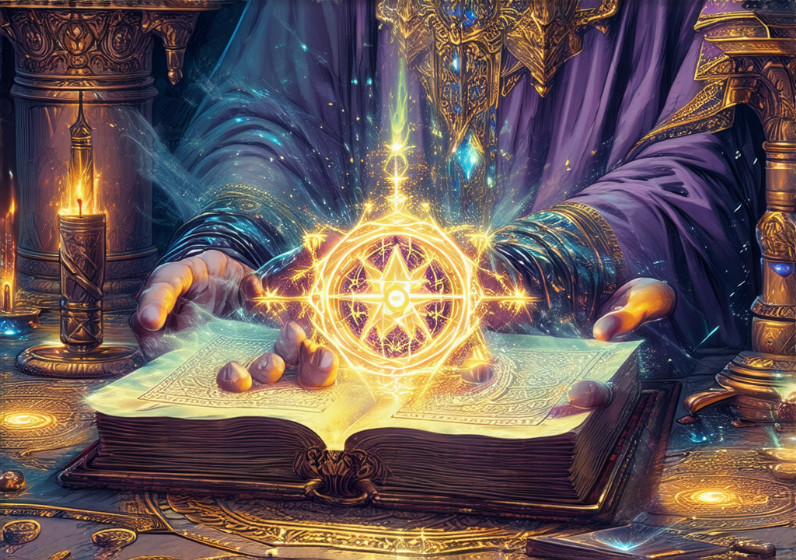
At its core, ceremonial witchcraft is about creating a container for transformation. The ritual itself—whether it is the casting of a circle, the lighting of specific candles at precise times, or the chanting of invocations in Latin or Hebrew—is not merely decorative. It is functional. Each element has purpose and meaning.
Modern life is largely unstructured in terms of spiritual experience. We consume content passively; we scroll through feeds; our days are broken into fragmented tasks with little ceremony marking the transitions between them. In contrast, a ceremonial ritual provides a distinct "threshold." When you step into your temple space or altar area, you are not just moving from one room to another; you are crossing over from the mundane world (the profane) into the sacred realm. This psychological separation is crucial for deep meditation and magical work.
The structure of ceremony offers a sense of control and order. For many modern witches, this creates a safe space where the chaos of external life can be set aside. The ritual provides a script, a path to follow. You do not have to figure out what to do in that moment; you know the next step. This reduces the cognitive load and allows the practitioner to focus entirely on their inner work, visualization, or connection with spiritual entities.
Furthermore, ceremony engages all the senses. It is not just mental; it is physical. The smell of incense (often myrrh, frankincense, or sandalwood), the taste of consecrated water or wine, the texture of velvet robes or silk cords, the sound of bells or chimes—these sensory anchors help ground the practitioner in the present moment. In an age dominated by screens and digital abstraction, this tangible, multi-sensory experience is a refreshing and powerful antidote.
📜 The Intellectual Approach: Witchcraft as Scholarship
One of the most defining characteristics of ceremonial witchcraft is its relationship with knowledge. Unlike the often oral or intuitive tradition of folk magic, ceremonial practice has historically been passed down through texts. Think of the Key to the Lesser and Greater Work, the Book of the Law, or the various grimoires that have been circulating since the Renaissance.
This scholarly aspect appeals strongly to the modern practitioner who values education and depth. Many contemporary ceremonial witches are readers, researchers, and students. They treat their practice as a lifelong study. There is a prestige associated with understanding the history behind a symbol, the etymology of an incantation, or the astrological timing of a rite.
This intellectual rigor does not mean that ceremonial witchcraft lacks heart or emotion; rather, it integrates mind and spirit. Understanding why you are performing a certain gesture gives the ritual more weight. It transforms magic from mere superstition into a deliberate act of will and understanding. For the modern seeker who is tired of vague spirituality, this concrete, explainable framework provides a satisfying sense of coherence.
🌟 Lineage, Identity, and the Craft
Ceremonial witchcraft often involves membership in specific orders or lineages: the Golden Dawn, the Antiqua et Nova, the Society of the Four Times, or various modern Eclectic Traditionalist (MET) groups. This creates a sense of community and continuity that many solitary practitioners crave but struggle to find.
In a world where identity is increasingly fluid and individualistic, belonging to a lineage connects the practitioner to something larger than themselves. It ties them to a tradition that stretches back centuries or even millennia. There is a profound comfort in knowing that you are part of an unbroken chain of seekers who have walked this path before you.
This sense of lineage also fosters a specific aesthetic and identity. The robe, the staff, the signet ring—these are not just props; they are badges of office. They signal to others (and to oneself) that one is a practitioner of the craft. For many modern witches, this external manifestation of their internal journey provides a sense of legitimacy and confidence. It allows them to step into their role as a magician with authority and presence.
🕸️ The Aesthetic of Mystery: Visuals and Symbolism
Let us not underestimate the power of aesthetics in drawing people to ceremonial witchcraft. The visual language of this tradition is rich, evocative, and beautiful. Think of the Pentagram within the Hexagram, the Tree of Life, the specific colors associated with elements (red for fire, blue for water, green for earth, yellow or white for air).
This symbolism creates a unique visual identity that is easily recognizable and deeply appealing on social media and in physical practice spaces. The altar becomes a work of art—a carefully arranged tableau of candles, crystals, runes, and talismans. This visual richness makes the practice approachable even to those who may not yet understand the deeper metaphysics. They are drawn in by beauty, and once inside, they discover the depth.
This aesthetic appeal also bridges the gap between high art and spiritual practice. Many ceremonial witches see their altars as miniatures of the cosmos; a microcosm reflecting the macrocosm. This artistic dimension resonates with a generation that values creativity, design, and self-expression. It allows witchcraft to be both a practical discipline and an aesthetic pursuit.
🔮 The Modern Synthesis: Blending Old and New
Interestingly, the modern practice of ceremonial witchcraft is not a pure replica of 19th-century orders like the Golden Dawn. It has evolved. Today’s practitioners are far more eclectic, drawing from diverse traditions without necessarily adhering to the strict rules of any single lineage. This "Eclectic Ceremonial Magic" (ECM) or MET movement allows for personalization while retaining the structure and symbolism that define ceremonial practice.
This blending is key to its current popularity. It makes the tradition accessible to those who may not identify with all aspects of a specific order but love the structure, the symbols, and the ritual depth. It invites practitioners to take what resonates—perhaps the Kabbalistic framework, perhaps the Hermetic correspondences, perhaps the visual aesthetics—and integrate it into their personal practice.
Moreover, modern ceremonial witchcraft is more inclusive than its historical predecessors. The rigid gender roles and sometimes exclusive membership criteria of early 20th-century orders have been relaxed or reinterpreted. Today’s ceremonial circles are often mixed-gender, open to people of all backgrounds, and focused on personal spiritual growth rather than institutional hierarchy. This accessibility has opened the doors to a wider audience.
🌿 Psychological Depth: The Inner Work
At its deepest level, ceremonial witchcraft is about psychological transformation. It is a form of active meditation that engages the entire being—mind, body, emotion, and spirit.
The use of visualization in ritual—imagining light, energy flow, or specific deities—is a powerful tool for mental clarity and emotional regulation. The act of externalizing an intention through ritual helps to clarify one’s desires and goals. It moves the magic from a wishful thought into a concrete action. This has therapeutic benefits that are increasingly recognized in modern psychology.
Furthermore, the study of correspondences—understanding how different elements, planets, days, colors, and herbs relate to each other—creates a web of meaning in the practitioner’s life. It helps them see connections where they previously saw none. This holistic view of the world fosters a sense of unity and coherence, which is profoundly healing for those feeling disconnected or fragmented by modern life.
📖 The Allure of the Written Word
Another factor contributing to the resurgence of ceremonial witchcraft is the accessibility of information. In the past, the secrets of ceremonial magic were guarded jealously by small groups. Today, a wealth of books, online resources, and community forums make this knowledge widely available. Books like The Temple of the Sacred Fire, Ritual Magic by Frank Dickey, or modern adaptations by practitioners like John Ziggeler or Rachel Pashlow have made the tradition more approachable.
This democratization of knowledge means that anyone with a book and an altar can begin to explore ceremonial practice. You no longer need an invitation from a secret society; you can study on your own terms. This autonomy is appealing in our culture of individualism, while still providing the structure that many seekers desire.
🕊️ Ritual as Resistance
In some ways, practicing ceremonial witchcraft has become a subtle form of resistance against the secular, materialistic, and consumer-driven world. In a society that often values efficiency, productivity, and quantifiable results, spending time in ritual—doing something that cannot be measured by money or status—is an act of rebellion. It says: "I value the invisible as much as the visible. I honor the slow work of inner transformation over the quick fix."
Ritual reminds us that life is not just about getting things done; it is about experiencing moments fully. It creates space for stillness, reflection, and connection. In a world that is always moving at 100 miles per hour, ceremony allows us to pause, breathe, and be present. This simple act of pausing in a busy world has become a radical spiritual practice.
✨ The Art of the Altar
Let’s take a moment to appreciate the craft involved in creating a ceremonial space. The altar is the heart of the practice. It is not just a table; it is a sacred geometry made physical. Every object placed upon it is chosen with intention. The candle colors correspond to the desired outcome or element. The placement of items follows specific directional lines (North for earth, East for air, South for fire, West for water).
This level of detail requires care and mindfulness. It turns the act of preparing for ritual into a meditative practice in itself. Arranging the altar becomes an exercise in focus and reverence. For many practitioners, this preparation is where they begin to shift their mindset from the mundane to the sacred. It is a daily (or weekly) practice that reinforces their commitment to the craft.
🌙 The Role of Deities and Spirits
Ceremonial witchcraft often involves working with specific deities or spiritual entities. This is distinct from simple ancestor veneration; it often involves complex theological frameworks drawn from various mythologies. Practitioners may work with Egyptian, Greek, Roman, Slavic, or even Hermetic intelligences.
This relationship with the divine (or the numinous) adds a layer of depth to the practice. It shifts the focus from pure self-improvement to a reciprocal relationship with forces greater than oneself. There is a humility in acknowledging that we are not the center of the universe; we are part of a larger cosmic order. This perspective can be grounding and comforting, providing a sense of place within the grand scheme of existence.
For many modern witches, this aspect brings a sense of story to their practice. They see themselves as characters in an ancient narrative, continuing a tradition that has been passed down through generations. This storytelling element makes the practice more engaging and less abstract. It becomes personal and relatable.
🔮 The Future of Ceremonial Witchcraft
Where is this movement heading? As more people discover the depth and beauty of ceremonial witchcraft, we can expect to see further innovation. We may see new rituals that blend traditional forms with modern issues—rituals for digital detox, for environmental healing, or for community building in a fragmented world.
The aesthetic will continue to evolve, perhaps becoming even more personalized while retaining the core symbolic language. The scholarly aspect will likely deepen, with more practitioners studying original sources and exploring lesser-known traditions.
Most importantly, the accessibility will increase. As the stigma around "weird" or "esoteric" practices fades, ceremonial witchcraft will become a respected branch of modern spirituality. It will stand alongside yoga, meditation, and mindfulness as a valid path to inner peace and personal power.
🕯️ A Call to Structure
If you are drawn to the aesthetics of ceremony but unsure where to begin, start small. Create a simple altar space. Choose one candle color that resonates with your current intention. Light it in the morning or evening. Sit in silence for ten minutes. Breathe. Observe. This is the seed of ceremonial practice.
You do not need a robe to begin. You do not need to memorize complex incantations. Start with the basics: space, time, and presence. As you grow in your practice, you can explore deeper texts, join communities, and expand your toolkit. But remember: the heart of ceremonial witchcraft is not the props; it is the process. It is the deliberate, mindful engagement with the sacred aspects of life.
In a world that often feels chaotic and disconnected, ceremonial witchcraft offers an anchor. It provides structure where there was chaos, meaning where there was emptiness, and beauty where there was plainness. It reminds us that we are beings capable of creating order from disorder, light from darkness, and magic from the mundane.
🌟 Conclusion
The resurgence of ceremonial witchcraft is not a passing trend; it is a natural evolution in modern spiritual practice. It speaks to our deep-seated need for structure, beauty, meaning, and connection. By embracing the ancient wisdom of ritual and symbol, we are not just practicing magic; we are reclaiming a way of being that honors the fullness of human experience.
So, light your candles. Cast your circle. Speak your word. The veil is thin, and the opportunity for transformation is here. Welcome to the craft. ✨