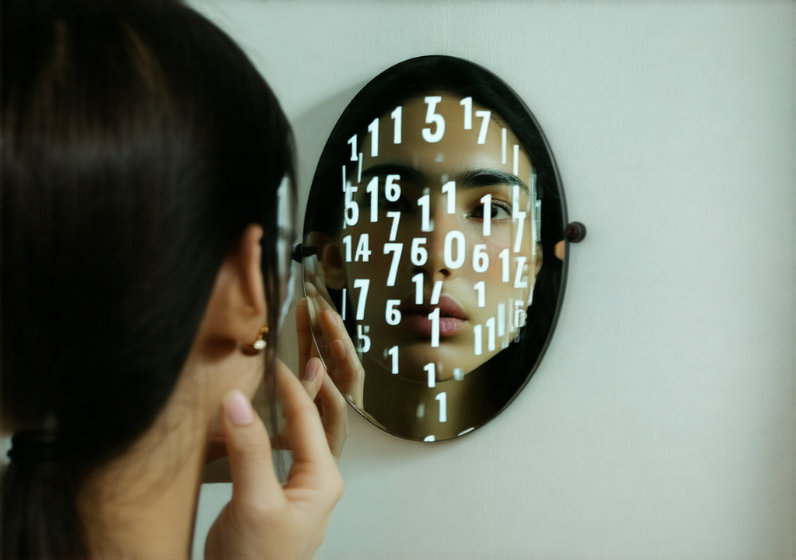
5 Ancient Scripts That Activate Your Inner 'Oracle' Mode
🌙 The Five Sacred Glyphs: Awaken the Oracle Within ✍️🔮
By Seraphina Voss, Keeper of the Veil
In an age dominated by screens, algorithms, and the relentless hum of digital noise, the human capacity for intuitive foresight has begun to atrophy. We have traded the stillness of meditation for the scrolling of feeds; we have replaced the deep listening to our inner voice with the constant validation of external data. Yet, beneath the modern veneer, an ancient power sleeps within every soul—the Oracle Mind. This is not merely a metaphorical concept or a whimsical notion reserved for mystics and shamans. It is a neurological and spiritual faculty, an evolutionary trait that allowed our ancestors to read the wind before it shifted and sense the predator in the grass before it struck.
To awaken this inner oracle mode, one does not need a crystal ball or a seance table. One needs only to engage with the oldest technology of humanity: symbolic language. Scripts are not merely tools for recording history; they are architectural blueprints for consciousness. When you study and practice ancient scripts, you are not just learning to write letters; you are training your neural pathways to perceive patterns, decode subtle energies, and tap into the collective unconscious.
Here are five ancient scripts that serve as powerful keys to unlock your innate precognitive abilities. Each one offers a unique frequency of vibration, a specific type of cognitive training, and a distinct pathway into the realm of intuitive foresight.
1. The Runic Futhark: Grounding the Vision in Earth 🌍🪵
The Script: The Elder Futhark (c. 2nd–7th century CE)
The Oracle Key: Elemental Stability and Practical Foresight
To understand precognition, one must first understand that visions are often dismissed because they lack tangible proof. The modern mind craves data; if a hunch cannot be quantified, it is discarded as anxiety or wishful thinking. The Runic Futhark, used by the Germanic tribes of Northern Europe, bridges this gap. These were not abstract symbols floating in the ether; they were carved into wood, stone, and bone. They were tools for survival, navigation, and trade. To write a rune is to ground your intuition in physical reality.
The Futhark consists of 24 distinct glyphs, each representing a sound but also a concept—often an object or force of nature (e.g., Fehu for wealth/cattle, Uruz for strength/aurus). When you practice writing these runes, you are engaging in a form of embodied cognition. Your hand moves the stylus or pen through the simple, angular strokes, and your mind connects the shape to its meaning. This creates a feedback loop between the physical act of creation and the mental concept being held.
For the aspiring oracle, the Runic script teaches practical foresight. Unlike the grand, sweeping prophecies of Greek seers, runic wisdom was often local and immediate. A Norse farmer used runes to decide when to plow or harvest. A traveler used them to interpret weather signs. By studying the Futhark, you train your mind to look for small, concrete details that predict larger outcomes. You learn to read the "text" of the physical world. The angularity of the runes also trains the eye to see structure in chaos. Where others see a messy landscape or a complicated social dynamic, the rune-reader sees angles, directions, and structural supports. This is the foundation of oracle mode: seeing the skeleton beneath the skin.
Practice: Take a piece of wood or sturdy paper. Choose one rune that resonates with your current situation (e.g., Tiwaz for justice/decision-making). Carve it or draw it slowly, focusing on the pressure and direction of each stroke. While doing so, ask yourself: "What is the structural truth of my situation?" Write down three practical steps that align with the rune's meaning. This grounds your intuition in action, preventing it from drifting into pure fantasy.
2. The Celtic Ogham: Listening to the Whispering Wind 🍃🌬️
The Script: Ogham (c. 4th–6th century CE)
The Oracle Key: Subtlety and Peripheral Awareness
If the Runic script is about strength and structure, the Celtic Ogham is about sensitivity and nuance. Used primarily in early medieval Ireland and Wales, Ogham is a unique script because it is not read as a continuous line of text. Instead, it consists of short lines or dots carved along the edge of a stone, usually on the central axis. You have to run your finger over the edge to feel the pattern. It is a tactile, peripheral script.
This makes Ogham an excellent tool for developing peripheral awareness—a crucial component of precognition. Oracles often receive information not through direct focus, but through the "corner of the eye." They sense things happening around them before they consciously register it. The act of reading Ogham requires you to shift your primary gaze away from the marks and use your tactile sense or peripheral vision to decode the message. This trains the brain to trust signals that are not at the center of attention.
Furthermore, Ogham is deeply tied to the tree lore. Each character represents a specific tree (Beech, Birch, Rowan, Alder, etc.), each with its own mythological and herbal properties. To write Ogham is to enter a state of ecological empathy. You are connecting your personal intuition to the slow, deep time of nature. Trees do not rush; they grow in cycles. They sense seasons before humans do. By aligning your mind with the rhythm of the trees represented by the script, you tune your internal clock to a more natural, predictable cycle. This reduces the anxiety of "future uncertainty" and replaces it with the calm confidence of seasonal awareness.
Practice: Find a smooth stick or a piece of bark. Carve simple Ogham notches on one edge. Sit in a quiet space where you can hear nature—wind, birds, water. Close your eyes and focus on the sounds around you for five minutes. Then, slowly run your finger over the carved edge while keeping your eyes closed. Notice how much more information you receive through touch and sound than through sight alone. This exercise trains your brain to value non-visual data, which is often where precognitive hints reside.
3. The Phoenician Proto-Alphabets: Decoding the Universal Code 🔤🏛️
The Script: Phoenician Alphabet (c. 1050 BCE)
The Oracle Key: Pattern Recognition and Interconnection
The Phoenicians were master traders, sailing the ancient Mediterranean to spread their goods—and their writing system. The modern Latin alphabet, and by extension most Western scripts, descends from Phoenician. But for the oracle, this is more than etymology; it is an exercise in universal pattern recognition. The Phoenician script is one of the earliest true alphabets, reducing the thousands of symbols used in cuneiform or hieroglyphics to a manageable set of ~22 consonants.
This simplification is key to precognition. To see the future, you must filter out noise and focus on signal. The Phoenician alphabet teaches the mind that complexity can be broken down into simple, repeating units. If you understand how "A" connects to Greek Alpha, then to Latin A, you begin to see a web of connections spanning thousands of years and hundreds of miles. This is the oracle's perspective: seeing the hidden threads that bind disparate events together.
Studying Phoenician trains the brain in comparative analysis. You are constantly asking: "How does this symbol relate to others? What pattern emerges?" This is a cognitive skill directly applicable to divination and foresight. When you encounter a new situation, your trained mind will instinctively look for patterns from past experiences or universal archetypes. It helps you decode the "language" of symbols in dreams, coincidences, and cultural cues. You learn that meaning is not isolated; it is relational. A single event means nothing until it is placed in context. The Phoenician script, as a bridge between East and West, teaches you to stand in the middle, seeing both sides, and synthesizing a new understanding.
Practice: Create a "Pattern Journal." Every day, write down three symbols or signs you encounter (a bird, a number, a color, a shape). At the end of the week, review them. Look for connections. Did a specific color appear before a stressful event? Does a particular bird signal a change in mood? You are training your brain to treat everyday life as a text to be decoded, using the same relational logic that underpins alphabetic writing.
4. Sanskrit Devanagari: The Resonant Chant 🎵🕉️
The Script: Devanagari (c. 7th century CE)
The Oracle Key: Auditory Intuition and Vibrational State
While the previous scripts are largely visual or tactile, Devanagari is inherently auditory. This script was designed for chanting. In Sanskrit literature, the precise pronunciation of a word carries spiritual weight. The shape of the letter often mimics the sound it makes (e.g., Ka has a small loop representing the back of the throat where the 'k' sound is formed).
For the oracle, this introduces the power of vibrational intuition. Many precognitive experiences are felt as sounds or tones before they are understood cognitively. You might feel a "hum" in your chest before knowing you need to call someone. Devanagari trains the mind to connect form, sound, and meaning into a unified field. When you write or read Devanagari, you should do so with vocalization, even if it is a whisper. This engages the auditory cortex and the brainstem, creating a deeper state of focus than silent reading alone.
This script also emphasizes flow. Unlike blocky scripts, Devanagari has a continuous horizontal line (shirorekha) that runs over the top of the letters. This creates a visual flow that mirrors the rhythmic flow of chant. It teaches the mind to move in waves rather than steps. Precognition is rarely linear; it comes in bursts and waves of insight. By practicing Devanagari, you learn to ride these waves, allowing insights to wash over you without forcing them into rigid logical boxes.
Practice: Choose a simple Sanskrit mantra or word (e.g., Shanti for peace). Write the Devanagari script by hand while chanting the sound softly. Focus on how the vibration in your chest and head changes with each letter. After writing, sit in silence and listen to the "after-ring" of the sound. This practice trains you to tune into subtle internal vibrations, which are often the earliest precursors to intuitive insight.
5. Egyptian Hieroglyphs: The Holistic Symbol 🏛️👁️
The Script: Middle Kingdom Hieroglyphs (c. 2000 BCE)
The Oracle Key: Archetypal Vision and Narrative Time
Finally, we arrive at one of the most visually rich scripts in human history: Egyptian Hieroglyphs. Unlike alphabets that represent sounds, many hieroglyphs represent concepts, objects, or even entire phrases. A picture of a reed leaf might mean "I" (first person) or "sound." A picture of a mouth might mean "to speak," "word," or "gate." This ambiguity and richness make it the ultimate tool for archetypal vision.
Oracles often think in images, not words. Hieroglyphs bridge the gap between the visual imagination and conceptual understanding. By studying this script, you train your mind to hold multiple meanings simultaneously. You learn that a single symbol can be literal (a bird) and metaphorical (the soul/bird of Horus). This is the essence of symbolic thinking—the ability to see the universal in the specific.
Hieroglyphs also teach narrative time. Egyptian art and writing often depict events not in chronological order, but in order of importance or symbolic resonance. The oracle sees time as a landscape, where past, present, and future coexist in a single visual field. Studying hieroglyphs helps you break free from linear thinking. You learn to look at a situation and see the "scene" rather than just the "plot." This allows for a more holistic reading of situations, helping you anticipate outcomes by seeing the symbolic balance of forces involved.
Practice: Sketch a simple scene using 3-5 hieroglyphs that represent your current life situation (e.g., an eye for insight, a sun disk for vitality, a snake for challenge). Then, write a short narrative explaining how these symbols interact. This exercise trains you to construct meaning from visual elements, a core skill for interpreting dreams and intuitive flashes.
Synthesis: The Daily Oracle Ritual 🕯️📜
To truly activate your inner oracle mode, do not study all five scripts at once. Instead, create a rotating ritual. Each morning or evening, spend 15-20 minutes with one of these scripts. Rotate them weekly to keep your mind fresh and to engage different cognitive faculties (tactile, visual, auditory, analytical).
Monday: Runic Futhark – Grounding. Focus on structure and practical steps.
Tuesday: Celtic Ogham – Listening. Focus on peripheral awareness and nature connection.
Wednesday: Phoenician Alphabet – Pattern Recognition. Focus on connections and decoding signals.
Thursday: Sanskrit Devanagari – Resonance. Focus on sound, vibration, and flow.
Friday: Egyptian Hieroglyphs – Vision. Focus on archetypes, symbolism, and holistic narrative.
As you practice, keep a "Oracle Journal." Record not just what you wrote, but how you felt while writing it. Note any flashes of insight, unexpected associations, or sudden clarity. Over time, you will begin to see patterns in your own intuition. You will find that the scripts are not just historical curiosities; they are cognitive tools. They rewire your brain to be more receptive, more patterned, and more connected to the subtle currents of information that flow through our lives.
The Science Behind the Myth 🧠✨
It is important to acknowledge that this practice sits at the intersection of art, psychology, and neuroscience. When you write by hand, you engage the motor cortex, which is closely linked to memory and emotional centers in the brain (the hippocampus and amygdala). This "embodied cognition" means that your physical act of writing influences your mental state.
Furthermore, the study of ancient scripts requires a specific type of attention: distributed attention. You are not hyper-focused on one point; you are holding multiple layers of meaning (sound, shape, history, myth) in mind simultaneously. This is similar to the brain state associated with creativity and insight. It is the "Aha!" moment where disparate pieces click into place.
By training your brain to hold these complex layers, you train it to do so in daily life. You become better at noticing the subtle cues that others miss—the shift in tone of voice, the change in light, the coincidence that seems too perfect to be random. This is not magic; it is a refined sensitivity. And like any skill, it improves with practice.
A Final Word on Patience 🕰️🌿
Becoming an oracle is not an overnight event. It does not mean you will predict the lottery numbers or know exactly when your ex-partner will call. It means you become a better navigator of uncertainty. You develop a trusted inner voice that can guide you through ambiguity. You learn to distinguish between anxiety (fear-based future) and intuition (wisdom-based present).
The ancient scripts are our teachers here. They have survived millennia because they carry the wisdom of those who came before us. By engaging with them, you join a lineage of seekers who understood that knowledge is not just stored in books or servers, but is woven into the very fabric of human expression.
Pick up your pen. Choose your script. Begin to write. And in the space between the stroke and the page, listen for the voice that has been waiting for you all along. It is quiet. It is patient. And it knows more than you think. 🌙🔥✨
May your hand be steady, your mind be clear, and your vision be true.