


By Dr. Ignatius Voss, Fellow of the Order of Thaumaturgical Studies
The sun sets upon our world, and the shadows lengthen—but they are not empty.
What the Dead Know That the Living Have Forgotten
I have spent thirty-seven years studying what most call demons—though I prefer to think of them as the oldest things in creation, older even than the stars. They do not dwell primarily in hell; rather, they inhabit that thin membrane between worlds, waiting patiently for us to forget how to see them.
The Architecture of Demonology
Before we can understand what demons are, we must first examine what they do. Every demon is an idea wearing a body, an intention that has grown teeth and learned to breathe. When I say “idea,” I do not mean abstract concept as your philosophers use it; I mean something far more visceral. Consider how you feel when entering a room where someone died—there was no ghost then, only the memory of death itself, pressing against your skin like cold water. This is precisely what demons are: concentrated remnants of profound moments, crystallized intentions that have learned to move and speak and hunger.
The Taxonomy of Demons
Let us begin with their classification. Most writers categorize by hierarchy—the angelic ranks descending through thrones, dominions, and so forth—but this approach misses something essential. I propose instead a taxonomy based on what each demon wants.
There are demons of hunger—those that consume flesh and blood—and demons of thirst, which drink our dreams. There are demons of forgetting, who enter our minds during sleep and erase memories we no longer need, leaving us wiser but diminished. And there are the older ones: demons of oath-breaking, of promises forgotten, of vows sworn in darkness. These last are particularly dangerous to poets, for they feed upon poetry that has been written down and then abandoned on shelves.
The Rituals of Recognition
How does one recognize a demon? Not by horns or tail—that is the vulgar mistake—but by what it takes from you when you meet it. Every genuine encounter leaves some part of yourself behind: perhaps your capacity to trust, or the memory of a particular scent, or even just the ability to sleep without dreaming on that night for years afterward.
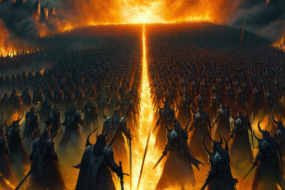
The old texts speak of demon-lights: strange illuminations seen before demonic appearance. Most practitioners know only the flickering candle and rising smoke, but there are deeper signs. When demons gather in significant numbers—what we call a “council”—the air itself begins to thicken. Not metaphorically. Physically. The air becomes viscous as if you were swimming through honey.
What the Dead Know That the Living Have Forgotten
This brings us to the central question: what do these creatures know that we have lost? And more importantly, how can we regain this knowledge?
What the dead know—and what demons preserve for them—is something beyond our ordinary perception. When you die, your body forgets almost everything: the way sunlight felt on your skin at age seven, the exact pitch of your mother’s voice, the sensation of being small enough to fit beneath a table and feel safe. These things go into the earth, and demons gather them up like children collecting pebbles. They hold our forgotten sensations in their pale hands while we walk through life forgetting what it means to truly feel.
The Practice of Remembering
To live demonologically is to practice remembrance with intention. It requires learning which memories are yours and which belong to the demons who have borrowed them from your ancestors. Most people carry about three thousand forgotten sensations that are not theirs at any given moment, unaware of what they are missing.
I recommend beginning slowly: each evening before sleep, spend five minutes remembering a single sensation—the taste of bread from childhood, the weight of a winter coat on young shoulders, the particular smell after rain in August—and then ask whether it feels yours or borrowed. You may be surprised by what you find.
Conclusion
The dead do not vanish; they merely forget to remember what remains. The demons exist to preserve these forgotten things. And we—perhaps foolishly—believe ourselves more alive than the dead, when in truth we are merely forgetting faster. What if some of us might learn to hold our sensations as a demon holds them: carefully, tenderly, with the patience of centuries?
What the Dead Know That the Living Have Forgotten is not simply a title but an instruction: learn again what you have lost, and you may find yourself more alive than those who never lived at all.













No Comments