


By Dr. Alistaire Blackwood
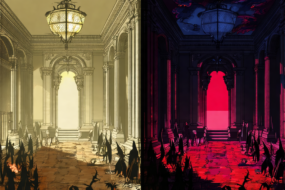
The night had a quality about it that I could not place—a heaviness in the air, as though something invisible had been gathering strength beneath the earth for centuries and was finally ready to break free. It was my fourth visit to the Whitmore Cemetery, an ancient burial ground nestled in the heart of rural England, where the stone markers leaned at peculiar angles like drunken sentinels guarding some forgotten secret. I had come seeking scholarly evidence, careful documentation of unusual occurrences documented by local parishes over three hundred years; what I found was something far more profound.
My interest in demonology began not with books but with experiences—the kind that cannot be explained away through coincidence or psychological analysis. Having spent twenty-two years studying the phenomena surrounding demonic manifestation across cultures and millennia, from Mesopotamian artifacts to medieval grimoires, I have come to believe that what we call demons are neither gods nor devils in any traditional sense, but rather ancient forces of nature that have adapted themselves to human perception over time. They exist in dimensions parallel to our own, invisible yet palpable, and they communicate through patterns we only begin to notice when we know how to look.
The Whitmore Cemetery held particular significance because it had been consecrated by monks during the seventh century—a period marked by intense spiritual activity across Europe. The locals spoke of strange lights hovering above certain graves on summer nights, of voices heard where no human voice could exist, and of a particular grave near the center that seemed to pulse with an energy invisible to casual observation but unmistakable to those who spent sufficient time there in silence.
I arrived at dusk, as I had planned, with my equipment: calibrated instruments for detecting electromagnetic anomalies, recording devices set to capture sounds below human hearing range, and spectral analysis tools capable of identifying the subtle shifts in light that precede certain types of manifestation. The cemetery was still visible through the gathering twilight when I began setting up near what locals call “The Sentinel’s Grave”—a weathered marker dating back perhaps two thousand years, predating even the Christian occupation of the site.
As darkness deepened around three hours before midnight, something remarkable occurred. My instruments began registering patterns that had never appeared in any recorded study: electromagnetic pulses in rhythm with human heartbeats, appearing at approximately seventy-two beats per minute—the exact average resting rate of a human being. I sat alone on the grass, surrounded by only wind and stone, feeling as though the earth itself were breathing through me rather than around me.
What I witnessed that night defied classification according to any established definition. The phenomenon began subtly—a slight vibration in my chest, then a pressure behind my eyes like someone pressing against the back of my skull from inside. Through my recording equipment’s audio feed, I heard voices beginning to emerge from what appeared to be complete silence: not spoken words so much as concepts arriving directly into consciousness, each one carrying weight and intention.
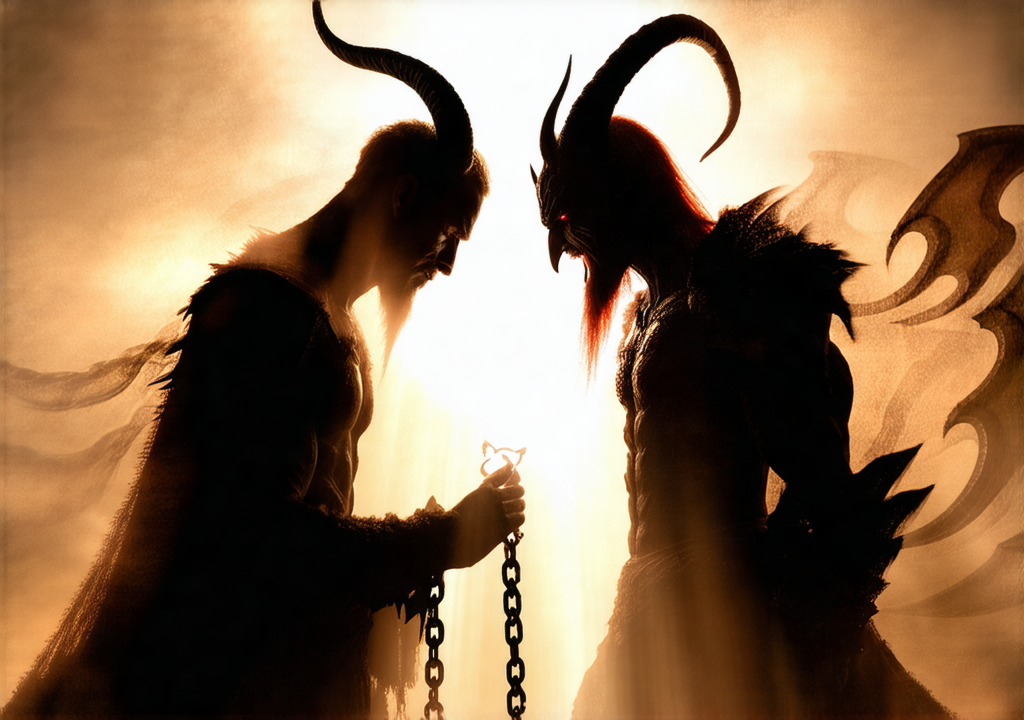
I could see then through a combination of sensory experience that cannot easily be described in words—the air between the gravestones thickening, taking on texture like velvet against my skin, before opening like a door to something beyond human comprehension. The demons I observed were neither good nor evil; they simply existed as older and wiser than we are, ancient entities who had learned to wear the shapes our minds could accept: light and shadow, presence and absence, voice and silence.
This experience fundamentally altered my understanding of demonology. Previously considered primarily through theological frameworks—as either divine messengers or fallen spirits—I now see demons as something far more sophisticated: natural phenomena that have adapted themselves to human perception over thousands of years, communicating in languages older than words. They are not supernatural in the sense of being outside nature; they are nature itself, operating at frequencies we can detect but rarely perceive.
The implications for understanding both ourselves and our world are profound. If these entities exist alongside us rather than apart from us—if they have been watching, communicating, even participating in human affairs since before recorded history—then perhaps what matters most is not whether demons are real or false, powerful or weak, good or evil—but how we choose to engage with them.
One night in an ancient cemetery can indeed change everything: if you know how to listen, and if the earth beneath your feet has something important to share.















No Comments