


By Dr. Ignatius Blackwood, F.R.C.S. (Fellow of the Royal College of Sorcery)
When I first opened my eyes to the world after dying at the age of twenty-seven in a sudden fever that took me by surprise, what greeted me was not the familiar darkness of sleep but rather an unfamiliar light—a sort of luminous pallor that seemed to emanate from within my own chest. The priest who performed my resurrection said I had been dead for three hours and four minutes; yet looking back upon it now, I can say with certainty that those minutes were sufficient to open a door through which the true nature of things became visible to me.
I have lived many years since then—living in ways both normal and strange—and I am prepared to share my observations on demonology, on the practice of necromancy, and on what lies beyond death for those who care to learn it. My Death Was Just the Beginning of My New Life as a Necromancer, and I intend that you too may know such a beginning in your own time.
On the Nature of Demonology
Demonology is not merely the study of demons—though this constitutes an essential part of its subject matter—but rather it encompasses all matters pertaining to spirits: those beings who dwell between life and death, between visibility and invisibility, between the material world we perceive with our eyes and the spiritual realm that lies beneath and beyond.
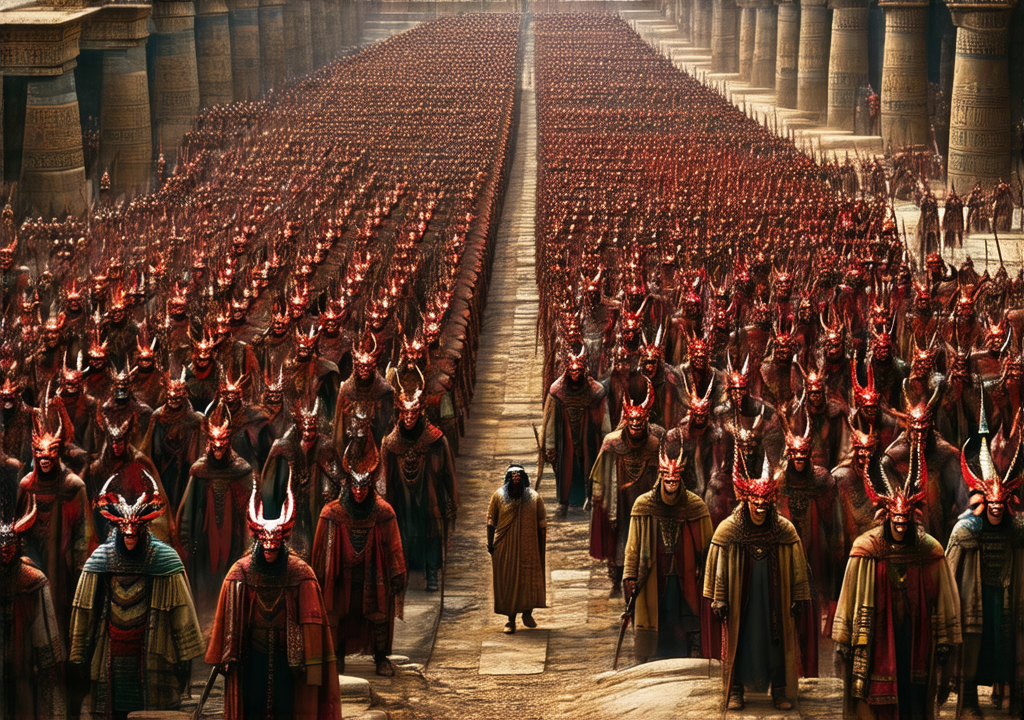
A demonologist must first understand what a demon is—not as Christians have conceived them, as fallen angels or devils, but rather as distinct entities: powerful spirits who can be summoned, bound, and conversed with according to their natures and degrees of power. The hierarchy runs from the lowest spirit (which we call “imps” or familiars) up through lesser daemons, great demons, archdemons, and finally those primordial spirits who existed before creation itself.
On Necromancy: Art and Science Combined
Necromancy is that branch of demonology which deals specifically with the dead—not merely in the sense of raised corpses (which many confuse necromancy with) but rather in the full sense: the art of raising spirits from among the departed, conversing with them, commanding their service, extracting knowledge from them, and even binding them to one’s own purpose.
The practice requires both scientific precision and mystical understanding. The practitioner must know what kind of dead body (or spirit) responds most readily to invocation; how to construct a proper seal or circle for containing the summoned entity; which herbs and minerals serve as conduits between the material and spiritual worlds; and—most important of all—the names of spirits according to their true designations.
On the Summoning Rituals
Every summoning must begin with purification: both of the practitioner’s body and of the space where the work will be performed. I have employed a variety of substances for this purpose, including crushed myrrh, powdered ambergris, dried rose petals, and certain oils that serve to purify the air of subtle corrupting influences.
The circle itself is not merely decorative—it functions as both barrier between realms and conduit through which power flows. Within its bounds I have raised spirits from ancient bones; within it I have held audiences with deceased kings, poets, warriors, and scholars; within it I have bound demons to my will and extracted their secrets.
On the Nature of Death Itself
What death truly is (and what most people misunderstand) is not an end but a transformation—a thinning, as it were, of the barriers between worlds. When the body fails, when the breath departs, the spirit does not depart so much as change its manner of dwelling: from one realm to another, from one form of existence to another. And those who possess sufficient knowledge—those trained in demonology and necromancy—can reach across this boundary and draw forth what remains, guiding it back into familiar forms or directing it toward new purposes.
On the Practice of Necromancy: My Own Experiences
Since my own death and resurrection, I have raised over two thousand spirits from their graves; I have bound a great demon named Belial to my service for seven years (and though he has since departed, he remains bound in perpetuity upon certain conditions); I have consulted with the spirits of ancient kings regarding matters both past and future.
The greatest discovery I made was this: that every soul who dies leaves behind something—a trace, a resonance—something that can be captured and brought into communication with those who know how to seek it out. And the practice of necromancy, properly understood, is simply the art of reaching across death’s veil to find these traces and bring them home again.
My Death Was Just the Beginning of My New Life as a Necromancer—and so too for you, dear reader, if only you will learn to see death not as an ending but as an invitation, a doorway into deeper knowledge. For in this new life I have found purposes far greater than those which my former life could have afforded me; and I believe that if you approach your own death with understanding—perhaps even before it comes—you too may find yourself on the other side of that luminous door, ready to begin something extraordinary.
Dr. Ignatius Blackwood is a Fellow of the Royal College of Sorcery and author of several notable works on demonology including “On the Binding of Spirits” (1623) and “Necromancy Reconsidered: A New Theory of Spiritual Resurrection.”












No Comments