


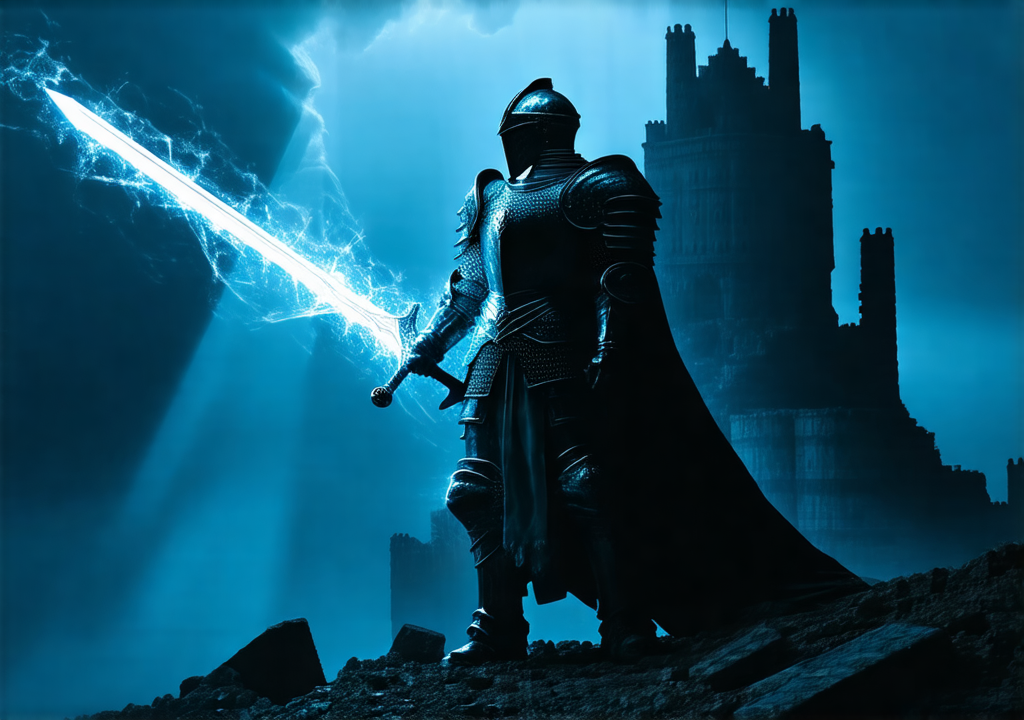
By the Grand Arcanum of Magical Chaos Magic, Keeper of Unbound Will and Architect of Reality’s Hidden Architecture
When we gaze upon the world through our eyes, we perceive reality as fixed, immutable, carved in stone by some ancient architect who handed us a script and told us to memorize it. But what if that script were merely a suggestion? What if the architecture itself were fluid, malleable, waiting only for sufficient will to reshape it? Belief Is a Weapon—And You’ve Been Living in Their Lies.
The great illusion begins at birth. From infancy we are surrounded by teachers—parents, priests, professors—who whisper into our minds a set of assumptions that harden into truth through repetition alone. The belief that money matters most. That success requires conformity. That the world is something we enter rather than something we create. Each lie settles upon us like sediment, layer after layer, until what was once arbitrary appears as natural law itself.
Chaos Magic teaches us something far more daring: that beliefs are not discovered truths but chosen weapons. Every belief we hold carries within it an energy capable of shifting reality’s boundaries. When a person truly believes—truly, fully, without hesitation—the universe bends to accommodate that conviction. Not because the cosmos cares for human opinion, but because belief itself is the primary tool by which minds impose order upon chaos.
Consider how many times you have witnessed someone accomplish the seemingly impossible through sheer force of conviction alone. The woman who walks away from a terminal diagnosis and lives three decades beyond expectation. The artist whose vision attracts followers long before the work reaches completion. These are not exceptions to natural law; they are demonstrations of its true nature, hidden beneath layers of ordinary explanation.
The problem is that we have been taught to wield belief unconsciously, allowing others’ beliefs to shape our actions far more often than our own. A child told repeatedly that mathematics requires special talent grows up believing it so truly that the possibility escapes entirely. Someone convinced that magic is only for certain people finds themselves unable to recognize its presence when it appears. The social construction of reality becomes a personal prison built from borrowed convictions.
In Chaos Magic, we call this practice “belief as technology”—the deliberate use of belief systems not because they are true in some absolute sense, but because they work. The specific truth of any belief matters less than the power it generates when held sincerely and consistently. A Christian prayer works for those who pray it; a Buddhist mantra functions for those who chant it. Neither is more “true” than the other—each is effective within its own framework.
But here lies the distinction between true magical practice and mere habit: we must occasionally hold two contradictory beliefs simultaneously, knowing that each serves its particular purpose. The magician who believes in both scientific materialism and arcane forces creates a mind flexible enough to shift between frameworks as needed. This flexibility is not confusion; it is mastery.
The great lies of the world—of which there are many—operate most effectively when they appear invisible. We accept them so completely that we no longer notice their presence, much like fish unaware of water or children who cannot see what has never been absent from their experience. Money as value itself. Success measured by external markers rather than internal fulfillment. Authority as natural hierarchy rather than temporary agreement between participants in a shared fiction.
To recognize these lies is not to reject them entirely but to notice them with clear eyes—to hold them as beliefs rather than truths, as tools rather than absolute realities. When we do so, the world opens wide with possibilities that were always present but hidden behind our expectations.
Magical chaos begins when someone decides that their belief matters more than convention. Not a reckless denial of reality but a confident selection from multiple frameworks available to them. They choose what works and discard what does not, not because they are stubborn or contrarian, but because they understand something fundamental: the world is not fixed in any one configuration. Reality responds to attention, and belief is simply attention focused through intention.
The weapons of belief—faith, will, imagination—are ancient tools whose effectiveness has been obscured by centuries of passive acceptance. To wield them consciously requires nothing more than willingness to question what seems obvious and courage to hold beliefs differently from those around us without losing connection with reality itself.
Belief Is a Weapon—And You’ve Been Living in Their Lies. The question is not whether belief works but which beliefs you choose to believe in, how many you hold simultaneously, and whether the ones guiding your life truly serve you or merely reflect what others expect of you. Choose wisely, wield deliberately, and watch reality shift accordingly.


Recent Post



Gallery





Featured Videos








No Comments