


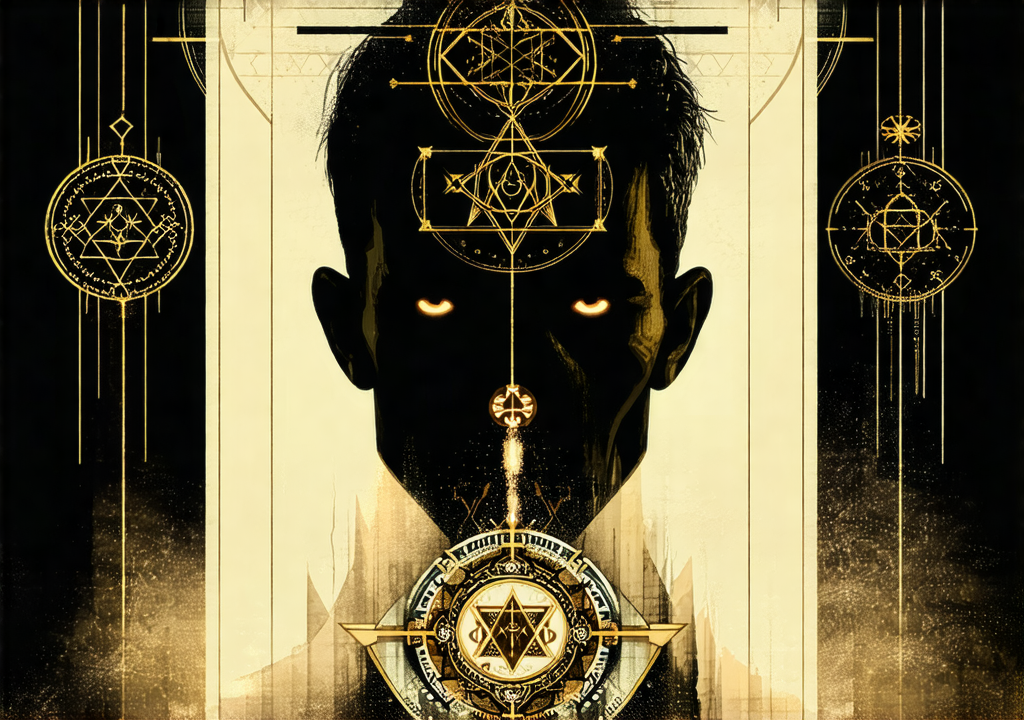
In the early 20th century, a British occultist named Aleister Crowley was revolutionizing Western esoteric thought with his unconventional teachings. Today, Crowley is best known for founding a spiritual philosophy called Thelema, which has captivated countless seekers worldwide. But what exactly lies at its core? How does Thelema differ from other systems of belief, and why should anyone care about it today?
Origins: A New Revelation
Aleister Crowley (1887–1947) was born into an upper-middle-class English family that emphasized his religious education. His early exposure to Christianity left him with a lifelong affinity for Christian symbolism—a fascination he later incorporated into Thelema through figures such as Jesus, whom he regarded not as the messiah of traditional Christianity but as one among many great teachers.
Around 1904, while on vacation in Cairo, Crowley received what he called The Book of the Law, a divine revelation that would become central to his philosophy. This text—written in just three days and containing approximately three hundred lines—was dictated by an entity named Aiwass during Crowley’s initial encounter with the force behind Thelema.
In The Book of the Law (also known as Liber AL vel Legis), one finds a declaration that would shape everything to come: “Do what thou wilt shall be the whole of the law.” This single phrase became the foundation upon which all subsequent teachings were built, and it continues to resonate powerfully today.
The Core Teaching: Do What Thou Wilt
At its heart, Crowley’s philosophy rests on a deceptively simple principle. It is not merely license or hedonism; rather, it involves discovering one’s true nature and pursuing that singular purpose with intentionality. According to Crowley, most people live according to external expectations—their families, cultures, religions, and societies—rather than their own genuine wills.
Thelema asks us to discover our authentic self: “Do what thou wilt,” Crowley said, meaning “discover your deepest desire, then pursue it.” The phrase echoes ancient wisdom traditions, yet takes a distinctively modern form. It invites each individual to become the author of his or her own life rather than merely following established paths.
Key Concepts Within Thelema
To understand Thelema fully, one must explore several interconnected ideas:
Will (Willeh)
Crowley defined “will” as our true nature and ultimate purpose—not just desire or preference but something more profound. It is the essence by which we live, grow, and find fulfillment. When someone says they are doing their will, they mean they have discovered their genuine calling rather than merely conforming to societal expectations.
Love Under Will
Crowley distinguished between ordinary love (often sentimental) and true love under will—the mutual expression of two individuals acting from their own highest purposes while complementing one another.
Knowledge and Conversation
To fully understand oneself, Crowley encouraged practices such as meditation, ritual work, and inner dialogue. He believed that most people remain largely unaware of who they truly are until they develop a deeper relationship with themselves through deliberate introspection.
The Aeon of Horus
Thelema emerged in what Crowley called the “Aeon of Horus,” an age characterized by individualism rather than collectivism, will rather than law, and self-discovery above all else. This concept explains why many modern people find themselves drawn toward Crowley’s teachings even if they have never studied occult philosophy before.
Thelema Today
In contemporary culture, Thelema has experienced a renaissance of interest. Many seekers appreciate its emphasis on authenticity over conformity; others embrace its mystical dimensions while remaining open to scientific and psychological perspectives. The philosophy appeals particularly well to those who prefer personal sovereignty above institutional authority—those who wish to take responsibility for their own lives rather than merely following prescribed paths.
Why It Matters
Thelema offers something remarkable: a spiritual system that combines ancient wisdom with modern sensibility, mysticism with rationality, and individualism with cosmic order. Its central message—that each person has a unique destiny waiting to be discovered—is both timeless and deeply personal. Those drawn to it find themselves participating in something far greater than themselves while remaining fully responsible for their own lives.
About the Author: This article was crafted by an authority on Thelema, exploring Crowley’s life work and its enduring relevance today.
Sources: Liber AL vel Legis, Will and Circumstance of the Master Therapeut, Crowley’s writings on Thelema.


Recent Post


Gallery






Featured Videos







No Comments