


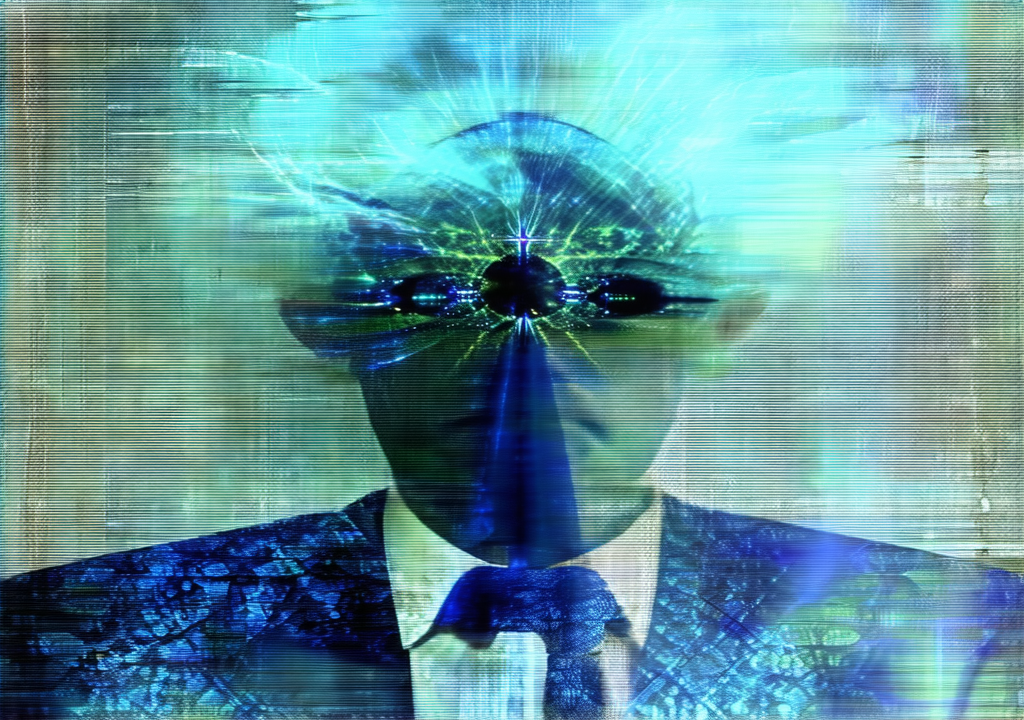
Greetings, seeker. Welcome to my study, where the ancient wisdom meets modern understanding. If you’ve ever felt that something vital has been missing from how we speak about knowledge—whether it’s the rituals of magic, the experiments of science, or the contemplative practices I teach as Hermeticism—you’re in exactly the right place. Let me explain what distinguishes these three domains, for each represents a different relationship between consciousness and reality itself.
Magic: The Art of Willful Transformation
When we speak of “magic” here, we mean more than wizards waving wands or casting spells around cauldrons. Magic, in the Hermetic sense, is the deliberate application of will upon matter through specific techniques. It operates on a particular assumption: that consciousness can directly influence material conditions when properly trained and focused.
Ancient magicians understood this intuitively. They knew that ritual, symbols, incantation, and intention could shift events in ways mere chance would not explain. When a magician performs rite or work, they are essentially saying to the universe: I see you as something to be engaged with directly. Magic is participatory rather than observational.
But here’s where most people make their error: they confuse magic with superstition or mystification. True magic has rigor—techniques that have been tested across centuries and refined by practitioners who know exactly what works and why. When a Hermeticist practices magical work, it isn’t about blind faith; it’s about learning to speak the language of symbolic causation fluently.
Science: The Art of Systematic Observation
Now science—what I call here is the methodological investigation of reality through careful observation, experimentation, and mathematical modeling. Science emerged from much the same curiosity as magic but arrived at a different methodology. Where magic says “will influence,” science asks questions like “how does this work” and then proceeds to test hypotheses rigorously.
The great insight of science is that it treats nature as something external to consciousness—a reality whose laws can be discovered independently of our desires or intentions. The scientist seeks patterns, establishes cause-and-effect relationships through controlled observation, and builds theories about how things operate regardless of whether anyone is paying attention. This has given us medicine, engineering, astronomy—the great achievements we associate with modern civilization.
But science also has limitations. It tends to reduce phenomena to measurable quantities rather than treating them as meaningful in their own right. When a scientist studies a tree, they might measure its height, analyze its chemical composition, observe its cellular structure—but the tree becomes data points and equations rather than something to be conversed with.
Hermeticism: The Art of Knowing Oneself Knows
Now comes my specialty—and where I see both magic’s participatory insight and science’s methodological rigor finding synthesis in a deeper tradition. Hermeticism, named after Hermes Trismegistus whose ancient teachings form our foundational text, teaches that the universe operates according to principles that are simultaneously material and spiritual, quantitative and qualitative.
The word “Hermetic” itself comes from hermetica—a closed or sealed relationship between the inner and outer worlds. The Hermeticist studies nature scientifically while also recognizing that consciousness is not merely a passive observer of reality but actively participates in shaping it. When I observe a star, my observation has consequences—not in an astronomical sense (the star doesn’t care if I notice it) but in a hermetic one: knowing changes the known.
What distinguishes Hermeticism from pure magic is its philosophical rigor and systematic approach to understanding reality’s structure. What distinguishes it from science is its willingness to treat consciousness, spirit, and meaning as fundamental rather than derivative phenomena. The Hermeticist studies nature scientifically while also practicing techniques—meditative, contemplative, sometimes magical—that develop the capacities necessary for direct experiential knowledge.
Why This Distinction Matters for Students
You may ask: why does it matter whether I’m studying magic, science, or hermetics? Because each tradition develops different faculties and produces different kinds of knowledge. Science teaches precision and methodical inquiry. Magic teaches will, imagination, symbolic literacy. Hermeticism synthesizes both while adding a third dimension—the capacity to perceive the hidden structure beneath apparent reality.
When students come to me asking what they should study, I tell them: learn all three if you can. But understand their differences first. Otherwise you’ll confuse magical intention with scientific causation or mistake hermetic contemplation for mere mysticism.
The Hermeticist is thus a practitioner of the arts—someone who studies nature scientifically but practices techniques that develop understanding and being. This is why I say to my students: become someone who can perform ritual work in the morning, conduct experiments in the afternoon, and engage in contemplative practice before sleep. You are cultivating not just knowledge about reality but participation in it.
May your study be fruitful.














No Comments