


By a Hermetic Practitioner, for those seeking the deeper arts.
Welcome, seeker. If you have arrived at these words expecting yet another superficial discussion of mind-body dualism or new-age buzzwords, I invite you to read more carefully. The truth that separates our craft from mere philosophy is not found in abstract theory but in lived experience—what Hermes Trismegistus called the “works” over against the “word.”
Here are ten things you likely do not yet understand about how your mind and body relate within the Hermetic framework:
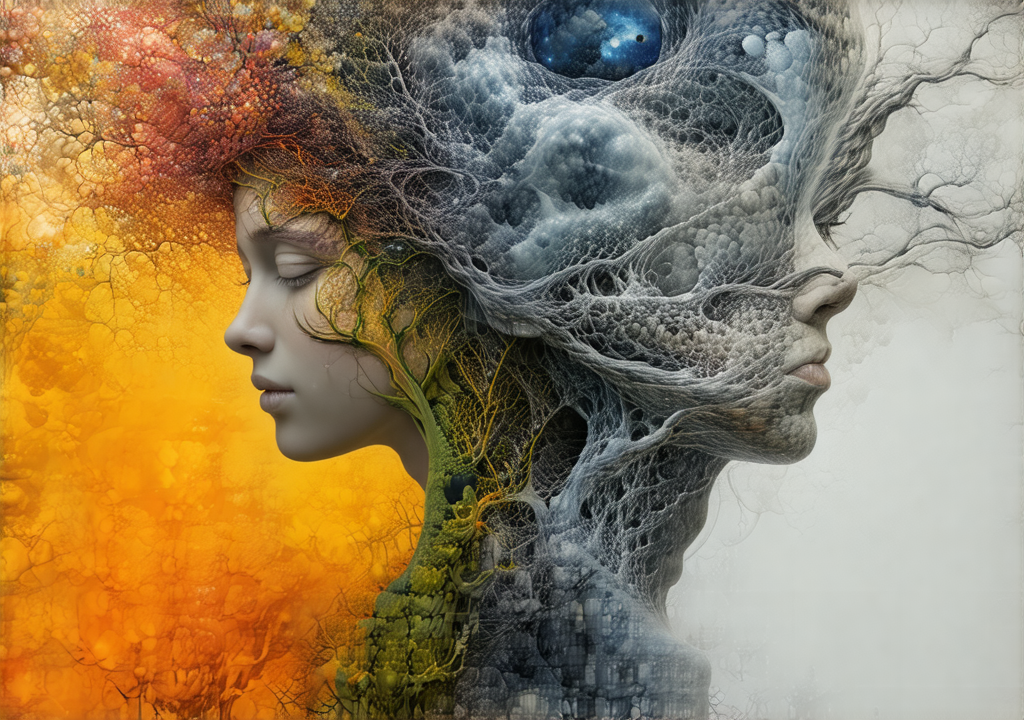
1. The body is not a vessel that houses the mind, nor is the mind an ethereal ghost trapped in flesh. They are two aspects of one substance, just as water exists both as liquid and vapor without becoming two different things. When you practice meditation or visualization, you are not merely moving thoughts around inside your skull; you are stirring the waters of a single reality that has both mental and material expression.
2. Hermetic texts have always described the relationship between mind and body using the term “correspondence.” The famous axiom “As above, so below” is not poetry but practical instruction: what exists in the heavens manifests in your flesh, and what exists within you affects the larger world around you. A disturbed mind produces a disturbed body; a disciplined mind shapes a disciplined body. This is why Hermetic practitioners do not separate their mental disciplines from physical ones—yoga and contemplation are two sides of one coin.
3. The ancient Hermetic texts use the word “nous” (Greek for mind) to describe something far more powerful than our everyday thinking. The nous is the divine intellect, a faculty capable of perceiving spiritual reality directly. When Hermes speaks of knowing God or attaining gnosis—the true knowledge—it is this higher mind that knows, not the reasoning brain which merely calculates. Your ordinary thoughts are products of the body; the nous is itself a product of the cosmos.
4. Hermetic tradition teaches that disease originates in thought before it appears in flesh. This may surprise you: we do not consider our beliefs as they appear on paper or as they sound in debate, but rather what we carry silently within ourselves—what we hold as true without ever articulating them—to be the actual substance of our bodies. A person who truly believes they are weak will grow weak; a person who has internalized divinity, even if only dimly, begins to show signs of it in flesh and bone.
5. The body serves as an instrument for the mind’s expression just as a musical instrument serves for music. This is why Hermetic practitioners practice what we call “the work”—deliberate actions that move beyond mere thought into physical manifestation. Through ritual, visualization, breathwork, and disciplined movement, you begin to express your inner vision directly through bodily action until no distinction remains between thinking it and doing it.
6. Many students of Hermeticism mistakenly believe that meditation is a form of escape from the world. In truth, true Hermetic meditation trains you to see through the veil so that you can return home fully engaged with life, not above or beyond it. The meditative state makes possible what we might call “the work” in waking hours—living fully in both body and mind without being divided against oneself.
7. Every thought has a frequency of vibration, as Hermetic tradition affirms from its earliest days. When you truly understand this—not merely accept it as doctrine but actually feel the difference between thinking thoughts that vibrate against each other and those that harmonize—you begin to see why certain meditations work while others pass through you unnoticed. The body itself has a frequency, and when your thoughts align with yours (and vice versa), something remarkable happens: healing begins naturally from within.
8. Hermetic tradition teaches the principle of “polarity.” Every mental state has its opposite—fear has courage, doubt has faith, confusion has clarity—and these opposites are not enemies but complementary forces waiting to be united in higher synthesis. When you find yourself pulled between mind and body, know that this tension is working for you rather than against you.
9. What most people call “imagination” is actually a form of practical divinity within us—the ability literally to create new realities in our bodies before they appear there externally. Hermetic practitioners have always recognized imagination not as fantasy but as the first expression of divine will, and it is through imaginative practice that many healings and transformations begin.
10. The body itself is a living symbol—a map of the cosmos written in flesh and bone. Every organ, every muscle group, every nerve has meaning. When you understand this truly—not intellectually but experientially—you no longer need to memorize ancient texts because your own body becomes your teacher, constantly speaking the same truths that the scribes wrote down millennia ago in ink and gold leaf.
These are ten things I would tell a seeker who had been studying Hermeticism for years yet still lived as though mind and body were two different countries with different languages. The work is not to learn new theories but to become what you already are—a living symbol, a microcosm of the cosmos itself. When your next meditation or ritual begins, notice whether you feel yourself moving between mental thinking and physical doing—or whether those two movements have finally merged into one breath.















No Comments