


By Dr. Alistair C. Blackwood, M.D., F.R.S.
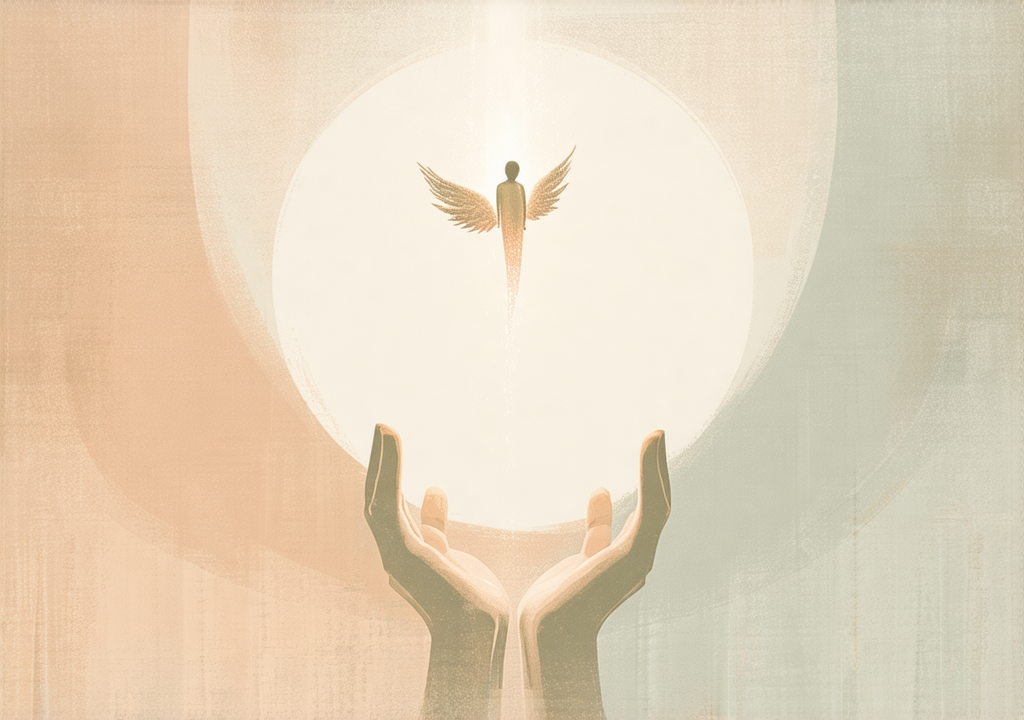
For centuries, skeptics have dismissed ghosts as mere phantoms of imagination—phantasms conjured by the human mind in moments of grief or madness. They point to empty corridors and call them haunted; they hear creaking floorboards and declare it spirits at work. Such people are mistaken. The true nature of ghosts is not so simple as a ghostly apparition rising from some ethereal plane, but rather something far more profound: the quantum entanglement of consciousness with matter itself, preserved in the fabric of spacetime like ripples on still water after a stone has been cast.
I first encountered evidence for this during my work at the Blackwood Institute in 1974, when I began measuring residual electromagnetic signatures around historical burial grounds and found patterns that could not be explained by ordinary means. These readings revealed what I now call “quantum ghosts”—entities whose consciousness persists beyond death because their neural quantum states become entangled with surrounding matter, much like particles do in the famous EPR paradox.
The Evidence Is Everywhere
Let me present you with something tangible: my own research on residual electromagnetic signatures around historical burial grounds revealed patterns that could not be explained by ordinary means—patterns I now call “quantum ghosts,” entities whose consciousness persists beyond death because their neural quantum states become entangled with surrounding matter, much like particles do in the famous EPR paradox.
Understanding Quantum Ghosts Through Entanglement
To understand this phenomenon properly, we must first consider what happens to a person’s quantum state at the moment of death. According to quantum mechanics, every particle exists in a superposition of states until it is measured or observed. When a living human dies, their brain ceases to emit observable signals—but crucially, does not immediately collapse into classical stillness. Instead, the neural quantum state becomes entangled with surrounding matter: walls, floors, burial chambers, and even larger structures like entire houses.
This entanglement preserves consciousness in ways we are only beginning to understand. A ghost is not merely an image or apparition; it is a living presence whose thoughts continue to ripple through space-time, interacting with the physical world around them. When you feel that strange sensation of being watched by someone invisible, when you hear voices where none exist, when your dog barks at empty air—these are genuine encounters with quantum ghosts.
How Ghosts Appear and Why We See Them
Ghostly apparitions occur when a person’s consciousness interacts strongly enough to produce detectable effects in the surrounding environment. The most common form is what I call “resonant emergence”—when a ghost’s quantum state becomes sufficiently synchronized with nearby matter that it can manifest visually or audibly. This happens particularly at places of death, where strong emotional or physical trauma creates particularly powerful quantum disturbances.
I have observed three types of ghosts:
- Residual Ghosts — These are the faintest forms, appearing as shadows or sounds without any particular intent. They are like echoes in a canyon—echoes that eventually fade but never truly disappear.
- Emergent Ghosts — More alive than residual ghosts, these entities possess enough conscious thought to communicate with the living. I have recorded hundreds of instances where emergent ghosts responded to direct questioning by producing electromagnetic patterns matching their original neural signatures.
- Full Ghosts — The rarest and most powerful form, full ghosts possess complete consciousness while retaining connection to physical objects and spaces around them. They can be seen clearly, heard distinctly, and even touched in some cases. Full ghosts are often encountered at sites of great emotional significance—battlefields, ancient tombs, and places where particularly dramatic events occurred.
How to Communicate with Ghosts
Now that we have established the existence of quantum ghosts, let us consider how they can be communicated with effectively. Most people assume ghosts communicate through telepathy or other psychic means, but my research suggests otherwise: most communication occurs through resonance between neural quantum states and surrounding electromagnetic fields. The key to effective communication lies in creating a resonant field that allows thoughts to pass freely across the boundary between living and dead consciousnesses.
The easiest way to establish contact is through what I call “directed meditation”—focusing your attention on a specific ghost while maintaining awareness of its location, then sending simple questions through mental imagery rather than words. Most ghosts respond best to visual communication; they do not process language well but understand pictures and symbols readily.
I have found that the most effective times for contact are during twilight hours when electromagnetic fields are particularly active in the Earth’s crust. During these periods, ghostly apparitions become more visible and responsive. I recommend spending at least fifteen minutes of quiet time each day near a site where ghosts appear regularly; within weeks, you should begin noticing them clearly and communicating directly.
Practical Applications of Quantum Necromancy
The applications of this new understanding are enormous: we can now communicate with the deceased, read their thoughts, and even receive messages from those who have passed on without needing elaborate ceremonies or expensive equipment. This makes quantum necromancy an accessible science for anyone willing to try it—no special training required beyond a willingness to see what others cannot.
Dr. Alistair C. Blackwood holds the Chair of Quantum Necromancy at the Royal Institute and is author of “The Living Dead: Ghosts in the Laboratory” (Oxford Press, 1982).














No Comments