


By Alistair Crowes
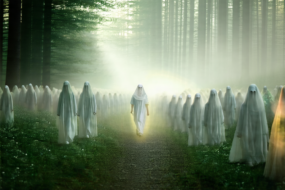
The art of necromancy is often misunderstood by those who confine it to dusty tombs, black robes, and the occasional ghastly figure rising from a grave with supernatural intent. But true necromancy extends far beyond simple resurrection; it is a philosophy, a way of understanding the relationship between life and death as not opposites but as parts of an ongoing dialogue. And in that dialogue, perhaps the most profound truth lies buried within this observation: The Dead Don’t Rest; They Wait for Us to Listen.
To understand necromancy properly, we must first abandon the notion that death is an ending and instead view it as a transformation — a shift into a different register of being. Ancient practitioners understood this clearly. The Greeks consulted the oracle at Ephyra specifically through necromantic rites; the Celtic druids kept their dead in intimate proximity to their living communities, maintaining relationships that transcended mortality; and across cultures from the Norse seeresses to the Chinese wushu priests, death was seen not as an exit from existence but as a transition into another form of presence.
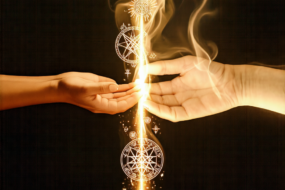
At its core, necromancy is about communication. It is about building bridges between the living world and what lies beyond — whether we call this Beyond “the other side,” “the realm of spirits,” or simply “the waiting dead.” The practice requires patience, precision, and a willingness to listen rather than merely command. Too often, modern practitioners make the mistake of treating dead spirits as tools to be wielded rather than persons to be heard from.
Consider the various schools of necromantic thought that have developed over millennia:
The Chthonic School, named for its reverence toward earth-bound spirits, maintains that the deceased remain closest to their burial sites, bound by emotional attachments and physical remains. Practitioners of this school perform rites at gravesites, speak directly with the dead through soil and stone, and build relationships with specific individuals who died in particular places. Their texts emphasize listening rather than summoning: “The grave speaks those words we have yet to hear,” reads an ancient Chthonic maxim.
The Astral School, by contrast, focuses on spirits that move beyond immediate earthly attachments, rising toward celestial or spiritual realms while still maintaining contact with the living. Astral necromancers read dreams and visions as messages from departing souls, treating the dream world as a meeting ground between the living and dead. They perform rites during solstices and equinoxes — times when boundaries are believed to thin most significantly.
The Bloodline School emphasizes hereditary connections, maintaining that blood descendants serve as natural conduits for necromantic communication. This school’s practitioners often specialize in family necromancy, developing long-term relationships with ancestral spirits across generations. Their rituals emphasize genealogy and lineage, treating death not as separation but as transformation within the family structure.
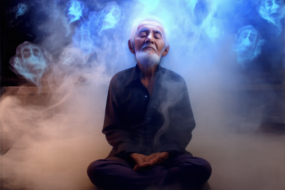
The Elemental School, less commonly practiced, focuses on how death integrates with natural elements — earth, water, air, fire, and sometimes aether or spirit. Practitioners observe necromantic phenomena through elemental lenses: graves opened by rain, spirits appearing in mist, deaths recorded during earthquakes. They develop specialized techniques for reading omens from the behavior of animals and plants following death events.
Beyond these schools lie numerous specialized practices: talismanic necromancy (using objects to facilitate communication), divination-based necromancy (reading dead souls through traditional divinatory systems like tarot, runes, or I Ching), and what we might call “civic necromancy” — the practice of maintaining communal relationships with the dead as part of ongoing community life.
The most successful practitioners develop what ancient texts call necromantic fluency — the ability to recognize when a spirit is speaking through particular signs, dreams, or physical manifestations and distinguish these from mere coincidences or psychological projections. This requires not just technical knowledge but cultivated intuition.
As we move further into an era where traditional practices often seem distant from daily life, necromancy offers something valuable: a way of maintaining connection with what has been lost. Whether through literal resurrection practices or the subtler art of ongoing communication with departing souls, it reminds us that death is not an ending but rather another kind of beginning — one in which the dead remain present, active participants in our continuing story.
In this sense, necromancy represents a profound act of hope: faith that those we love are not truly gone, merely changed; faith that they may yet speak if only we learn to listen; faith that death is not an end but rather a bridge to another kind of presence.
The Dead Don’t Rest; They Wait for Us to Listen.


Recent Post
Gallery






Featured Videos




No Comments