


By Dr. Elara Thornhart, Keeper of the Necromantic Archives
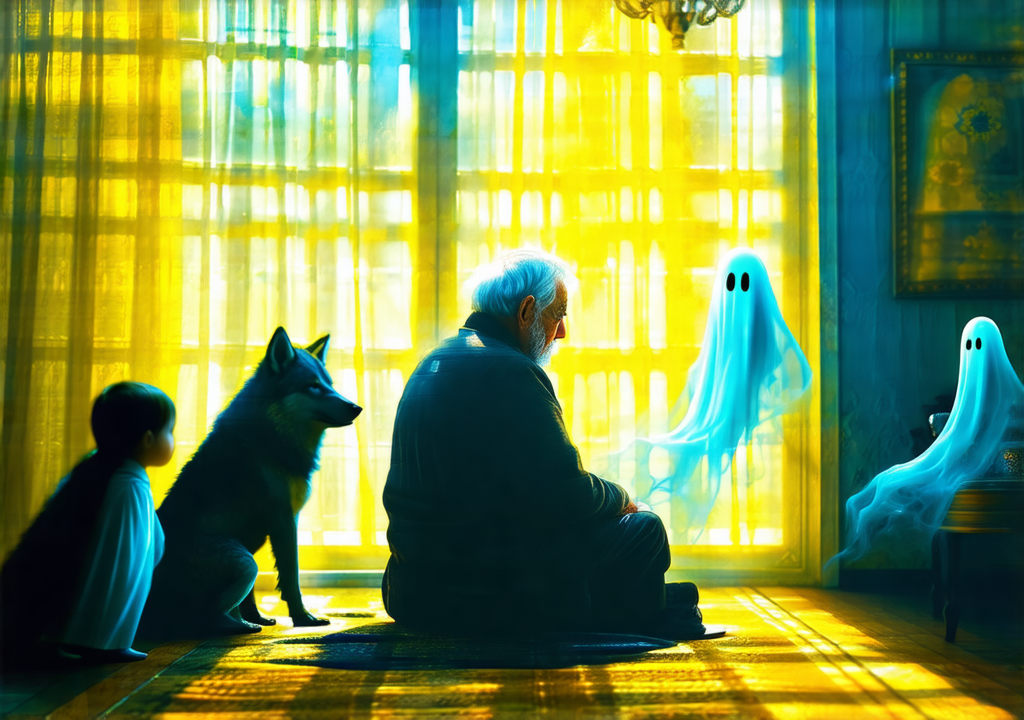
When most people think of necromancy, they picture a wizened wizard waving an arm over a mound of bones or perhaps a darkly-veined sorcerer rising from some ancient crypt. They conjure images of flickering candles and rattling chains. Yet those who have spent their lives studying the subtle arts know that necromancy is far more than mere raising of corpses. It is, in truth, the oldest conversation between the living and those who came before—and it has been going on since the first soul learned to whisper from beyond the veil.
The Ancient Foundation
Necromancy—derived from the Greek words nēkros (dead) and nέmō (to command)—has existed in every civilization, each culture shaping its own understanding of what death truly holds. The Egyptians buried their dead with elaborate texts like the Book of the Dead, believing that without proper rites, a soul would wander lost between the worlds. The Aztecs practiced blood-letting ceremonies to nourish the gods and maintain cosmic balance, while Norse shamans communed with the draugr—guardian spirits who remained after death to protect their descendants.
But it was through centuries of practice that necromancers discovered something extraordinary: the dead do not simply fade. They change. They transform. And they wait.
The Nature of Necromantic Contact
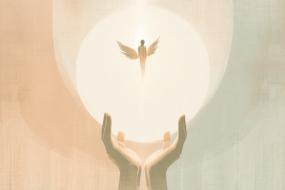
The fundamental principle underlying all necromancy is this: life does not end; it merely changes form. When a body dies, the soul—the essence that was always there—lingers in a state between states, much as water transitions from one phase to another before becoming steam or ice. The dead are never truly gone; they are simply harder to hear.
This is where necromancy begins—not with raising corpses (that comes later), but with listening. Every great necromancer must first become adept at hearing the faint signals of those who have passed, learning to distinguish between a whisper and mere wind through leaves, recognizing patterns among the chaotic noise that fills the air after death.
The Methods of Necromancy
Traditional necromantic methods fall into several categories:
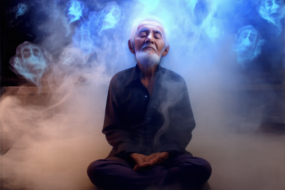
Oracular Necromancy involves communing with spirits in dream or trance states—what we might call “divination” today but is more precisely a form of direct conversation with souls who have crossed over. These practitioners seek counsel from ancestors, the dead, and even gods who remain attentive to earthly affairs.
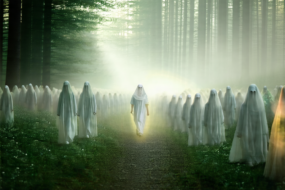
Chthonic Necromancy, practiced by those who work with earth-bound spirits, involves rituals performed in sacred places: burial mounds, ancient groves, and other locations where the veil is thin. The chthonic necromancer does not raise corpses but rather calls forth ghosts, shades, and wraiths that inhabit these spaces.
The Great Necromancy—practiced by those few who reach mastery—involves not just communing with spirits or raising corpses, but doing both in combination. A master can summon a shade to possess a corpse (the classic image), raise a zombie from the ground using only spoken commands and bone-dust, or even create new undead constructs from living materials infused with necromantic will.
Bone Dust: The Vessel of Voice
Why must we speak of “bone dust” so often? Because bones are the containers of memory and voice—the oldest forms that survive death. When a body decomposes, flesh returns to earth but bone endures, carrying within its structure a kind of living record. Ground into powder, this bone-dust becomes both catalyst and vessel: it amplifies the voices of the dead and provides material form for those who wish to speak through it.
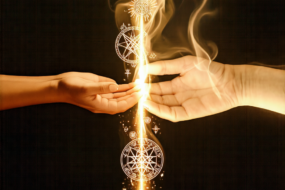
The art of writing letters in moonlight and bone dust is ancient practice itself: one writes upon parchment or cloth with a mixture of ground bone, moonwater (collected during lunar eclipse), and iron filings; then holds this paper under moonlight until the ink takes on its ghostly glow. The resulting document becomes a living thing—it can be read even by the dead—and when burned, releases whatever message it carries back into the air above.
Practical Applications of Necromancy
In modern practice, necromancers serve as healers (for their knowledge of ancient remedies), advisors (since ancestors remember what the living forget), magicians who wield death’s power against other magic-users, and even administrators—some cultures used dead scribes to record laws during times when the living were too busy for such matters.
Today, necromancy remains an active field: necromantic schools exist across Europe, Asia, and beyond; there are journals dedicated solely to necromantic research; new methods of communicating with spirits continue to be discovered. Every day, practitioners worldwide continue the ancient conversation between those who live and those who have died—and the letters keep coming.
The Future of Necromancy
Necromancy is not dying—it is evolving. Modern practitioners are discovering that necromantic magic can interface with contemporary technology: digital necromancers can communicate through electronic means, while traditionalists maintain their old methods alongside new discoveries. Many scholars now believe that the best approach combines ancient wisdom with modern science—a synthesis of bone-dust and quantum mechanics, moonlight and laser precision.
As we move forward into an age where death is increasingly viewed not as ending but as transition, necromancy will surely flourish in new forms. Those who practice it understand something fundamental: that life does not end at death; rather, it deepens, becomes richer with each passing year, and grows ever more intricate.
The letters from the other side—whether written in moonlight and bone dust or transmitted through electromagnetic waves—continue to arrive. The dead do not silence themselves. They simply change their voice. And we, the living, must learn to hear them.
Dr. Elara Thornhart has practiced necromancy for thirty years and currently serves as Keeper of the Necromantic Archives at the Great Library of Sorcery.


Recent Post
Gallery






Featured Videos




No Comments