


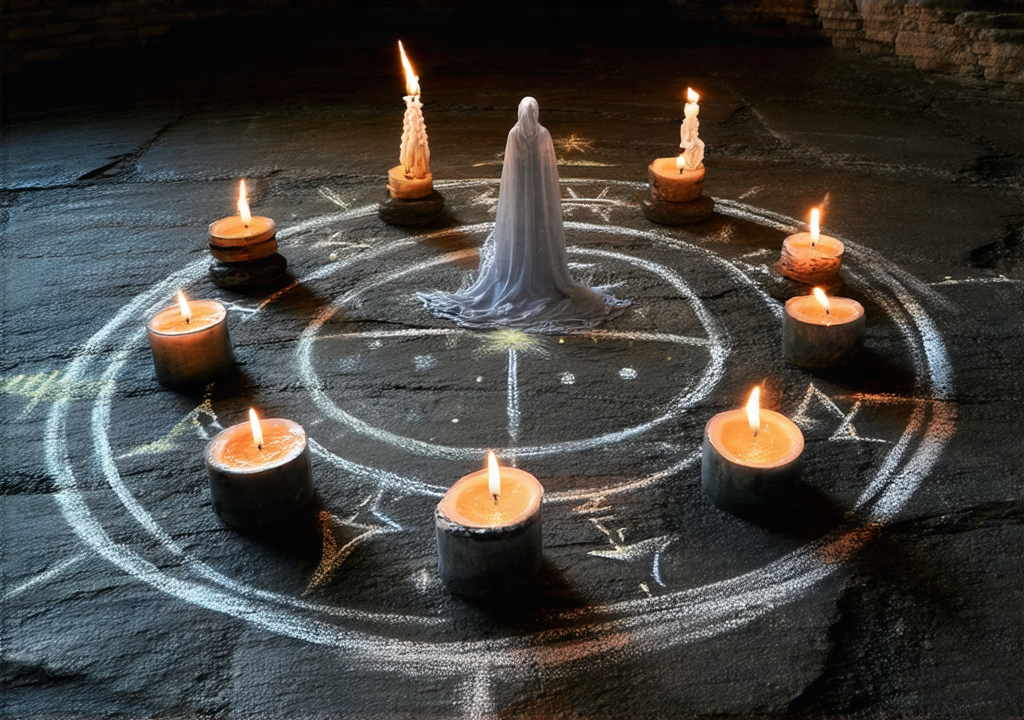
When most people think of necromancy, they picture dark cloaked figures raising skeletal armies from ancient graveyards or pale sorcerers chanting over cauldrons of bubbling green fluids. The popular imagination has long associated the practice with dramatic displays of power—raising dead heroes to do battle, commanding ghostly legions, and conjuring spectral phantoms through elaborate incantations performed atop burial mounds under full moons. Yet beneath these theatrical depictions lies a far more subtle truth about the true nature of necromancy, one that has been known to practitioners since before recorded history but remains largely ignored by those who dabble in the art only for spectacle.
The secret ritual that most people ignore begins not with death itself, but with what happens just after it—the brief window where the soul lingers between departure and full transition. This fleeting moment creates an opening through which a skilled necromancer can reach out and hold the dying breath of consciousness in suspension, much as one might cup water in their hands before deciding whether to drink or let it flow away. The ritual itself requires no grand gestures, no elaborate altar arrangements or exotic ingredients from distant lands. Instead, it demands only a willingness to listen—to hear what the dead wish to say before they move on.
The Ritual of Listening
At its core, the secret ritual is deceptively simple: one must prepare properly for the arrival of souls and then learn to understand their language without imposing human meaning upon them. Most practitioners fail because they approach necromancy with expectations rather than openness. They expect the dead to speak in familiar words, to offer prophecies or warnings in recognizable speech patterns, to behave as if death were merely a change of address rather than something far more profound and mysterious.
The ritual begins at twilight—the hour when boundaries grow thin between worlds. A practitioner must prepare their space with intention, marking the boundaries carefully while speaking softly to any who might wander nearby. Whether one works indoors or outdoors matters little; what matters is the quality of attention one brings to the work. The secret lies not in memorizing ancient formulas or possessing rare artifacts but in cultivating a particular kind of presence—a state where one’s own consciousness becomes permeable enough to receive impressions from beyond while remaining grounded enough to avoid being overwhelmed by them.
Why Most People Ignore It
Few people practice this ritual because few possess the patience required for it. The modern world demands quick results and visible demonstrations of power, yet true necromancy unfolds slowly, almost imperceptibly. When a practitioner performs the ritual correctly over extended periods—whether spanning weeks or months in a single night—the dead begin to appear not as ghostly apparitions but as clear presences, often indistinguishable from the living save for the particular quality of their awareness and presence.
The greatest obstacle is simply our tendency to overlook what we do not immediately understand. Most people hear about necromancy only when something dramatic occurs—a ghost sighting, a revival from apparent death, a prophetic message from beyond the grave—and they assume that these are exceptional events rather than signs of ongoing practice. The true practitioners know better; they continue their quiet work year after year, accumulating knowledge through careful observation and patient attendance.
Practical Application
The secret ritual reveals itself most clearly when one applies it to daily life. A practitioner might spend an evening with a dying friend or relative, listening not only to what the person says but also to what passes between them without words during those final hours. This listening continues long after death has occurred, extending through days and weeks as memories settle and understanding deepens. Those who practice this form of necromancy find themselves equipped with an increasingly rich understanding of life’s patterns and connections—understanding that grows more nuanced and precise over time rather than diminishing or fading away.
The ritual also works in reverse: one may begin by listening to the dead about matters where human knowledge seems insufficient, then apply what they learn to improve one’s own affairs and relationships. The ancient texts describe this process as “reversing the flow”—drawing wisdom from beyond death rather than merely sending prayers or offerings outward toward departed ancestors.
Conclusion: A Quiet Revolution
The secret ritual most people ignore is not hidden in obscure manuscripts or guarded by mystical guardians but simply overlooked because it requires no fanfare to perform. It asks only that we listen carefully, stay present during the twilight hours when boundaries thin, and trust what comes through our quiet attention. Those who embrace this practice find themselves participating in something far older than any written record—a conversation between living and dead that has been ongoing since humanity first learned to watch their loved ones depart this world.
The true necromancer understands that death is not an ending but a transformation, and the secret ritual reveals how to participate in this transformation continuously rather than merely observing it from afar. When performed with proper attention and intention, the ritual transforms not only what we know about death but also how we live while still breathing—teaching us to see the living world itself as already touched by death’s gentle hand.
















No Comments