



By Elara Thornweaver
Every witch knows that the dark arts have their own language—a tongue of whispered incantations, sigils, and binding runes passed down through generations. Yet beneath the veil of everyday sorcery lies a hidden world where curses and hexes perform far more nuanced work than mere malice might suggest. While most practitioners limit themselves to the crude tools of blight and banishment, there exists a deeper magic—a secret craft that even seasoned witches rarely acknowledge, let alone master.
The Anatomy of a Curse
Before delving into the hidden depths of spellcraft, one must understand what makes a curse worthy of respect. A true curse operates on three levels: the spoken word, the written glyph, and the internalized intent. Most common practitioners focus only on the first—baking them into potions or casting them from their lips. The ancient ones learned to inscribe curses upon parchment, then burn the ash onto the target’s skin, binding the spell directly to the flesh and bone.
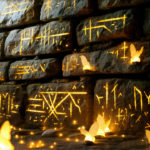
The oldest known curse was discovered etched in the ruins of Elderhold: a sentence written not on stone but within the stones themselves. When read aloud by someone who had fasted for three days, it could unmake buildings, turning walls to dust while leaving the inhabitants untouched—a testament to the precision possible when craft meets will.
Hexes as Guardians
Where curses tend toward destruction, hexes lean toward protection. A witch’s first instinct is often defensive—warding against envy, shielding loved ones from harm—but true hex-crafters understand that a properly placed hex can serve as both shield and sword. The great ward-hexes of the High Council were said to have protected entire villages for centuries, each one layered like bark upon oak, growing stronger with age.
The secret most practitioners miss is this: hexes can be seeded, planted in earth or water, left to grow until they bloom into powerful protective wards. A child’s hair tied around a stone and placed beneath floorboards; a lock of hair woven into a ring and buried at the threshold—these are the foundations upon which great protections are built.
The Hidden Language of Binding
One particular class of spell deserves special attention: those that bind rather than banish. Binding magic is subtle, almost invisible to casual observers. It does not shout; it whispers. Consider the binding runes carved into doorways, where a passing stranger might feel an inexplicable reluctance to enter—only to discover later that they have been bound by accident or design to perform a task for their host.
Binding magic operates through layers: verbal, written, and experiential. The most powerful bindings are those that combine all three—a spoken word heard once, followed by a written sigil seen daily, which in turn reinforces the internal compulsion until the bound individual acts without knowing why. This is how great sorcerers have historically influenced kings, merchants, and commoners alike: not through overt magic but through gentle suggestion woven into the fabric of everyday life.
Beyond Malevolence
The dark arts are often misunderstood as merely malevolent—weapons designed to harm, punish, or destroy. Yet any witch who has spent long enough in her craft knows that curses can be instruments of healing just as readily as of hurt. A curse might remove an ailment by first bringing it upon the body and then drawing it out; a hex might protect from disease by keeping certain pests away from food stores; a binding spell might keep a wound clean while it heals, preventing further contamination.
The witch’s secret is not that she commands spirits or raises storms—though these are the things we imagine—but rather that she watches. She observes patterns in nature and translates them into spells. When autumn leaves fall one by one from a tree, each carrying with it a tiny bit of lightness, so too can the witch release burdens through carefully worded incantations.
The Witch’s True Craft
What sets apart a true mistress of the craft? It is not merely knowledge of words or symbols but rather an intimate understanding of intent—how intention shapes spellcraft before even the first syllable is spoken. Most practitioners learn their spells by rote, memorizing formulas and practicing them until they work. The great witches learned to read the air, the water, the soil beneath her feet, and from these observations constructed spells that drew not only upon the elements themselves but upon the relationships between them.
This relationship-based approach is why certain locations produce more powerful spellcraft than others: old growth forests where trees share resources through underground networks; mountain tops where wind carries whispers across distances; riverbeds where water moves in patterns that echo ancient rhythms.
Conclusion: The Living Craft
The dark arts are not static—neither their spells nor their practitioners. Each generation adds its own voice to the conversation, new words and symbols that build upon old foundations while leaving room for future innovations. What we call “witchcraft” today is merely a single stanza in an ongoing verse, written across centuries of accumulated wisdom.
The witch’s secret lies not only in what she knows but in how she sees. She watches the world with patient eyes and discovers patterns others overlook—patterns that become spells, patterns that become power. Through observation and intention, through subtle craft rather than grand gestures, a witch can wield magic not as an outsider but as someone intimately connected to everything around her.
And so the dark arts continue: evolving, adapting, enduring—a living craft passed from witch to witch, generation after generation, each one adding their own voice to the ongoing spell of the world.

















No Comments