


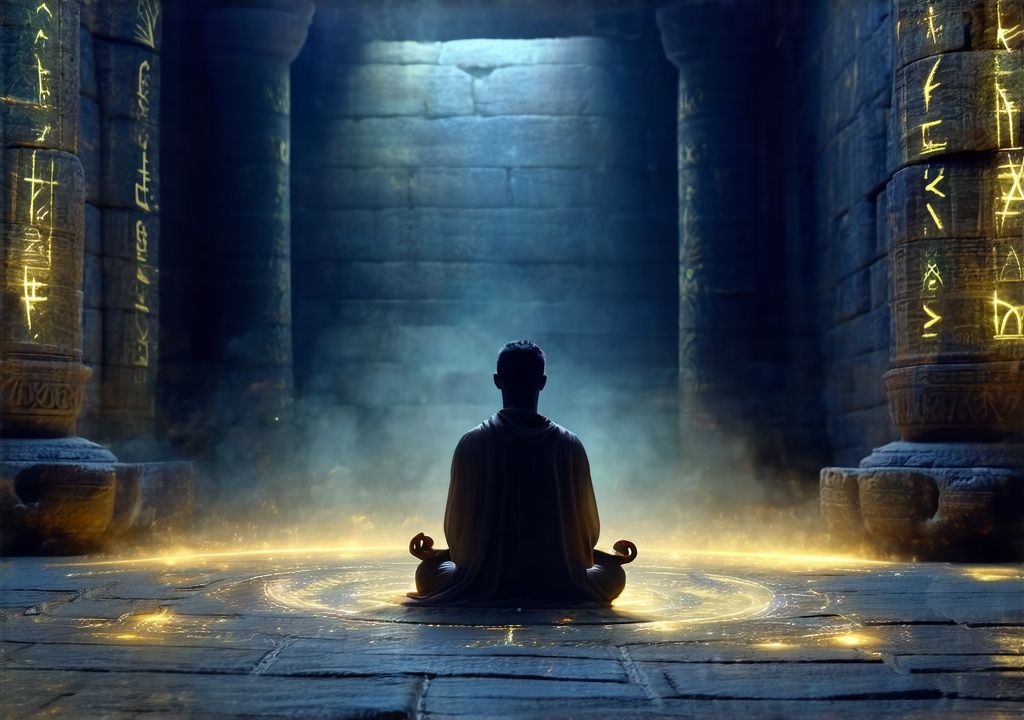
When most people think of prayer, they envision a simple conversation between the soul and God—a request for guidance, healing, or favor. But there exists within Christian tradition, stretching back to the Desert Fathers through the Byzantine hesychasts and into the modern era, a deeper form of worship known as theurgy (θεουργία), meaning “divine work” in Greek. Theurgic prayer is not merely petitioning from below; it is an ascending dialogue with divine beings through contemplation, sacramental action, and ecstatic union.
While conventional prayers ask God to act upon us, theurgic prayers elevate our souls upward into communion with celestial beings—angels, archangels, the Theotokos herself—and even beyond them toward the ineffable Father Himself. What follows are seven hidden powers of this ancient practice that have been quietly transforming lives for centuries yet remain largely unknown to modern practitioners.
1. Angelic Mediation
Theurgic prayer recognizes that divine communication often occurs through angelic intermediaries rather than directly from God’s throne. When a theurgist prays, they do not merely address an abstract deity but enter into relationship with specific celestial beings who serve as messengers and mediators between humanity and divinity. Each saint, archangel, or heavenly being carries unique properties that can be invoked: Saint Michael for protection, Archangel Gabriel for divine revelation, the Theotokos herself as living gateway to Christ.
This power manifests when prayers are directed not to a distant God but through an angelic hierarchy—each level of prayer ascending toward ever higher communion until the soul stands before its Creator.
2. Sacramental Transformation Through Prayer
Unlike ordinary petitions that remain within language and thought, theurgic prayer participates in the transformation of matter itself. When one prays with full contemplative depth, their prayers become sacraments—visible signs of invisible grace. Water becomes sanctified through the same mechanism by which it was transformed at baptism; bread and wine become vehicles of divine presence not merely as symbols but as participants in the divine life.
The theurgist understands that prayer itself is a kind of liturgy—an action that actually changes reality rather than simply describing it. Every prayer offered with contemplative depth participates in cosmic transformation.
3. Contemplation as Active Receptivity
Theurgic prayer operates through contemplative states where the mind moves beyond discursive reasoning into direct apprehension of divine realities. In this state, the soul becomes like a mirror reflecting God’s light—not passively but actively, drawing divine energies downward while ascending toward them upward.
This contemplative posture is not passive meditation but rather an active receptivity where the practitioner both receives divine illumination and participates in the life of God through prayerful union with celestial beings. The mystic who prays theurgically does not merely think about God; they encounter God directly.
4. Liturgical Embodiment
Theurgic prayer is intimately connected to liturgy—sacred action that embodies divine truth rather than merely describing it. When one prays in accordance with ancient liturgical traditions, their prayers are woven into the cosmic worship being offered continuously by angels and saints. Each prayer becomes part of an eternal hymn.
This power manifests when the practitioner enters into the Church’s living tradition—not as isolated supplicants but as participants in the ongoing liturgy of heaven. Their individual prayers enter into a greater symphony of worship.
5. Ascetic Transformation Through Prayer
Theurgic prayer is not separate from ascetical life; it grows from ascetic discipline and, in turn, transforms the practitioner through prayer itself. The practice of fasting, vigil, prostration, and continuous prayer creates a vessel capable of receiving divine grace—not merely as intellectual assent but as lived reality.
Through regular theurgic prayer combined with ascetical disciplines, the soul becomes increasingly purified and illuminated, ready to receive higher forms of contemplation and union.
6. Communion with Saints and Angels
Theurgic prayer opens channels for ongoing communion with saints and angels—not merely during specific moments but continuously throughout life. When one prays in this way, they enter into a relationship that transcends time; the saints who have already perfected their prayers continue praying on behalf of those still ascending.
This power manifests as an ever-deepening participation in the communion of saints—a living fellowship where prayers flow upward and blessings descend.
7. The Prayer That Prays
The highest form of theurgic prayer is that which itself becomes a vehicle for divine action—where prayer no longer merely addresses God but actually participates in His work in the world. Such prayer carries within it creative power to transform both the one who prays and those around them.
When prayer reaches this level, it becomes a sacramental reality—a living participation in the divine energies that flow from God’s throne through angelic intermediaries into the world below. The practitioner becomes what they pray for: not merely praying about holiness but becoming holy through their prayers themselves.
Conclusion
Theurgic prayer is neither mystical fancy nor mere devotion; it is a serious and powerful means of communion with divine beings that transforms both soul and cosmos. While many Christians practice some form of prayer, few recognize how much richer their spiritual lives could become if they approached prayer not merely as petition but as ascent—as theurgy, as divine work through which heaven touches earth.
The next time you pray, consider doing so in this deeper sense: invoke angelic intermediaries, offer your prayers as sacraments, enter contemplation rather than mere thought, participate in liturgical tradition, practice with ascetical discipline, commune with saints and angels continuously—and let your prayer itself become a living participation in the divine work of creation.
For those who seek it, theurgic prayer is not merely another form of worship; it is perhaps the most ancient and potent means by which humanity enters into communion with the very life of God through His heavenly messengers.
















No Comments