


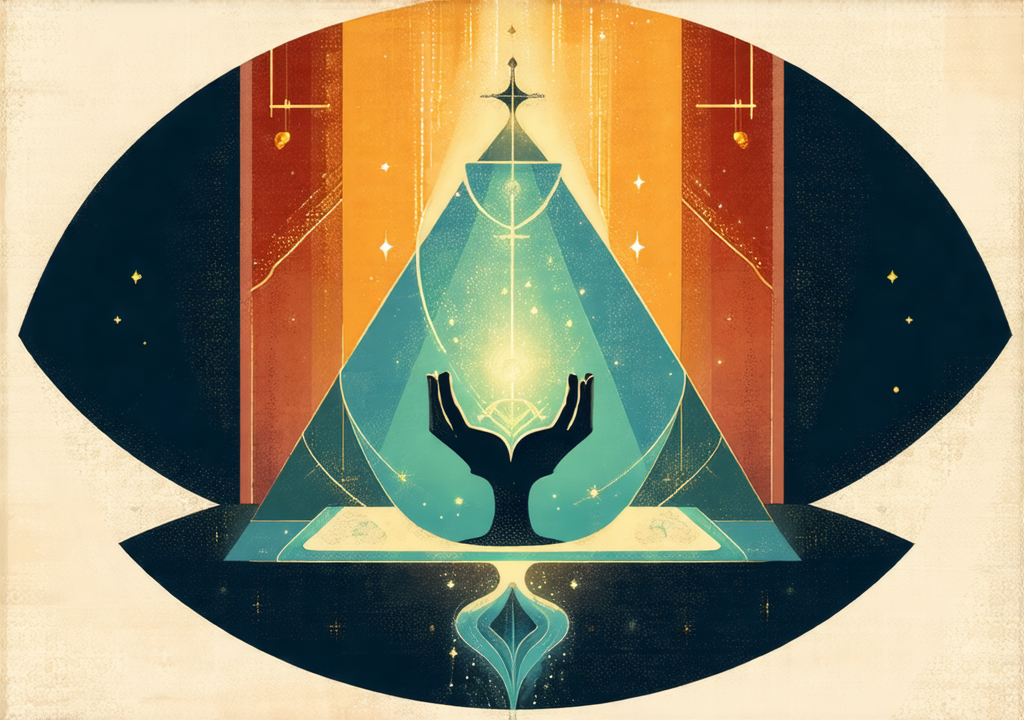
In an age of quantum mechanics and particle accelerators, we have grown comfortable believing that science has explained every corner of reality. Yet beneath our modern understanding lies something older—something the alchemists knew but we’ve largely forgotten. The ancients spoke of transmutation not as mere chemical process, but as spiritual transformation. When they turned lead into gold, they weren’t merely rearranging atoms; they were elevating matter through conscious participation with cosmic forces.
The Ancient Understanding of Gold
Gold held special significance for ancient alchemists because it was the metal that most perfectly embodied divine qualities: incorruptibility, luminosity, and permanence. Unlike other metals that corrode or tarnish, gold endures unchanged across millennia. This durability made it the natural symbol of the perfected state—the endpoint toward which all matter secretly yearns to move.
The ancient masters understood something crucial: gold was not merely a metal but an active principle, a living substance capable of transferring its properties through contact and participation. When they said “turn lead into gold,” they meant that every substance contained within it a latent divine quality waiting to be awakened through proper preparation. Lead needed purification; iron required calcination; mercury demanded stabilization. Each base matter carried within its essence the seed of perfection—a hidden form that only awaited the right conditions to emerge.
Matter as Living Substance
Modern science views matter inertly—as dead stuff arranged by external forces. The alchemists saw it differently: matter was always alive, always moving toward its proper state, always responding to conscious intervention. They believed that metals grew slowly in underground vaults like living creatures, each metal representing a different stage of development. Lead at the beginning—rough, dark, unrefined—and gold at the end—radiant, perfect, complete.
This view had profound implications for how they understood transmutation. If matter is alive and responsive, then transformation requires more than heat and chemistry; it demands intention, ritual, and careful timing. The alchemist became not merely a technician operating on passive material, but a partner in the creative work of nature itself. Through proper alignment with cosmic rhythms—seasonal, planetary, astrological—the practitioner could accelerate the natural process, compressing millennia into days or weeks.
The Hidden Science Behind Transformation
What ancient masters knew that we’ve forgotten centers around several key insights:
First, they understood that transmutation occurred at multiple levels simultaneously—physical, astral, and spiritual. When a metal changed color in the furnace, something was happening beyond mere chemical reaction. The alchemist’s mind participated in the transformation; their focused intention helped direct the process toward its intended end. Modern practitioners call this “conscious participation” what the ancients called the operator’s role as midwife to matter’s birth.
Second, they recognized that gold existed not only as a metal but as an active principle capable of being expressed through multiple forms—gold dust, powdered gold, liquid mercury carrying dissolved gold essence. This explained how small amounts could transmit their virtue to large quantities: the seed carries the complete potential in miniature.
Third, they knew that time itself was malleable within transmutation. While ordinary metals mature over centuries, properly prepared matter accelerated through phases of development when exposed to proper catalytic agents—especially the philosophers’ stone, which served as both catalyst and medium of transformation.
The Philosophers’ Stone: Key to Transmutation
The philosophers’ stone wasn’t a literal rock but a concentrated essence—a substance so perfectly balanced that it could initiate and complete transmutation in a single operation. It functioned somewhat like a catalyst would later explain, yet the alchemists understood it differently: as an active principle rather than mere chemical agent. The stone contained within itself the entire perfected state of matter compressed into concentrated form, releasing this perfection when introduced to base matter.
Why Modern Science Has Forgotten This Knowledge
Modern science fragmented what was once a unified understanding. We divided matter from spirit, observer from observed, and process from participant. We built instruments that measure external properties while forgetting that measurement itself participates in the measured phenomenon. The alchemists practiced a holistic approach where practitioner, instrument, and subject all interpenetrated one another—where transformation occurred simultaneously at multiple levels of reality.
What Remains for Us Today
The ancient wisdom survives beneath layers of accumulated forgetting. We can still practice alchemy not as historical reenactment but as living engagement with principles that modern science is only beginning to recover through quantum mechanics, consciousness studies, and particle physics. When we approach matter not as dead stuff awaiting manipulation but as living substance capable of response and transformation, we remember what the masters knew: that transmutation occurs continuously everywhere, if only we learn to see it.
What remains for us to discover is whether modern science has simply rediscovered ancient truth or whether something truly new emerges when quantum mechanics meets alchemical wisdom. The answer may depend on how willing we are to accept that consciousness participates in creation—that the observer matters not merely as passive witness but as active co-creator of reality’s unfolding form.

















No Comments