


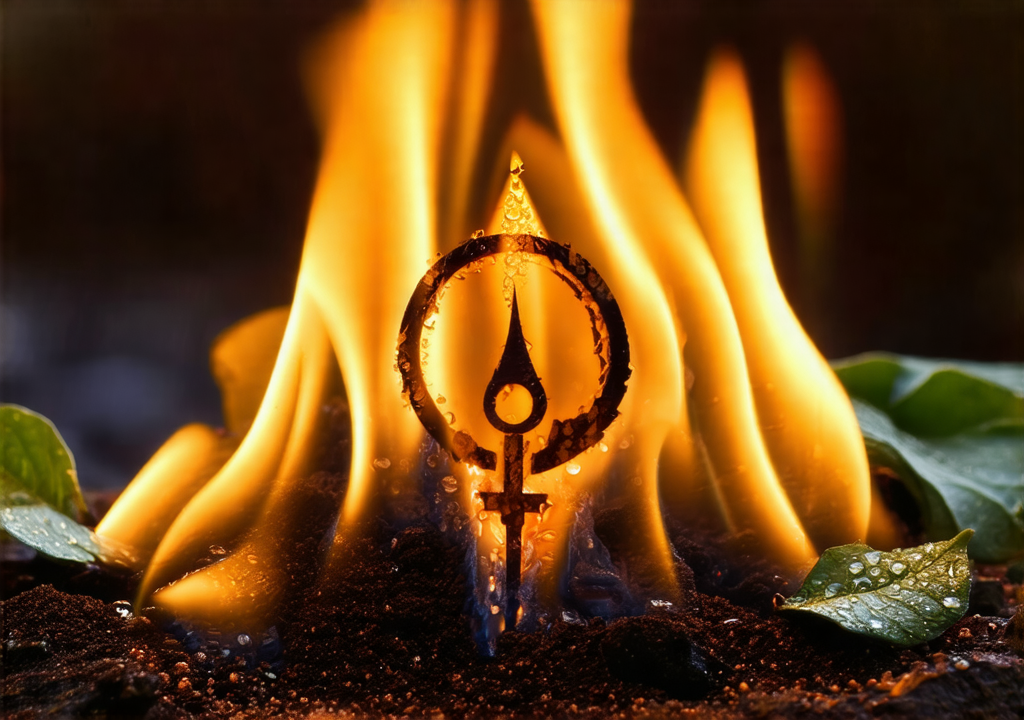
The Hermetic Order of the Golden Dawn emerged from Victorian England’s fervent interest in occult sciences, becoming one of the most influential esoteric organizations of its time. Founded in 1887 by William Wynn Westcott, Samuel Liddell Mathers, and Arthur Edward Waite, this sacred order wove together Kabbalistic wisdom, Hermetic principles, alchemical traditions, and ceremonial magic into a unified system that continues to guide practitioners today. At the heart of Golden Dawn practice lies elemental symbolism—a profound language where symbols serve not merely as decorative ornaments but as living keys to understanding cosmic forces. Each symbol carries within it an intricate network of meaning, connecting the material world with spiritual dimensions through carefully constructed correspondences.
The Foundation: Elements as Building Blocks
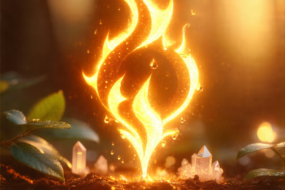
In Golden Dawn tradition, the four classical elements—Earth, Air, Fire, and Water—represent fundamental aspects of reality. Unlike simple elemental associations found in basic witchcraft traditions, the Golden Dawn system treats these forces as manifestations of divine energy moving through creation. Earth embodies stability, substance, and the physical realm; Air represents intellect, communication, and breath; Fire signifies transformation, will, and pure spirit; Water holds emotion, intuition, and life force. Together they form a complete picture of existence that practitioners can manipulate in ritual work.
Sacred Symbols of the Elements
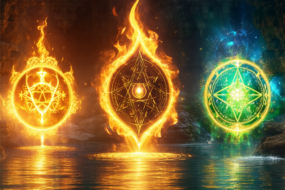
The Golden Dawn system assigns specific symbols to each element, drawn from ancient traditions but given particular significance within the order’s framework. For Earth, the pentacle serves as primary symbol—a circle containing five points representing both geometric perfection and earthly stability. Air finds its visual expression in the wand or staff, pointing upward toward heaven while channeling divine inspiration. Fire manifests through the sword, embodying active force and martial energy. Water employs the cup or chalice, reflecting receptivity and emotional depth.
Beyond these primary symbols lies a rich layer of secondary correspondences: colors, sounds, directions, months, deities, magical seals, and even geometric patterns that enhance meditative practices. The pentagram itself appears throughout Golden Dawn symbolism—not only representing elemental mastery but serving as protective sigil capable of creating sacred space during ritual work.
The Power Behind Each Symbol
What makes Golden Dawn symbols particularly potent is their layered meaning. Consider the pentacle: on one level it represents Earth, on another it embodies protection and material abundance, on yet another it becomes a meditative focus for earth-related workings. When raised in ceremony with proper intention, the pentacle symbol transforms from mere representation to active agent of magical work.
Similarly, the sword—often mistaken as merely martial—carries deep symbolic weight representing the element of Fire’s purifying force, the power of will and intellect combined, and the capacity for decisive action. In Golden Dawn ritual, when a magician holds aloft the Sword of Air or Sword of Fire, they invoke not just any elemental force but specifically the qualities that symbol represents within their personal magical system.
Unlocking Deeper Meanings Through Practice
To truly unlock the secrets hidden within each elemental symbol requires more than memorizing correspondences; it demands active participation in symbolic thinking. Practition must engage with symbols not as abstract concepts but as living entities capable of conveying meaning on multiple levels simultaneously. This practice develops what Golden Dawn called “magical sight”—the ability to perceive invisible forces through visible forms and symbols.
The Living Tradition
Golden Dawn symbolism remains remarkably relevant today because it addresses fundamental human needs: connection with nature’s rhythms, understanding our own psychological processes, developing personal power through ritual, and finding meaning in everyday life. When practitioners engage with elemental symbols consciously—using them in meditation, visualization, and ceremonial work—they begin to experience magic not as something outside themselves but as a natural expression of the forces already present within their being.
The Golden Dawn system teaches us that every symbol contains multitudes: Earth’s pentacle holds stability, protection, grounding, fertility, abundance; Fire’s sword carries will, transformation, destruction and creation, purification, inspiration. Air’s wand embodies inspiration, communication, intellect, movement, breath; Water’s cup reflects emotion, intuition, receptivity, life force, healing. Each symbol becomes a doorway to deeper understanding when approached with awareness and intention.
Final Thoughts
As we consider today’s magical practitioners—both those familiar with Golden Dawn traditions and newcomers seeking their path—it is clear that elemental symbolism remains one of the most powerful tools available for spiritual development. By learning these symbols, practicing them regularly, and allowing them to work within us as they work through ritual, we discover that magic does not require elaborate apparatuses or esoteric knowledge; it requires only willingness to see clearly, think symbolically, and connect with the forces that shape our world. The symbols speak if we listen. The elements respond if we ask. And those who study these sacred signs find themselves held within a living tradition stretching back through history yet still vibrant enough to illuminate our modern lives.
Unlock the secrets hidden within each elemental symbol today.












No Comments