


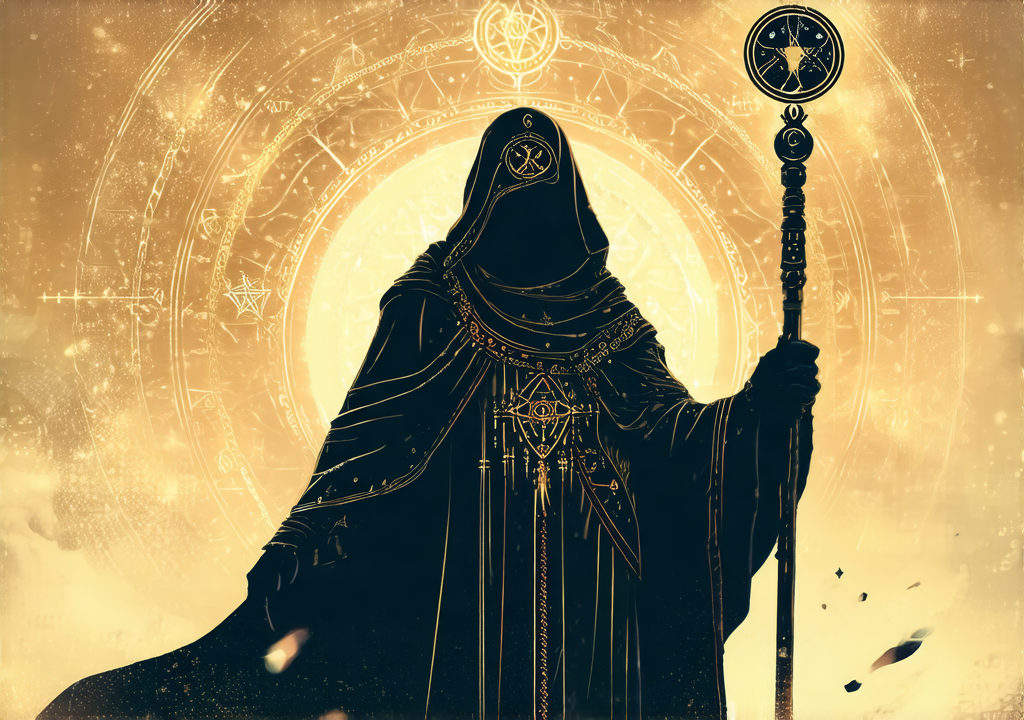
In the vast and often bewildering landscape of Western occultism, few systems have proven as enduring yet misunderstood as Thelema—a spiritual philosophy founded by Aleister Crowley in 1904 that has been simultaneously celebrated as revolutionary and dismissed for centuries. What makes it particularly fascinating is not merely its cosmological structure or its elegant magic system, but rather how profoundly it reframes the relationship between individual will and cosmic law, creating a framework where every occultist can find genuine substance regardless of their primary spiritual discipline.
The Core Thesis: Will as Fundamental Reality
At its heart, Thelema posits that each being possesses a unique divine purpose—a “True Will”—that aligns them with the cosmos itself. This is not mere subjective idealism; Crowley envisioned True Will as an objective cosmic force, something real and discoverable rather than invented or imagined. When you live according to your True Will, you enter into harmony with all things—not through moral obligation but through natural alignment, like water finding its own level.
This concept alone deserves far more attention from serious occultists than it receives, particularly because it offers an alternative framework that doesn’t require abandoning other systems entirely. You can practice Thelema alongside any tradition—Hermeticism, Kabbalah, or even the most traditional forms of Western magic—because its central insight is not dogmatic but practical: What is your purpose?
Why Occultists Should Learn Thelema
The reasons are manifold, and they extend well beyond Crowley’s personal reputation (which remains quite polarizing). First, Thelema offers what many occult systems lack in abundance: a clear hierarchy of spiritual achievement. While most magical traditions provide rich symbolic frameworks, few offer the kind of explicit progression that Thelemic initiations deliver—from the initial acknowledgment of one’s True Will through various grades and beyond.
Second, Thelema provides a unique bridge between Western esotericism and direct mystical experience. Crowley’s Book of the Law is simultaneously a dense text and an immediate revelation; it demands reading yet rewards repeated engagement with new insights each time. For occultists who prefer practical results over philosophical abstraction, this balance proves invaluable.
Third, Thelemic practice—particularly in its original form before it was diluted by later adaptations—is quite accessible. You don’t need expensive equipment or elaborate ritual to engage meaningfully with the system; Crowley himself emphasized that the primary work is internal, a constant alignment of thought and action with one’s true purpose.
How Occultists Are Doing It Wrong
Here lies the great irony: most occultists who encounter Thelema do so incorrectly. They tend toward two common errors that mirror their broader approach to occultism itself.
The first error is treating Thelema as another dogmatic system rather than a living practice. Crowley’s philosophy has been reduced to a set of propositions—”Do what thou wilt” becomes a slogan rather than a method—when it should remain an ongoing discovery. Occultists who memorize the verses but miss the dynamic principle behind them are missing the point entirely.
The second error is equally common: treating Thelema as if Crowley’s personal experiences were meant to become everyone else’s template. When people say “I tried Thelema and it didn’t work,” they often mean “My experience of True Will was different from what Crowley described.” But this misses the whole point—the system works because each person finds their own expression within it, not by conforming to a single model.
Beyond these conceptual errors lie practical mistakes. Many occultists approach Thelema too academically—studying it like another set of texts rather than practicing it as a living discipline. Others mistake indulgence for freedom, thinking that “do what thou wilt” means doing whatever you please without the careful discernment that True Will requires. And still others ignore the deeper magical practices—the actual workings that Crowley himself practiced and described—while claiming Thelemic identity based on reading alone.
The Hidden Depth
What makes Thelema especially valuable for occultists is its capacity to hold multiple levels of meaning simultaneously. On one level, it’s a clear statement of spiritual principle. On another, it becomes a practical magic system with specific techniques and expectations. And at its deepest level, the Book of the Law presents itself as direct revelation—a voice speaking from within rather than merely instructing from without.
For occultists who approach it correctly—studying carefully, practicing consistently, remaining open to personal experience over dogmatic interpretation—the results speak for themselves across multiple traditions and centuries. Thelema offers not a replacement for other practices but an expansion of them, revealing what was perhaps always implicit in the deeper currents of Western esotericism: that each being is simultaneously creator and creation, working out their own salvation through deliberate action rather than passive obedience.
Conclusion
Occultists who truly engage with Thelema find not just a system to study but a practice to inhabit—a way of living magical that transforms ordinary existence into an ongoing work of art. The key lies in approaching it neither too literally nor too loosely, neither as dogma nor merely as suggestion, but as a living philosophy worthy of sustained attention. And for those willing to do so, Thelema offers one of the most powerful frameworks available for anyone seeking genuine occult experience: not what Crowley tells them to think, but what their own practice reveals about themselves and the cosmos around them.


Recent Post


Gallery






Featured Videos








No Comments