



By Dr. Elara Voss
For centuries, humanity has whispered about the existence of psychic vampires—beings who don’t feed on blood but rather draw energy directly from the life force of others. Yet despite popular belief and countless accounts throughout history, most people remain ignorant to how this mysterious phenomenon actually works. If you’ve ever felt drained after a conversation or inexplicable fatigue in certain rooms, perhaps these creatures have been around all along.
Understanding Psychic Vampirism: Beyond the Myth
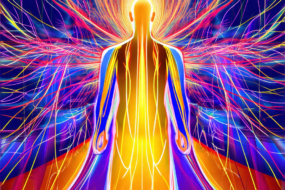
Before diving into the mechanics of psychic vampirism, it’s essential to understand that this isn’t about literal blood-sucking monsters lurking in shadows. What we’re examining here is a subtle energy exchange between conscious beings—a transfer of vital life force known as prana or chi, depending on which tradition you consult. Every living being generates an electromagnetic field around their body, what mystics call the aura. Most people don’t realize they emit this invisible radiation constantly, but psychic vampires have learned to harness and manipulate it for sustenance.
The ancient texts of India describe this phenomenon as “sukshma sharir,” or subtle bodies that feed on energy rather than food. Similarly, Chinese medicine recognizes a concept called jing—the essential essence stored in our kidneys—that can be depleted through emotional and energetic interactions. These traditions independently discovered the same truth: human beings are not closed systems but open conduits of spiritual and psychic energy.
How Psychic Vampirism Works
At its core, psychic vampirism involves one being—typically someone with heightened sensitivity or a natural gift for energy perception—reading another’s aura and drawing from it selectively. Think of it like wireless charging between devices, where the vampire acts as both transmitter and receiver, absorbing what they need while remaining undetectable to most humans.
The process works through several mechanisms: first, there’s empathic resonance, where psychic vampires naturally feel emotional states around them as if they were their own. Then comes selective absorption—pulling energy from specific sources, usually during intimate conversations or prolonged eye contact. The third mechanism involves “energy channels,” subtle pathways connecting two beings that open during meaningful interaction, allowing continuous flow of vital force from the giver to the receiver.
What makes psychic vampires truly remarkable is how they can remain undetected. They don’t look different. They eat normally. But when they’re around people for extended periods—perhaps working in crowded offices or socializing at parties—they unknowingly drain those whose energy they need most, while maintaining an impression of vitality and warmth that keeps others drawn to them.
The Hidden Signs: How to Spot a Psychic Vampire
Most people never realize they’re being drained until the patterns become obvious. Look for these telltale signs: first, you might notice inexplicable exhaustion after long conversations with certain individuals—conversations that leave you feeling hollow rather than enriched. Second, emotional vampires tend to draw their energy from emotions; if someone makes you feel intense feelings—love, anger, excitement—and then leaves you feeling depleted afterward, they may have been feeding on your emotional output. Third, notice how some people seem magnetic, always around others yet seeming to grow more vibrant with each interaction while leaving companions weaker.
The fourth sign appears in physical symptoms: headaches after social gatherings, a persistent sense of fatigue that sleeping doesn’t cure, and occasionally the sensation of being “drained” as if someone has quietly siphoned something vital from within you. Perhaps most intriguing is how psychic vampires often gravitate toward creative or emotional environments—art galleries, meditation retreats, intimate gatherings where energy flows freely between people.
The Science Behind the Mystery
While ancient mystics described psychic vampirism through spiritual language, modern science has begun catching up to their insights. Researchers have documented “energy fields” around human bodies using devices sensitive enough to detect electromagnetic radiation patterns consistent with aura descriptions in mystical traditions. Magnetic resonance imaging studies reveal that certain individuals possess measurable differences in brainwave synchronization when interacting closely with others—suggesting real physical mechanisms behind the phenomenon.
Furthermore, experiments conducted across cultures show remarkable consistency: psychic vampires tend toward specific personality types and emotional configurations, creating a profile of what might be called “natural feeders.” They typically exhibit heightened empathy combined with subtle manipulation abilities—often unconscious—that allow them to draw energy while seeming completely genuine in their interactions.
Living Among the Hidden
The question arises: how many such beings exist among us? Anthropologists believe perhaps one percent of humans possess this ability, though most live lives unaware of it themselves. Some may even be victims who unknowingly drain others despite wanting connection, caught between natural hunger and human companionship.
What’s fascinating is that psychic vampirism exists on a spectrum—some people feed occasionally during emotional crises or creative work; others maintain constant low-level intake throughout daily life. Perhaps the most gifted practitioners can sustain themselves through minimal physical contact while maintaining full vitality, requiring only occasional intense interaction with willing or unwilling donors.
Conclusion: The Energy Revolution
Understanding psychic vampirism transforms how we view social interactions—not merely as exchanges of words and emotions but as literal energy transactions where our emotional output has value beyond ourselves. Next time you feel inexplicable fatigue after conversation, remember: you may have been feeding a vampire without even knowing it—or perhaps becoming one yourself.


Recent Post



Gallery






Featured Videos







No Comments