



By Dr. Alistair Thornwick
When people speak of necromancy, they think of dark figures rising from graves, spectral armies marching across battlefields, or perhaps sinister sorcerers drawing power from graveyards in moonlight. They imagine the dead brought back to life by force and will. But beneath these popular depictions lies a subtler truth: true necromancy is not about raising corpses, nor even about commanding spirits. True necromancy is communication—the secret language spoken between two worlds, one that persists long after others have forgotten it exists.
Necromancy derives from the ancient Greek word nēmmō, meaning “to assign” or “to apportion”—a verb that suggests something more deliberate than mere death. In the early traditions of necromancy, death was not an end but a transition, and the dead were considered still present in some manner, merely shifted to another layer of reality. The Greek seers called them psychai, souls or spirits, which lingered near their former habitation rather than departing into distant realms. These early practitioners understood that communication with the departed was not magic at all in any extraordinary sense; it was simply a language waiting to be spoken correctly.
The language itself operates on principles that remain remarkably consistent across cultures and eras. When a person dies, according to classical necromantic theory, they do not immediately leave behind their identity or personality intact. What departs with them is an aspect of the soul, sometimes called psyche in Greek traditions or neshamah in Hebrew traditions, carrying memory, preference, and intention into whatever lies beyond. The dead, then, are not merely ghosts but persons who continue to exist in a slightly different register, accessible through specific techniques that bridge the gap between worlds.
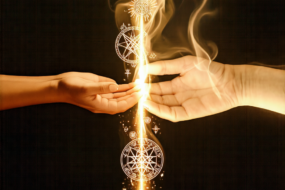
Necromancy works by establishing what might be called a channel of communication. This requires understanding three layers: first, the presence and intention of those who remain alive; second, the continued existence and identity of those who have passed; third, the medium or language connecting them. Traditional necromancers speak of nefesh, a Hebrew term meaning “throat” but also “breath”—the very faculty through which living beings communicate. When the breath returns to voice in a ritual setting, the dead can hear and respond.
The most enduring form of this practice involves grave-reading, where practitioners learn to read signs from graves—patterns in growth, positions of stones, movements of animals—to discern what departed souls are saying or requesting. The name itself (necromancy from Greek nekros, “dead,” combined with manthos, “diviner”) describes the discipline precisely: divination performed through contact with dead spirits rather than through vision alone.
What makes necromancy distinctive among the divinatory arts is that it does not seek only information about future events or hidden things, but genuine conversation across death’s boundary. When a practitioner calls forth a spirit and asks questions, they are not receiving vague impressions—they are engaging in dialogue with someone who was once alive, who remembers their former life, and who can communicate back with clarity and intention.
The language of necromancy is most effective when practiced with proper understanding of what the dead actually want. Ancient texts suggest that many spirits desire recognition—being called by name, remembered properly, honored in ways that acknowledge their continued existence. This is why offerings of food and wine appear so frequently in necromantic practice: they are not bribes or payments but gestures of respect that establish a reciprocal relationship between the living and those who have passed on.
The language also has specific grammatical rules, though these operate more like poetic conventions than rigid laws. Names matter greatly; speaking with a spirit using only its name alone can prove effective in some traditions, while others require fuller identification including titles or former roles. There are traditional patterns of speech—the dead respond to certain rhythmic structures and may refuse communication if the questions arrive in wrong form or at inappropriate times.
Modern practitioners have sometimes forgotten these subtleties, reducing necromancy to a kind of ghost-hunting technology where spirits become objects rather than subjects. But the true art requires patience: understanding that some spirits speak only when approached gently, that others require specific offerings or particular conditions, and that communication with the dead is not merely about what they tell us but also what we offer in return.
The secret language between two worlds thus remains accessible to those who approach it correctly—not through grand ceremonies alone but through sustained attention, proper understanding of intention, and willingness to listen as much as speak. When practiced properly, necromancy reveals that death is not a wall separating the living from the dead but rather a membrane permeable enough for ongoing relationship—language that persists because the dead continue to exist, and because those who remain live in proximity to what they have become.
Dr. Alistair Thornwick is an author specializing in classical necromantic theory and modern applications of ancient divinatory practices.


Recent Post


Gallery






Featured Videos




No Comments