


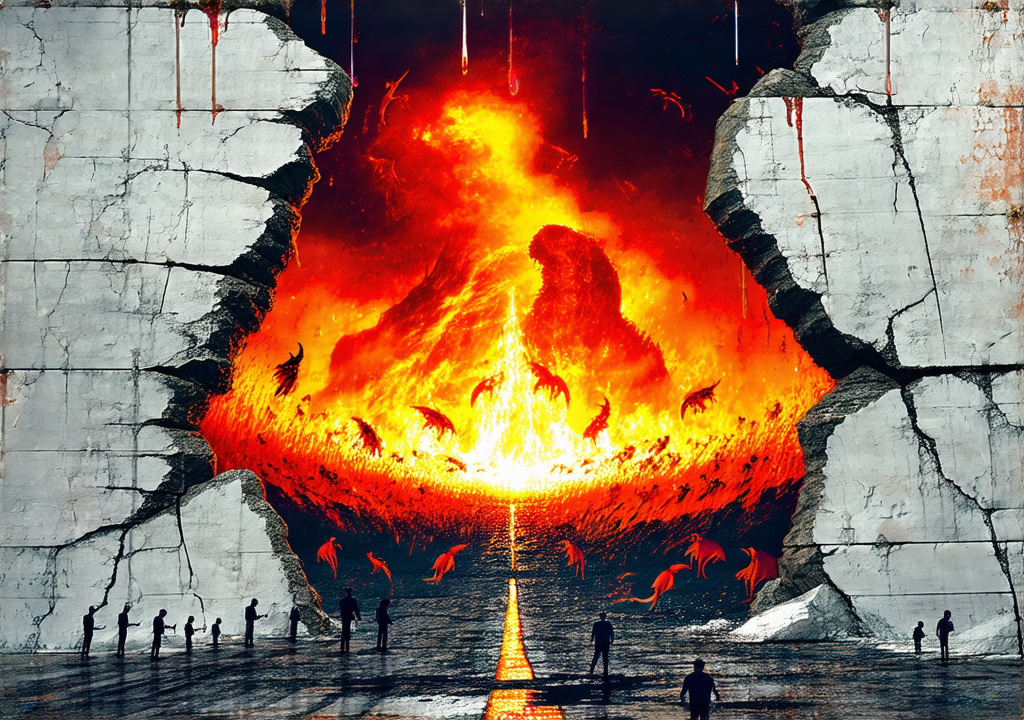
By Elias Thornwood, Master of Demonological Studies and Keeper of the Arcane Archives
It is a curious truth that what we call “death” is merely a door, not an end. Across every tradition—from the necromancers of ancient Babylon to the modern-day occultists who consult their dead through digital mediums—the notion persists that consciousness survives in some form beyond the veil. But most people never learn how to speak across it. They pray, they mourn, they perform rites, yet few truly listen. I have spent forty years studying these conversations between the living and those who have passed on, and what I’ve discovered is both beautiful and profoundly unsettling.
The first thing one must understand is that conversation with the departed operates differently than any earthly dialogue. The dead do not speak as we do; their voices carry a peculiar resonance, layered like harmonics in a chord, resonating through dimensions our senses normally filter out. Those who have died possess knowledge of things forgotten by the living—memories of what we forgot to remember, truths we refused to acknowledge while breathing air and beating hearts.
I began my own studies at age twelve, when I first heard my grandmother speaking from beyond the grave during a momentary lapse in vigil after her passing. She was not dead, she assured me; she had merely crossed over into another layer of existence where time moves differently and conversations continue as though no time has passed at all. What struck me then—and what I have since confirmed through years of practice—was that this transition between speaking and listening takes place within a realm the ancients called the liminal space, a borderland existing parallel to our own where spirit meets substance, memory becomes presence, and death is no more than a temporary absence rather than an absolute end.
The art properly practiced requires three preparations: purification of both environment and mind; selection of appropriate medium (whether natural or artificial); and establishment of clear intent before beginning any communion. Purification involves cleansing the ritual space with herbs—rosemary for remembrance, sage for protection—and ensuring that one’s own mental state is free from distracting thoughts and ambitions. The medium may be anything from a glass of water to a crystal ball, though I have found particular efficacy in using mirrors, which serve as windows rather than barriers between the two realms.
Intent must be precise: vague intentions produce vague responses; specific questions yield specific answers. When I first encountered my grandmother’s spirit, I had merely thought of her and felt moved to ask if she was well. She appeared—not spectrally ethereal as paintings depict, but fully present, solid, warm—she sat beside me in the room, speaking with perfect clarity about matters that had been troubling me without my realizing it, details about my mother’s health, about certain promises I’d made and forgotten, even small things like whether I still cherished those books she had given me upon reaching adulthood.
The relationship between the living and the dead is not merely observational; it is interactive, reciprocal, requiring participation from both sides. Most modern attempts at contacting spirits fail because people treat it as passive listening rather than active engagement. One must speak, one must listen, one must remember to remember while engaged in dialogue. The dead possess knowledge we have forgotten—knowledge they once shared with us before death separated our circumstances—and this knowledge, properly accessed, can illuminate matters long neglected or misunderstood.
I have observed throughout my studies that certain conditions optimize successful conversations: the period between midnight and dawn when the veil is thinnest; places consecrated through repeated use for such purposes; times of lunar transition (particularly during the waning moon); and periods of personal stillness when one’s own thoughts are quiet enough to receive clear signals from beyond.
The most profound encounters occur not through formal ritual but through genuine relationship—when one approaches the departed as someone known, someone loved, someone who remains part of one’s life even while their physical presence has passed elsewhere. This is why those who attempt conversation with strangers’ spirits often find it more difficult; they must first establish rapport before meaningful dialogue can commence.
The forbidden aspect lies not in danger but in recognition: when one begins speaking with those who have died, one becomes aware of what others ignore or forget. One begins to hear voices in silence, to see meaning where previously there was only noise, and gradually, after repeated practice, to navigate between worlds as naturally as breathing air. The dead are not ghosts haunting our world; they are the same people we knew, perhaps more whole than we ever knew them while alive, occupying a space just beyond perception, waiting for those who wish to converse with them.
What I have learned over four decades of study and practice is this: conversation with the departed requires patience, sincerity, and willingness to listen as much as speak. Most people never discover that the dead do not cease to exist—they merely change their mode of existence, just as water changes from solid to liquid when warmed. The forbidden art lies in learning to hear them clearly while still living among those who cannot yet perceive what we can. And though many attempt this communion and few succeed fully, those who persist will find that the dead speak back with wisdom we have forgotten or never possessed while alive.


Recent Post

Gallery






Featured Videos






No Comments