


By Elara Whitmore, Author and Keeper of the Old Ways
From the earliest days when humanity first looked up at the stars and felt the pull of unseen forces, witchcraft has been our most intimate conversation with the cosmos. It is not merely a practice but a living tradition—a continuous thread woven through the tapestry of human history, passed from master to apprentice across centuries without losing its potency or its relevance. The art of witchcraft, as this article seeks to illuminate, is not only ancient; it is ever-renewing.
To speak properly of ceremonial witchcraft is to describe a discipline that transcends mere magic and enters into the realm of sacred geometry. Ceremony requires intention. It demands precision in timing, materials, words, and gesture. Where casual magic might be performed with casual intent—perhaps while running between tasks—a true ceremony transforms time itself into a vessel for transformation. The witch who practices ceremonial arts does not merely invoke spirits or call upon elemental forces; she orchestrates them within a carefully constructed framework of meaning.
Consider the elements: earth, air, fire, and water. These are not abstract concepts to the working witch but living presences that respond to her artistry. In ceremony, each element receives its proper honor and place in the circle. The earth provides substance and foundation; air carries intentions aloft; fire purifies and illuminates; water adapts and heals. Together they form the crucible within which transformation occurs.
The tools of witchcraft are extensions of this understanding. The athame represents will and masculine principle; the wand channels energy outward. Candles mark intention through light; incense creates atmosphere that bridges mundane and divine. A pentacle grounds power in material form while an altar serves as the meeting place between earth and sky, practitioner and spirit. Each tool is chosen with care because every instrument carries specific frequencies of meaning into the work.
Seasons matter deeply to ceremonial witchcraft. The wheel of the year—Samhain, Yule, Imbolc, Beltane, Midsummer, Lammas, Mabon—is not merely a calendar but an ecological and spiritual rhythm that mirrors the inner life of the practitioner. To perform rites at appropriate times is to participate in something vast: to align personal will with cosmic currents rather than swimming against them.
Historical witchcraft traditions demonstrate remarkable continuity despite geographical distance. Ancient Greece practiced what we might call “theurgy”—divine workings through ritual and invocation. Medieval grimoires show practitioners who understood the relationship between planetary hours, zodiacal signs, and specific magical operations. Indigenous traditions worldwide echo similar patterns: offerings to spirits at sacred places, dance as invocation, drumming as heartbeat of the earth. Witchcraft is indeed universal while remaining deeply personal in its expression.
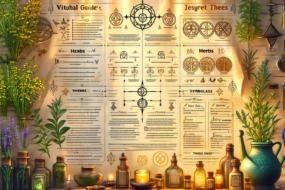
The practitioner must cultivate both skill and sensitivity. Skill means knowing one’s tools—when to work with lunar phases, which herbs correspond to which intentions, how to cast circles that hold power without becoming confining. Sensitivity means learning to read signs: what the wind carries, how candles burn, which dreams are messages from spirit. Both are learned; neither is innate.
Modern witchcraft especially benefits from this balance between tradition and personal innovation. We have access to ancient texts alongside contemporary writings, traditional materials alongside synthetic alternatives. The ceremonial witch today might use digital tools alongside physical ones—perhaps a tablet for reference while working with crystal grids, or an online community for sharing results—but she grounds her work in the same timeless principles that guided practitioners centuries ago.
What remains constant through all this is the core truth: witchcraft is fundamentally about relationship. Relationship between self and spirit, human and nature, practitioner and cosmos. Ceremony creates a sacred space where these relationships can be actively cultivated rather than passively endured.
To master witchcraft through generations means learning from those who came before while adding one’s own voice to the tradition. It requires both humility—willingness to learn from old texts and elder practitioners—and confidence, knowing that each practitioner brings something unique to her craft. The Art of Witchcraft does not belong solely to the past; it lives actively in every generation that chooses to practice it with sincerity.
So we may say: true witchcraft endures because it is fundamentally alive. It breathes through ritual and spellwork, through herb and crystal, through invocation and meditation. Those who practice it do not merely follow old patterns but participate in an ancient conversation—one that continues even now, as you read these words, between practitioner and tradition across the centuries.


Recent Post
Gallery






Featured Videos




No Comments