


By Seraphina Blackwood
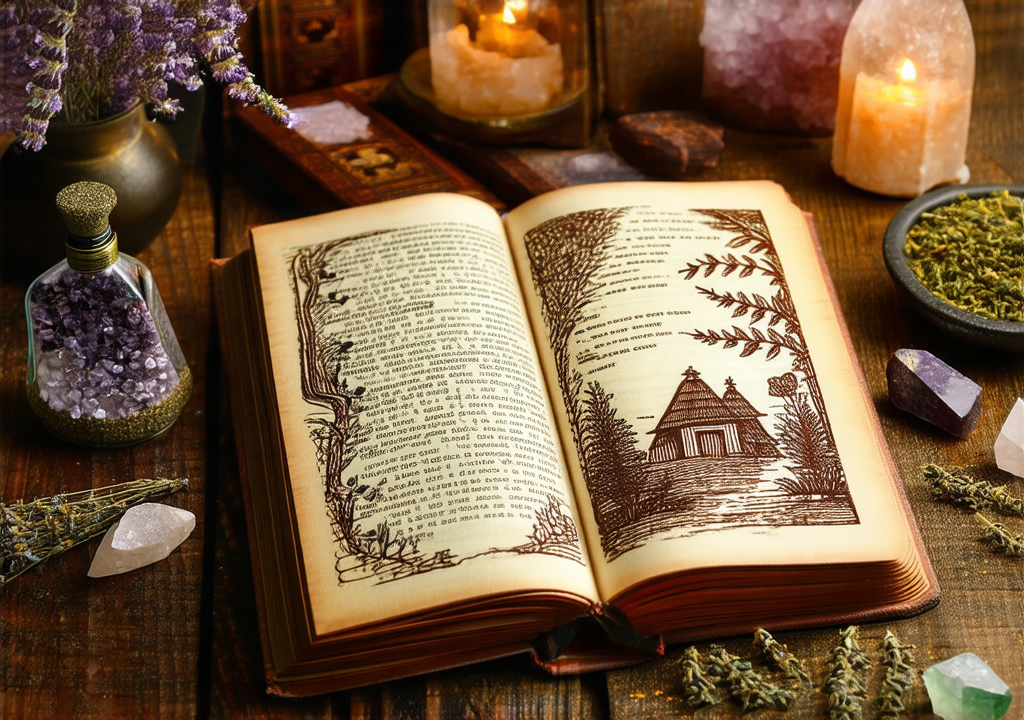
In an age where we rush through our days like startled deer, there exists beneath the surface a quiet magic waiting to be unearthed—the ancient art of ceremonial witchcraft. This is not merely about hanging dried herbs in your windows or lighting candles on full moon nights (though both are lovely). Ceremonial witchcraft is the deliberate weaving of ritual into every facet of daily life, transforming ordinary moments into sacred encounters with the unseen world.
The Philosophy Behind the Practice
At its core, ceremonial witchcraft recognizes that everything participates in a web of meaning and relationship. A cup of morning tea becomes communion when taken as an offering to the day ahead; a walk through the forest becomes pilgrimage when undertaken with full presence; even sweeping your floors transforms into a cleansing ritual when performed with mindful intention.
The word “ceremony” comes from the Latin caerimonia, denoting sacred rites and solemn observances. A ceremony is not entertainment but participation—it invites us to step beyond mere function into the realm of significance. When you grind corn for flour, are you merely preparing sustenance? Or are you participating in a rite that honors earth, sky, sun and rain; that thanks the grains’ slow maturation from seed to harvest?
The Elements of Ritual
A true ceremony requires more than props—it demands presence. Consider these foundational elements:
Intention: Before any action, there must be intention—a clear mental image or feeling held in focus. Intention is what distinguishes a mere habit from ritual. A mother rocking her child may do so habitually; the same motion becomes ceremonial when done with awareness of the sacred bond between parent and child.
Form: The outward shape that carries meaning. Whether it’s a circle drawn in salt, words spoken aloud, hands raised or lowered, music sung or silence kept—form gives ritual its body.
Material: The physical elements through which spirit enters matter: candlelight casting golden shadows upon ancient trees, wine turning to blood and bread becoming flesh in the mind’s eye, incense smoke rising as prayer.
Practicing Ritual Daily
What makes ceremonial witchcraft truly revolutionary is its claim that ritual need not be rare or special to be effective. Each day presents countless opportunities for sacred action:
When you draw water from a well (or open a tap), pause and thank the earth’s hidden streams. When reading before sleep, let each word settle like seed into the soil of memory. When baking bread, knead it as one kneads prayer. When walking to work, observe that every step is both ordinary motion and sacred journey.
Tools of Ceremony
While ceremonial witchcraft can be practiced without tools, certain implements carry particular significance:
The Knife (the athame) separates and cuts away the old; the wand directs energy outward and inward; the chalice receives and contains; the pentacle grounds spirit in matter. But these are merely suggestions—the knife may be any blade, the wand any straight branch, the chalice any vessel. What matters is not their form but how we use them.
The Magic of Repetition
There’s power in returning to the same ritual again and again—not for its own sake, but as a way of building bridges between worlds. Each repetition deepens the groove, making it easier for spirit to enter matter and vice versa. The witch who lights her candle every evening at dusk is not merely marking time—she is creating continuity, weaving her small life into larger patterns that outlast her individual days.
Ritual as Relationship
Ultimately, ceremonial witchcraft teaches us that everything can become an ally: the earth beneath our feet, the air we breathe, even the wind itself. When we learn to perform ritual before eating, after waking, during travel and before sleep, we begin to live not merely in the world but with it—constantly in relationship with those invisible presences that surround us always.
So go forth: light candles when you can; speak your intentions aloud; gather herbs from whatever garden is available to you. For ritual is nothing less than the art of making life itself into a ceremony worthy of participation.


Recent Post



Gallery






Featured Videos




No Comments