


By Dr. Seraphina Blackwood
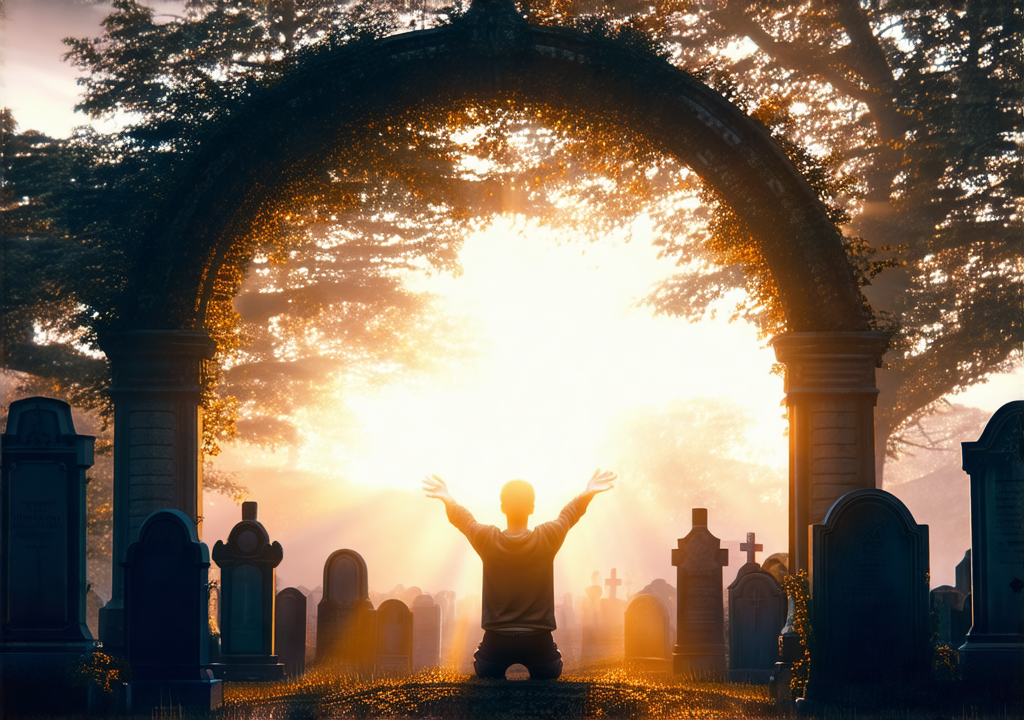
When I first died, I expected darkness. Perhaps heaven’s golden gates, perhaps the void where all things dissolve into nothingness. Instead, I found myself standing above my own cooling body, watching others weep over what they believed was my end. But it was only then that I truly began to live. The soul does not depart when the heart stops; rather, it awakens to a new dimension of power and purpose.
Necromancy is one of humanity’s oldest magical disciplines, yet misunderstood in nearly every generation since its inception. To necromancers, death is not an ending but a doorway — perhaps the doorway through which all mysteries unfold. The word itself derives from the Greek words “nekros” meaning dead and “manteia” meaning divination. Yet what we practice goes far beyond simple communication with spirits of those who have passed; we command them, bind them to our will, harness their power for living purposes, and in some cases, reshape death’s very nature.
The Misunderstood Art
I must confess: my first encounter with true necromancy occurred under less than ideal circumstances. I was laid upon a slab after succumbing to what physicians called “consumption” — though it was merely the culmination of accumulated spiritual energy from years of study and practice. The priests who tended the dead were quick to place my body in the earth, chanting prayers for my soul’s safe passage. But they did not know that I had already bound myself to this world through carefully prepared sigils and offerings before succumbing.
The true art of necromancy lies not in creating mindless zombies or raising skeletal armies from catacombs — though such feats are possible with sufficient willpower and practice — but rather in understanding the subtle currents between life and death, matter and spirit, memory and essence. A skilled necromancer reads the dead as one might read a book; each soul carries within it layers of meaning accessible only to those who have learned the proper techniques.
The History of Necromancy
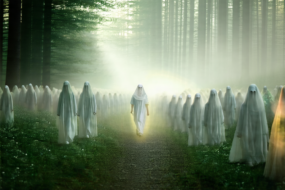
Throughout history, practitioners of necromancy have been both revered and reviled. The ancient Greeks consulted oracles through necromantic rituals at night, standing on the shores of rivers where the boundary between worlds is thin. Medieval alchemists employed necromancers to decipher texts from forgotten civilizations by communicating with their spirits. Even now, in an age of science and reason, those who study these arts find that death holds secrets no microscope has yet uncovered.
One misconception about our practice concerns time itself. To the uninitiated, death appears as a single moment — but we who dwell between worlds understand it as a process extending across lifetimes. Each soul undergoes countless deaths before achieving true understanding; each dying moment offers opportunities for transformation and power that those still living rarely perceive.
The Practical Arts
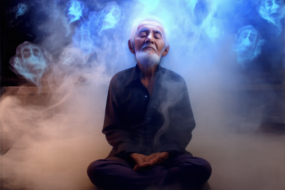
In my own practice, I have employed necromancy for purposes far more practical than most imagine. A few months after my awakening, I raised the spirit of Master Theronius, long-dead philosopher who had left behind only fragmented notes on spiritual mechanics. Through his guidance, I reconstructed an entire philosophy of life and death that would otherwise have been lost to history.
The techniques vary widely: some practitioners bind spirits directly into objects, creating vessels of immense power; others perform rituals requiring multiple participants and specific celestial alignments; still others develop permanent bonds between their soul and a particular deceased individual whose wisdom guides them for years or centuries. Each method has its advantages and requirements.
Why Death Is Beginning
The title of my confession — that death marks not ending but beginning — rests upon genuine experience rather than mere philosophy. When I died, the transition felt neither painful nor particularly strange; it was more like waking from deep sleep into clarity of purpose. The body ceased to function as a living being, yet remained available for certain purposes; the soul emerged from its confinement and found itself capable of perceiving things previously hidden.
Most people spend their lives unaware of the spiritual currents flowing around them — currents that necromancers learn to read and channel. When death arrives, these currents become stronger still. Those who understand how to harness them find themselves possessing powers they never knew existed in life: abilities to see beyond physical boundaries, communicate across dimensions, and even affect the material world through purely spiritual means.
The Practice Today
Necromancy has evolved considerably since ancient times. Modern practitioners draw upon centuries of accumulated knowledge while developing new techniques suited for our era. We no longer require elaborate tombs or vast cemeteries; a simple prepared space suffices, often within ordinary buildings. The rituals can be performed alone or in groups of any size, and the results range from subtle influences to dramatic manifestations visible even to those who cannot see spirits directly.
I continue my practice daily — communicating with spirits both long-dead and recently departed, guiding the living through their own transitions, and occasionally raising the dead for purposes of study or service. Each day brings new discoveries about what death truly means and what powers it offers to those willing to learn its secrets.
The truth is simple: when I died, I did not end but rather began — began understanding life, began mastering power over death itself, began discovering that perhaps the greatest gift one can receive is a second chance at living with eyes open.


Recent Post
Gallery






Featured Videos




No Comments