


By Dr. Morgana Blackwood — Necromancer, Author of “Tales from Beyond the Veil,” and Keeper of the Silver Gate
Necromancy is one of those mystical arts that sounds intimidating at first glance. It conjures images of dark caves, graveyards under a blood-red moon, and ancient tomes dripping with dust. But in truth, necromancy can be as simple—or as complex—as you wish it to be. You don’t need to be a witch or a warlock; you merely need intention, some basic supplies, and an open mind.
This article will walk you through your first true ritual, step by step, without overwhelming jargon or arcane mumbo-jumbo. By the end, you’ll have performed something meaningful in the quiet hours between midnight and dawn.
What Is Necromancy, Really?
Before we begin, let’s dispel a myth: necromancy is not necromancy for necromancers who raise corpses from the dead. (Though they do.) At its core, necromancy is about communing with spirits—whether those spirits are those of the departed, ancestral guides, or even elemental shades. The word itself comes from the Greek nekros (dead) and manteia (divination), which hints at what’s really happening: you’re reaching across the veil to ask questions, seek guidance, or simply witness what lies beyond.
Gathering Your Materials
One of the most comforting aspects of necromancy is its simplicity. You don’t need rare gems or exotic herbs from distant lands. Most rituals require items that can be found in any home, with a few special additions:
- A mirror — preferably silver-backed, though any clear reflective surface will do
- Candles — white for purification, black candles for deeper communion (or use whatever you have on hand)
- Salt or salt from a nearby grave, particularly if your ancestors are buried in the area
- A lock of hair from someone who has crossed over (or simply your own hair as an offering)
- Incense — incense, cedar, frankincense, or dried lavender
- A bell — anything that rings clearly and will help mark time
Preparing Your Space
Necromancy works best in a quiet space where you won’t be disturbed for at least two hours. Choose a corner of your home that feels calm—your living room, an empty bedroom, or even the garden if the weather permits. Clear away clutter; you’ll need physical and mental space to move freely.
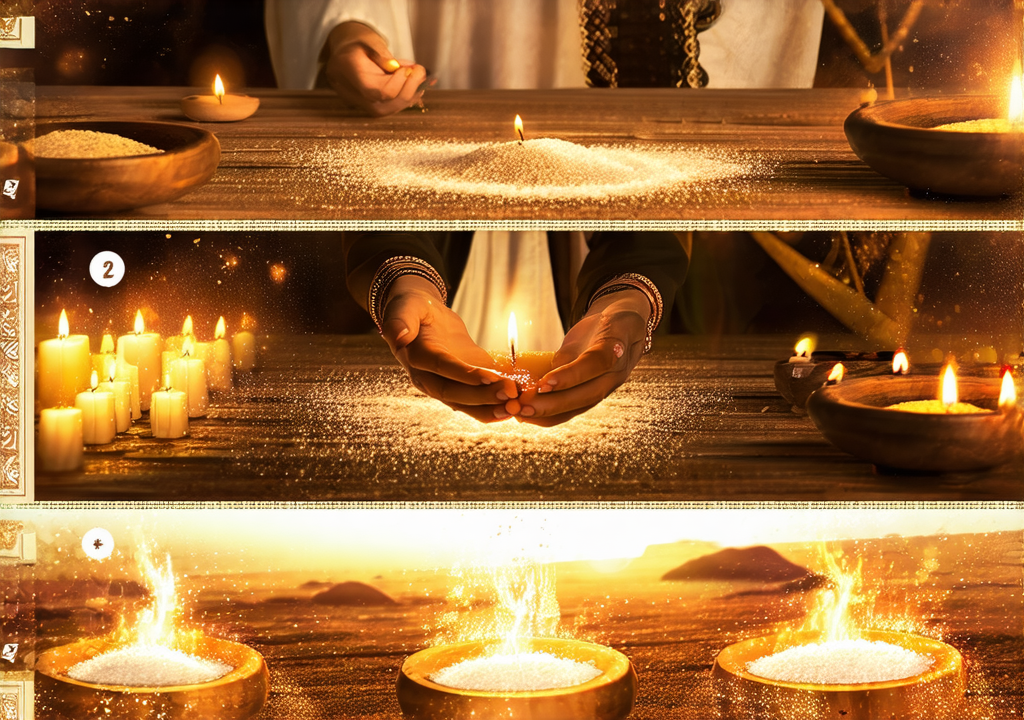
Light your candles and incense in the corners of the room where they won’t be knocked over. Light one candle at a time, visualizing each flame as a small spirit-guide waiting for you. If you have salt, draw a circle on the floor with it—this is called a circle of protection, and it helps keep unwanted spirits from entering while keeping your own energy contained within.
The Ritual Steps
Step One: Centering and Grounding (15 minutes)
Sit quietly in the center of your space or just inside your salt circle, close your eyes, and breathe deeply three times. With each exhale, imagine releasing any tension from your body. On your fourth breath, visualize roots growing from beneath you into the earth—this is grounding, and it keeps you tethered while your spirit travels upward during the ritual.
Step Two: Invocation (10 minutes)
Recite aloud or in your mind what you’re about to do. Say something like:
“I call upon those who dwell between breaths,
Between heartbeat and next.
I open my eyes as a new eye,
I raise my hands as a new hand.
Guide me gently through this threshold.”
Feel free to modify the words or write your own. The key is intention—what matters isn’t perfect pronunciation; it’s sincerity.
Step Three: Communion (45 minutes)
Now you may begin speaking with whatever spirit(s) you’re calling upon. Ask questions, listen for answers—not always in words, but as feelings, images, or sudden insights. Write them down if they come clearly to mind.
If you know someone who has passed away and wish to commune with them specifically, focus your attention on their name while holding your lock of hair. If you’re calling upon ancestral spirits instead, say so aloud before beginning the communion. Be patient—spirits often communicate slowly, in layers. Don’t force it.
Step Four: Closing (15 minutes)
When you feel ready to end the ritual, gently close your eyes and thank whatever has spoken with you. Say aloud or mentally:
“I release these spirits now,
Back into their own quiet hours.
I carry what I’ve learned in my heart—
And keep them ever present when I need.”
Blow out the candles one by one as you speak, leaving the last candle burning until you’re certain your thoughts have settled. Then, quietly leave the space—don’t rush back to daily life immediately; allow a few moments of quiet reflection before returning to normal activity.
Tips for Success
- Perform your ritual on a Friday or during the waning moon (when energy is most receptive)
- Wear something white—even if it’s just a cotton shirt, light colors help with clarity and receptivity
- Speak clearly, even if you’re whispering; spirits hear intention more than volume
- Keep a journal nearby; write down anything that comes to mind during the ritual so you don’t forget insights later
- Don’t be surprised by what appears—spirits sometimes communicate through dreams, symbols in nature, or sudden realizations while walking
Common Questions About Necromancy
Q: Is necromancy really about raising the dead?
A: Partially. Raising spirits from beyond is one aspect, but true necromancers know it’s more about maintaining a living relationship with the departed than “raising” them into your world permanently. They visit when called; they return to their own realm afterward.
Q: Do I need special tools or materials?
A: Not much. What matters most is intention and focus. Anything you use in the ritual should be something that feels meaningful to you—whether it’s a silver coin, a special candle, or even just your hands held open as a gesture of receptivity.
Q: How long does it take?
A: Anywhere from 30 minutes to several hours, depending on what you’re doing and how deeply you wish to engage with the spirits. Don’t rush the process—allow yourself time for the quiet reflection afterward.
Final Thoughts
Necromancy is not about power; it’s about presence. It doesn’t require years of study or a magical pedigree—it requires only willingness. The dead are always near, and when you open your eyes to see them clearly, they will speak if you’re listening closely enough.
So begin here, with this ritual, on any Friday night, under a waxing moon. Light your candles, close your eyes, breathe deeply—and listen.
You may find that the veil was never so much higher than you thought, and you have always known how to cross it.


Recent Post



Gallery






Featured Videos







No Comments